
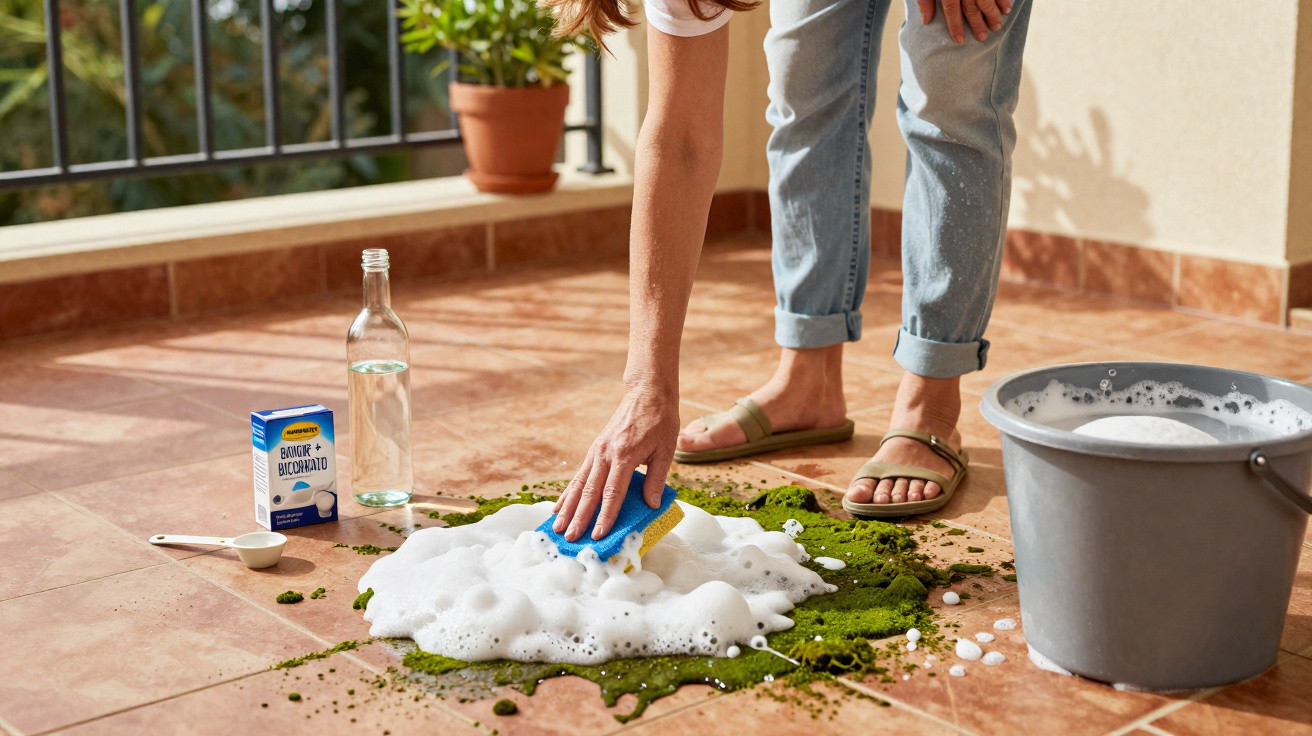
Many people spend hours scrubbing until they are exhausted, only to find moss appearing everywhere again a few days later. Yet the answer is quite literally sitting in the kitchen cupboard: it costs next to nothing, is kinder to the garden and can help keep stone surfaces free from moss over the long term.
Why moss spreads so quickly on patios and driveways
Moss thrives in damp, shaded places. Patio slabs, block paving, driveways, garden paths, walls and even roofs provide exactly these conditions. After winter, water often remains in the joints, sunlight barely reaches the surface, and the ideal environment for this green growth is created.
Most people then reach for a stiff brush or pressure washer. Although the result initially looks clean, the underlying issue remains.
"Simply scrubbing removes the green carpets, but the tiny spores and anchoring structures remain deep within the gaps."
These rhizoids are precisely why moss soon begins growing again. Anyone who treats only the surface will gain, at most, a few weeks.
Many chemical moss killers do work, but they can contain harsh substances that may affect flowerbeds, lawns or even groundwater. Anyone keen to maintain a healthy garden will understandably be reluctant to apply such products across large areas.
The kitchen secret weapon: vinegar and bicarbonate of soda
The good news is that two cupboard staples are enough to remove moss far more thoroughly, without needing a specialist cleaner.
"The combination of household vinegar and bicarbonate of soda works as a two-pronged attack on moss-covered areas: visibly on top and deep below the surface."
Household vinegar contains acetic acid, which penetrates the plant material and damages the moss's cell structure. Bicarbonate of soda is mildly alkaline and draws moisture from the growth, particularly around its roots. This makes renewed spreading considerably more difficult.
A dash of washing-up liquid makes the mixture work better: it acts as a wetting agent, helping the liquid cling to the moss cushions instead of running straight off.
What you will need
- Household vinegar (white, undiluted or slightly diluted)
- Bicarbonate of soda
- Washing-up liquid (a dash is enough)
- Hot water
- A bucket or washing-up bowl
- A stiff scrubbing brush or yard broom with firm bristles
A dry, overcast day is the best time to use it. Rain would dilute the solution and wash it into beds, while strong sunshine would make it evaporate too quickly.
Step by step: removing moss from stone surfaces
1. Prepare the surface thoroughly
Before mixing anything, sweep the patio completely. Remove leaves, soil, sand and loose debris so the solution can reach the moss directly.
2. Mix the cleaning solution
Fill the bucket with hot water. Add a generous splash of vinegar, stir in two to three tablespoons of bicarbonate of soda, then finish with a little washing-up liquid. Wait briefly for the fizzing to settle.
"The mixture does not need to be measured with absolute precision – what matters is that both vinegar and bicarbonate of soda are present in clearly noticeable amounts."
3. Apply plenty of solution
Pour the liquid straight over every mossy area or distribute it using a watering can. Make sure the joints, edges and hard-to-reach spots are all wetted.
Then allow time for it to work. Leave it for at least 15 to 30 minutes. During this period, the acetic acid acts within the plant cells while the bicarbonate of soda dries out the growth.
4. Add mechanical cleaning
Once the waiting time is over, scrub in circular motions with the brush. At this point, the moss will usually lift from the surface in whole patches or thick clumps.
For larger areas, a coarse yard broom can also be used. Apply firm pressure so that the remaining material is genuinely loosened from the joints.
5. Rinse carefully – in the right direction
Finally, rinse the whole surface with clean water, ideally using a garden hose. This washes away vinegar residue, bicarbonate of soda and the loosened moss.
Ensure that the water flows away from beds, vegetable plots and delicate ornamental plants. Acetic acid can damage leaves and roots there, especially on young plants.
Keeping moss away: how to keep the patio clean for longer
Anyone who only reaches for the bucket once a year will keep seeing the green growth return. The key is to change the conditions that allow moss to develop in the first place.
"Moss loves standing water, shade and narrow joints – change those conditions and you are already halfway there."
More light, less damp
- Improve drainage: Eliminate puddles on patio slabs where possible, for instance by creating a slight slope or clearing drainage channels.
- Reduce shade: Prune shrubs and trees regularly so more light reaches the stone surfaces.
- Maintain joints: Refill washed-out or particularly deep joints so less moisture can collect in them.
Planting around the patio also has an effect. Dense ground-cover plants can retain moisture for a long time, whereas gravelled areas dry out more quickly. Keep this in mind when planning new beds.
Preventing moss with vinegar and bicarbonate of soda
The homemade solution can also be used as a preventative treatment. Applying a lighter, less concentrated mixture every two to three months keeps many surfaces visibly clean before thick carpets can form again.
It is inexpensive and quick, and avoids the major effort required at the start of the season.
When you need to take care
Useful as this kitchen-cupboard method is, it should not be used without consideration.
| Area | What to consider? |
|---|---|
| Lawn & beds | Do not pour the solution directly onto grass or flowers, as vinegar can harm plants. |
| Joints containing plants | Beneficial plants growing in joints, such as thyme or cushion-forming perennials, will also be affected. |
| Metals | Do not leave vinegar on metal rails or handrails for a prolonged period, as there is a risk of corrosion. |
| Delicate stone | Test natural stone slabs first in an inconspicuous place to check whether discolouration occurs. |
What many people mistake for moss – and how to respond properly
Not every green coating is ordinary moss. It is often algae or lichens instead. They react in a similar way to the vinegar and bicarbonate of soda mixture, but may sometimes need a little longer and more mechanical help.
Black, slimy-looking coatings on north-facing sides or walls are frequently algae. The same method works here, sometimes followed by a second treatment after a few days.
Practical tips for less work next year
Planning the clean-up carefully saves a great deal of effort later. An early-spring treatment, before the patio is used heavily again, is ideal, followed by a second round in late summer.
If you are already working in the garden – pruning shrubs or creating new beds, for example – include the moss treatment at the same time. This creates a routine and stops surfaces from reaching the point where they need drastic treatment.
There is another benefit: avoiding aggressive chemical products protects not only plants and soil, but also pets and children at play. When handled sensibly, vinegar, bicarbonate of soda and a dash of washing-up liquid are considerably more compatible and can be used responsibly.



Comments
No comments yet. Be the first to comment!
Leave a Comment