
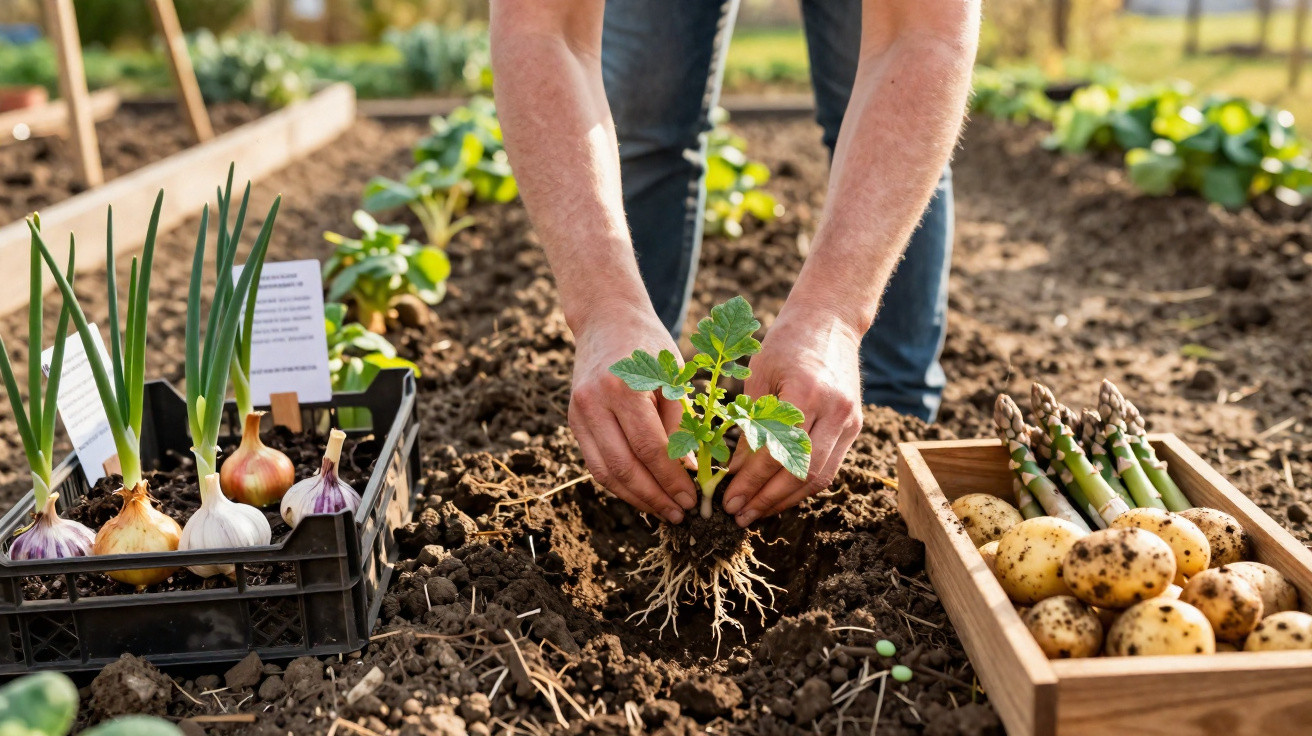
Many amateur gardeners reach for seed far too quickly in spring – and lose valuable weeks as a result.
Some vegetables perform much better when planted directly rather than grown from seed.
While the last of the winter moisture still lingers in the beds, many gardeners are already eager to start sowing. However, relying on seed alone at this point can slow down your harvesting schedule. Certain vegetables establish far more quickly and reliably when tubers, young plants or so-called “crowns” are put into the soil. The difference can easily amount to two to four weeks – and often affects the size of the harvest too.
Why planting instead of sowing saves so much time
The most vulnerable stage in a plant’s life is germination. A seed sits in cold, often still-wet soil, where it needs sufficient warmth and the right level of moisture while avoiding rot and fungal disease. With some crops, you can simply bypass this uncertain stage.
By planting young plants, tubers or bulbs, you avoid the delicate germination stage and gain an average head start of up to a month.
Whether you raise the young plants indoors yourself or buy them from a garden centre makes little difference. What matters is that they already have roots, are actively growing and can get going as soon as the soil has warmed slightly. This lets them make more efficient use of every ray of sunshine than newly emerged seedlings.
The ideal time to start: monitor soil moisture
However keen you may be, do not plant into soaking-wet soil. If the ground resembles a saturated sponge, tubers and roots may rot before they have a chance to establish.
- Turn over a small patch of soil with a spade.
- If the soil sticks heavily to the tool, it is still too early.
- If it falls apart into crumbs, you can begin.
This straightforward test is a more reliable guide to whether your bed is ready than any date on the calendar. Being patient at this stage greatly reduces disease and root damage.
These tubers and bulbs should be planted directly
Potatoes: the early starter for the vegetable bed
Growing potatoes from seed is impractical and very slow for ordinary gardeners. Chitted seed potatoes, on the other hand, give beds a real boost. Place potatoes that have already begun to sprout lightly in rows about 8–10 cm deep.
- Spacing between rows: approximately 60–70 cm
- Spacing within each row: 30–40 cm
- Position each tuber with the visible shoots facing upwards
This arrangement gives the tubers plenty of air, helps them dry more quickly and encourages growth once temperatures rise. It reduces fungal issues and makes early “new potatoes” possible before summer is properly under way.
Garlic, onions and shallots: small bulbs, major results
Members of the onion family are sensitive to waterlogging and cold during germination. Planting onion sets, garlic cloves and shallots is considerably safer than raising them from seed.
Plant onions and garlic with the pointed end facing upwards, covering them only lightly with loose soil.
Do not firm the soil down too hard, so that excess water can drain away freely. Planting too deeply or pressing bulbs into heavy soil increases the risk of rot. When planted correctly, they develop a strong root system early on and mature more dependably.
Perennial vegetables: when seed is simply too slow
Asparagus: a long-term project with “crowns”
Asparagus is a classic example of a vegetable for which seed is generally relevant only to professional growers. It can take a full three years to get from seed to the first proper harvest. So-called asparagus crowns – one- or two-year-old root systems – are a much more practical choice.
- Dig a deep trench around the width of a spade.
- Add a loose, sandy layer at the base.
- Spread the crowns out like small spiders, with the growing buds facing upwards.
- Fill the trench with loose soil without crushing the roots.
Good drainage is especially important here. If residual moisture remains in the soil for too long, the roots suffer – and the bed can remain weak for years.
Plant artichokes as potted plants
Artichokes love warmth and do not cope well with lengthy, cold germination periods. In the UK climate, sowing outdoors early in the year tends to produce slow results. Potted young plants are far more dependable.
Planting vigorous artichoke plants with a well-rooted root ball saves weeks of worrying about whether they will germinate.
Choose a sunny, sheltered spot with deep, nutrient-rich soil. Work plenty of well-rotted compost into the ground before planting. Artichokes remain in the same position for several years, so it is better to prepare the site thoroughly once than to make difficult corrections later.
How to prepare the soil gently
Loosen rather than dig over
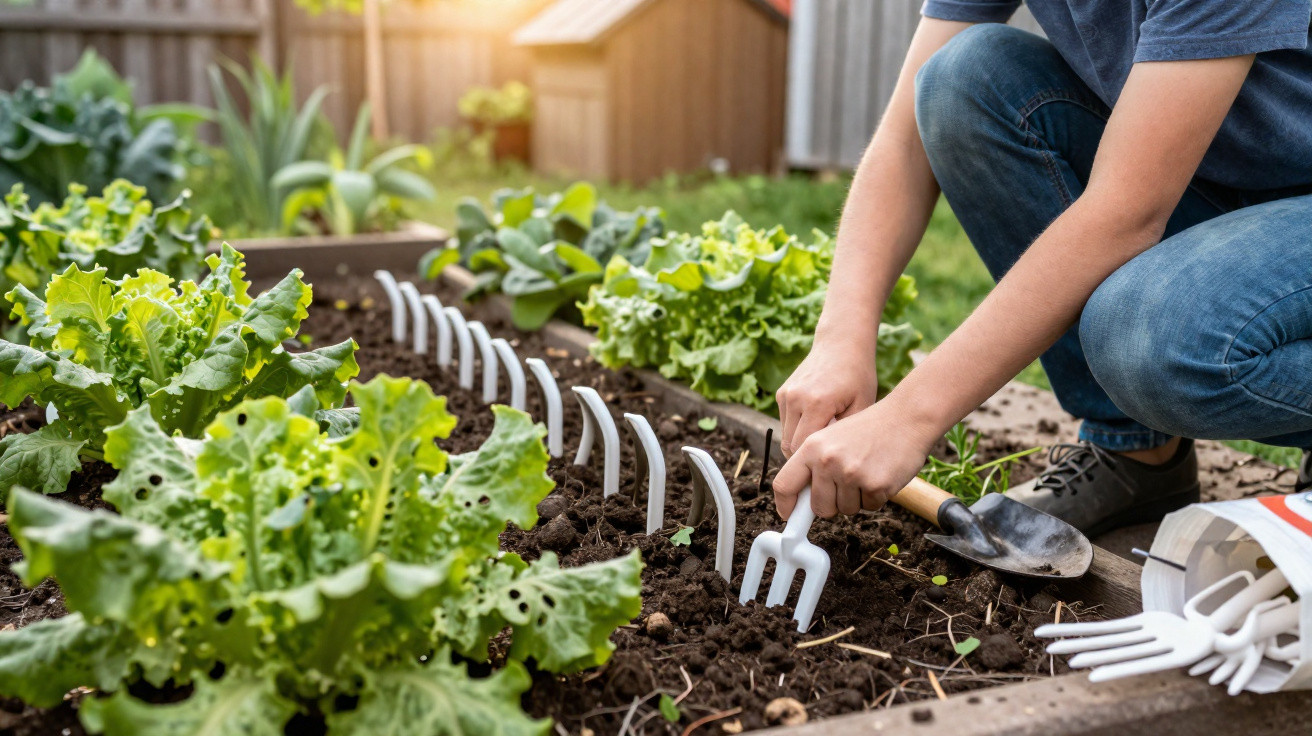
Many gardeners instinctively reach for a spade and turn over the entire bed. Yet this damages delicate soil structures and disrupts the microorganisms responsible for fertility. For established planting material, gentle loosening is often all that is needed.
- Use a broadfork, garden fork or cultivator.
- Push it in only 10–15 cm deep and lift slightly rather than turning the soil.
- Break up large clods by hand.
The soil warms more quickly, water drains away better and soil organisms largely remain where they belong. In return, your plants form roots faster.
Protect young plants from late frost
Vegetables planted early get away more quickly, but they remain vulnerable on cold nights. Even temperatures a few degrees below freezing can damage fresh shoots. A simple protective routine is therefore worthwhile.
- Keep lightweight fleece covers or thin horticultural fleece ready.
- Lay it over the beds on clear nights when frost is forecast.
- Air the beds during the day when temperatures are above freezing, preventing moisture from building up.
Small polytunnels or old window frames raised on bricks can also create a mini greenhouse. This protects your head start without requiring costly professional equipment.
Higher yields with a well-planned planting schedule
Which crops benefit most from young plants
Not every vegetable needs this shortcut; many can still be sown directly with excellent results. However, some crops benefit enormously when planted as pre-grown plants or planting material:
- Potatoes: quicker tuber formation, lower risk of fungal disease
- Garlic, onions and shallots: sturdier plants, a more even harvest
- Asparagus: harvesting after only a few years rather than after an “eternity”
- Artichokes: better establishment in cool springs
Planting these crops consistently instead of sowing them brings your entire harvest calendar forward. It leaves more room and time for typical warmth-loving crops such as tomatoes, peppers and courgettes, which are planted out later.
How an early start affects the rest of the garden
If you complete your planting tasks in late winter or early spring, you can approach the usual April rush more calmly. Beds for these “early risers” will already be occupied, allowing you to focus entirely on more sensitive crops under cover or indoors.
It is also useful that many of the plants listed are relatively robust and need little care once rooted in. This saves watering and stress later, when hot weather, holidays and tomato care all compete for attention.
Useful extra tricks for a strong start to the season
Using bed edging, compost borders or dark mulching materials in spring can raise the soil temperature by a few more degrees. Dark surfaces absorb more solar warmth and release it gradually during the evening. Tubers and bulbs in particular respond with faster shoot growth.
Clearly marking rows with string, canes or stones is equally helpful. Planted vegetables often emerge earlier than their conventionally sown neighbours, so beds soon become crowded. If you can no longer see what is planted where, it is easy to tread on young shoots or accidentally hoe into tubers.
Over time, many amateur gardeners settle into a regular annual rhythm: first come the “planting vegetables” such as potatoes, onions, asparagus and artichokes. Typical direct-sown crops, including carrots, radishes, spinach and lettuce, follow afterwards. Once you have adopted this sequence, you will make better use of every season and can reliably enjoy full harvest baskets well before midsummer.
Comments
No comments yet. Be the first to comment!
Leave a Comment