
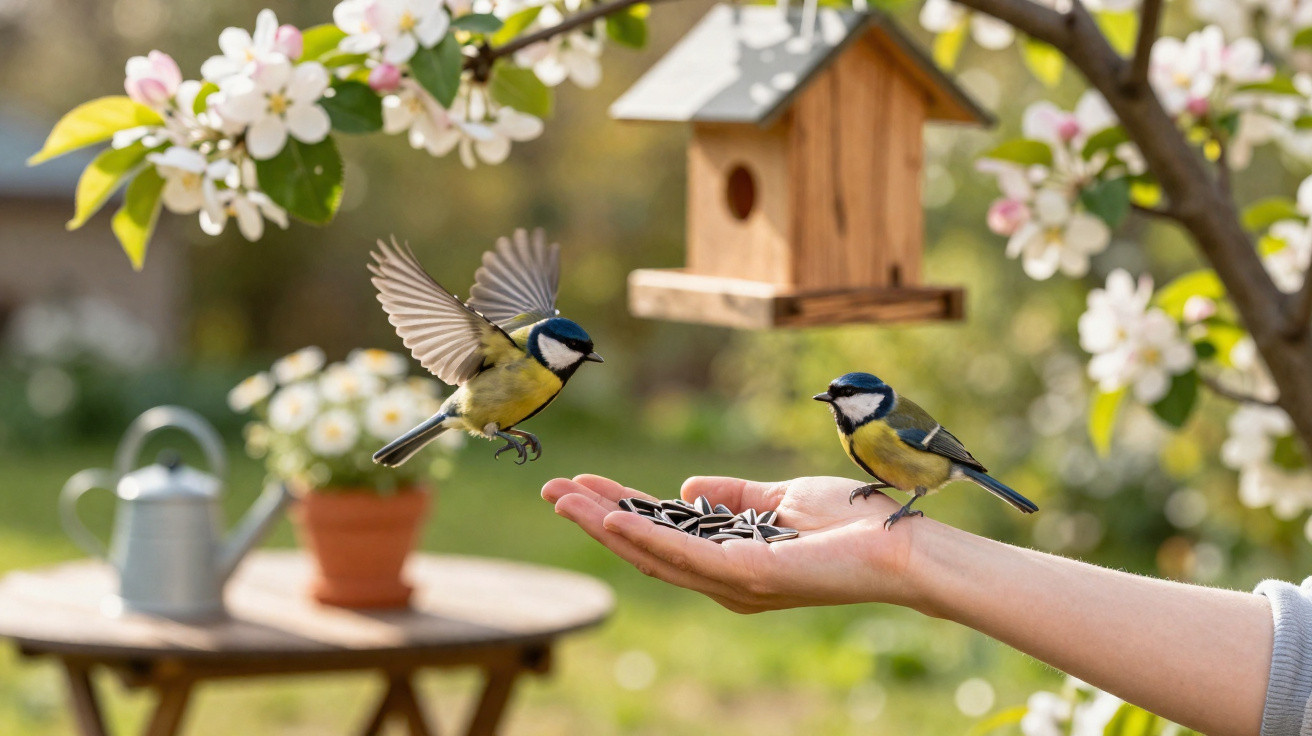
It could instead be full of tits, song and life.
Many amateur gardeners dutifully put up a nest box in spring, then wait in vain for a flash of colourful wings. The reason is that one box is rarely enough to genuinely attract tits. Anyone hoping to keep great tits and blue tits in the garden long term needs to see the whole space as a small, living woodland habitat, with food, shelter, dense planting and safe nesting places.
Why tits avoid your garden in the first place
Tits are inquisitive, quick and adaptable, yet they are selective about where they breed. A closely mown lawn, one isolated tree, and otherwise just gravel and thuja will feel more like a desert than a home. Above all, they are looking for three things: safety, food and variety.
“A garden only becomes interesting to tits when it works like a small ecosystem, rather than a sterile showroom.”
The more “tidy” a plot appears, the less appealing it is to birds. Paved areas, gravel gardens, noisy robotic lawnmowers and constantly clipped hedges deprive tits of the peace and structures they need. They will instead favour older gardens with mature trees, ivy-covered walls, hedges and plentiful insects.
The overlooked trick: preserve natural nesting sites
Nest boxes are useful, but they are only one part of the picture. Bird conservation specialists repeatedly stress that the most important measure is often to retain what is commonly removed without hesitation: cracks, crevices, old trees and weathered walls.
Where tits nest in the wild
- Cavities in old trees or dead branches
- Gaps in walls, beneath roof tiles or around timber cladding
- Hollows in old fruit trees
- Dense hedges with sheltered inner sections
Many homeowners renovate, insulate and seal every joint in their house. While this looks neat, it removes traditional nesting places for birds. Leaving a few recesses during renovation work, or incorporating separate nesting bricks, can quickly make a property more attractive to tits, sparrows and swallows.
“Every crack, every tree hollow and every gap in a wall can mean the difference between ‘I’ll stay here’ and ‘keep flying’ for a tit.”
Using nest boxes properly: position, height and direction
A well-intentioned nest box may have no effect if it is hung incorrectly. Tits are particular about both its location and design.
- Height: Around two to four metres above the ground is ideal, keeping it beyond the reach of cats, martens and children’s hands.
- Direction: A slight east or south-east orientation protects it from driving rain and the midday heat.
- Peace and quiet: Do not place a nest box directly beside the patio or next to doors that are constantly used.
- Protection: Position it as close as possible to shrubs or trees, so fledglings can find cover after leaving the nest.
- Cleaning: Empty it once a year in late summer to prevent parasites building up.
The entrance hole must also be the right size. For great tits, a diameter of about 32 millimetres is usually sufficient, while blue tits need closer to 28 millimetres. If openings are too large, predators can gain easier access.
No insect food, no young tits
When people think of tits, sunflower seeds or fat balls are often the first things that come to mind. During the breeding season, however, these are not enough. Parents need huge quantities of insects and larvae to raise their chicks. A single brood of tits consumes thousands of small insects.
Which plants provide food for tits
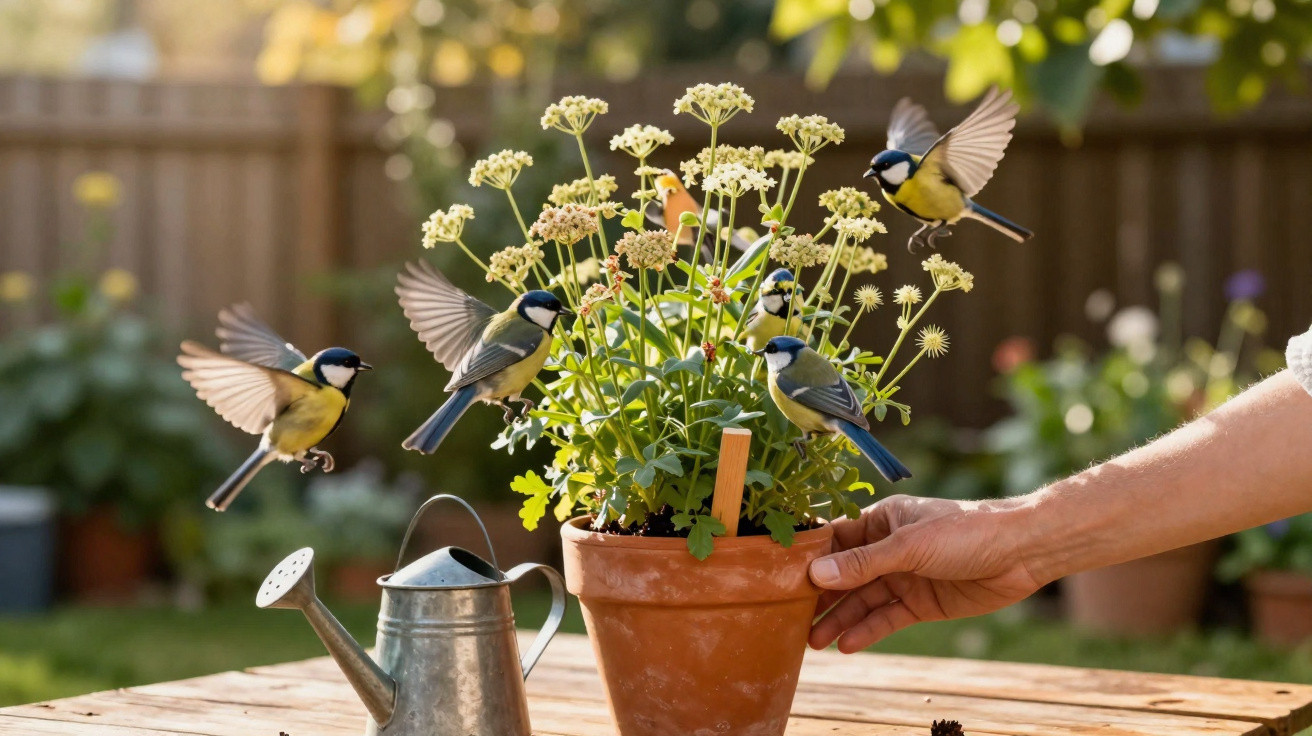
The most important “tit method” in the garden is therefore to choose plants that attract insects and provide seeds. Native species are particularly valuable.
- Flowering wild perennials such as oxeye daisies, viper’s bugloss, knapweeds and wild marjoram
- Native shrubs such as hazel, elder, blackthorn, hawthorn and dog rose
- Flowering herbs such as thyme, oregano, sage and chives
- Meadow flowers instead of a uniform lawn, including clover and bellflowers
“The more buzzing, crawling and fluttering there is in a flower bed, the greater the chance that tits will stay and breed successfully.”
Garden-centre plants with double flowers or heavily bred varieties may look magnificent, but they often offer insects barely any nectar or pollen. As a result, birds lack a reliable food supply.
Hedges instead of fences: structure brings life
A bare lawn is still considered “low maintenance”, but for tits it is simply uninteresting. They need structures at different heights: ground cover, perennials, shrubs and trees. Hedges play a particularly important role.
How to turn a hedge into a hotspot for tits
- Mix different woody plants: for example, privet, hawthorn, cornelian cherry and dog roses.
- Avoid close clipping: rather than constantly shaping it, allow periods of dense, natural growth.
- Protect the interior: do not clear everything out; leaves and small branches within the hedge provide shelter.
- Plan pruning carefully: do not cut back radically during the breeding season from March to August.
Berry-bearing shrubs serve several purposes at once: they provide food, cast shade and create safe hiding places among their branches. Even dried fruit remains valuable in winter.
Weather protection and safety for small songbirds
Heavy downpours, storms and late frosts can affect tits considerably. Dense evergreen shrubs therefore offer a real advantage. Cherry laurel, yew (take care: highly toxic to people), holly or honeysuckle can provide year-round cover.
“A garden becomes a ‘four-season hotel’ for birds when it still has hidden, sheltered corners in January.”
Protection from cats and martens is also important. Anyone wishing to safeguard their tits should consider:
- Barbed wire or smooth collars on sections of trunk supporting nest boxes
- Avoiding bird feeding stations immediately beside dense shrubs from which cats can pounce
- Quiet zones without constant noise, party lighting or continually operating robotic lawnmowers
Think of the garden as a small ecosystem
The surprisingly most effective “method” for attracting more tits is not an unusual gadget, but a change in perspective: move away from the decorative garden and towards a living habitat. Those who allow plant diversity, leave fallen leaves in place occasionally and tolerate dead wood will attract beetles, spiders and larvae - and therefore tits as well.
Even a small area is enough to begin: a wild corner by the fence, a more natural perennial bed or a tiny “mini woodland” containing shrubs and a tree. Many birds use such islands as stepping stones through built-up areas.
How wild can you let the garden become?
Many residents worry that a nature-friendly garden will look neglected or cause problems with neighbours. A compromise can help: keep edges facing the path neat and make routes clearly recognisable, while deliberately leaving areas behind them wild. This maintains an orderly appearance while still delivering considerable benefits for tits and other species.
Anyone unsure can contact local conservation groups. They often offer practical advice on which shrubs are suitable for the region, and may even organise plant-swapping events. Some local authorities now actively support nature-friendly gardens.
Practical additions for beginners
For anyone wanting to get started in the same spring, several quick measures are suitable:
- Put up, or reposition, at least one species-appropriate nest box
- Stop mowing part of the lawn every week and allow it to become a flowering meadow
- Plant one or two native berry-bearing shrubs
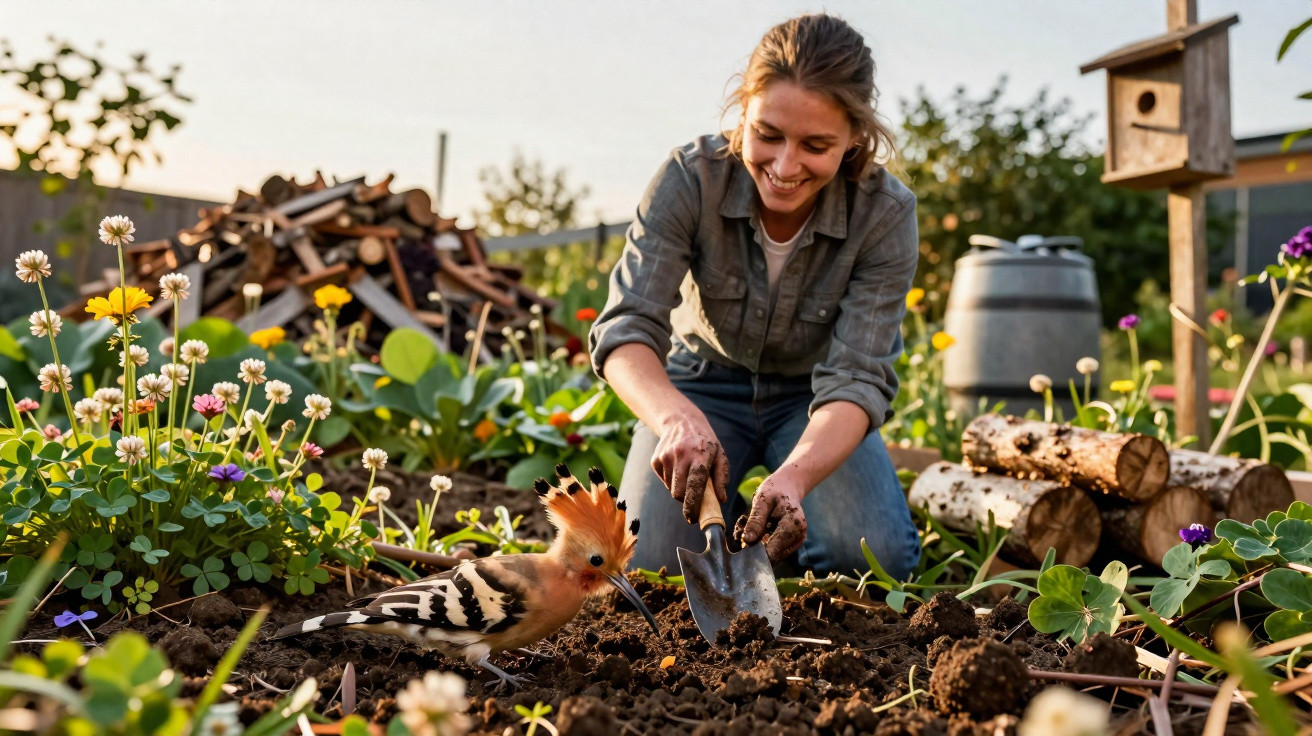
- Create a small pile of wood or leaves as an insect shelter
- Avoid chemical pesticides so insect populations can recover
The effect comes from combining these measures: more insects, more shelter and more structure - and therefore a greater chance that tits will not merely pass through in spring, but will truly stay and raise their young.
Comments
No comments yet. Be the first to comment!
Leave a Comment