
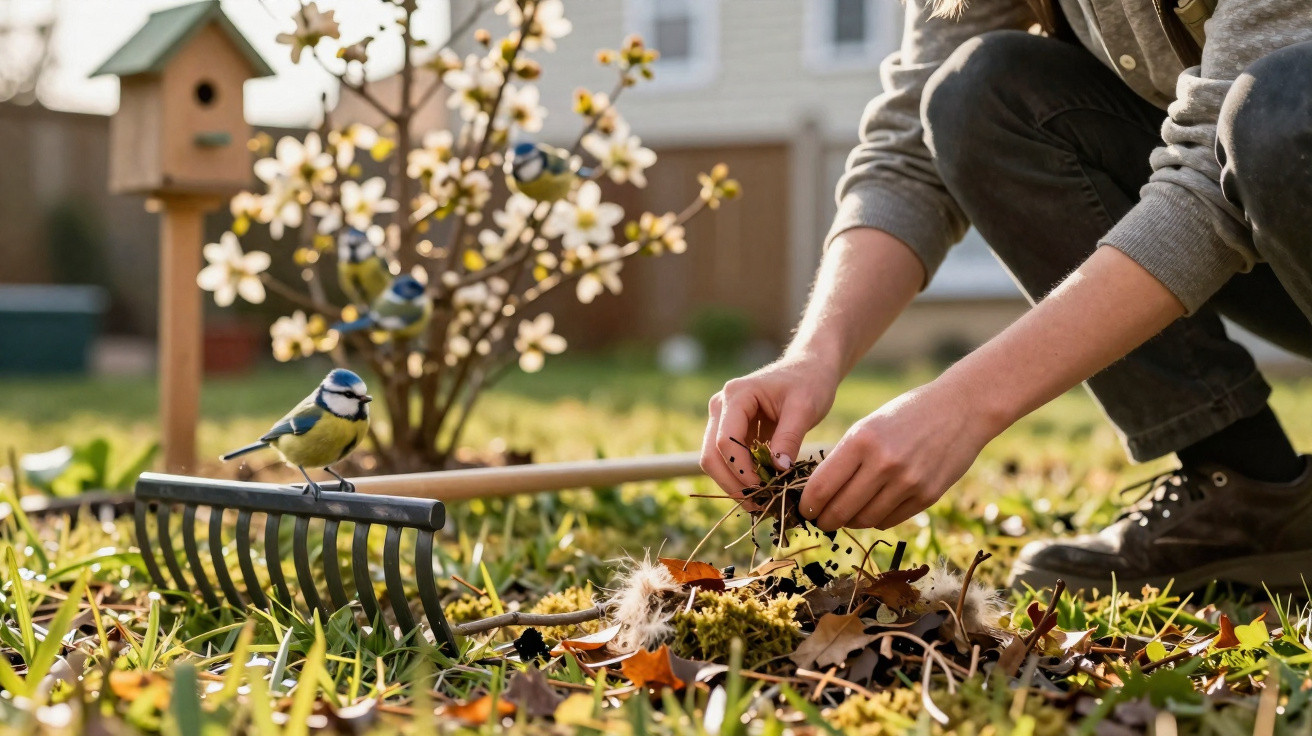
While we gather leaves, sweep away cobwebs and scrub moss from stones, tits spend day and night carrying material for their nests. What looks like “tidiness” to us means stress, lost energy and, in the worst case, failed broods for these birds. By following a few straightforward rules, you can tidy your garden while still keeping it a haven for these small insect hunters.
Why the April tidy-up becomes a source of stress for tits
Tits begin their breeding season early. In Central Europe, the main nesting period broadly runs from mid-March to mid-August. The crucial nest-building stage takes place in spring, as daylight hours lengthen, pairs form and claim a nesting site – whether in an old tree, a gap in a wall or a nest box.
At this point, the birds are working at full speed. Around the middle of April, a great tit can make an astonishing 500 flights a day, continuing at that pace for roughly 10 to 15 days. Every journey has a purpose: a blade of grass, a piece of moss, an animal hair or a strand of spider silk. None of it is collected by chance.
“While we are ‘tidying’ the garden, we often remove precisely the things tits urgently need to build their nests.”
For the birds, this means that the farther they must travel to find suitable nesting material, the more energy they expend – and the greater the risk to the brood, especially during cool or rainy spells.
Garden materials to leave in place for tits
The good news is that tiny changes in behaviour can make a huge difference to tits. This is not about letting the garden become overgrown; it is about deliberately leaving certain things alone. A few inconspicuous materials, often treated as “mess” in many gardens, are what matter most.
Moss – natural insulation
Moss on lawns, stones or old tree trunks bothers many gardeners. For tits, however, it is extremely valuable. They pack it into the nest cup, using it as natural insulation. It keeps the eggs, and later the bare chicks, warm even when the adult birds leave to search for food.
For this reason, leave patches of moss beneath hedges, beside walls or in little-used areas. If you feel the need to make things tidier, gather the moss loosely into a pile rather than removing it altogether.
Cobwebs – the invisible binding material
Cobwebs are often removed automatically – from sheds, carports and beneath roof eaves. To tits, they are an elastic adhesive. The birds use the fine threads to reinforce their nests, fill gaps and hold the structure together without making it rigid or brittle.
Avoid sweeping every corner for a few days or weeks; it can make all the difference, particularly in places that people rarely use.
Nest-building materials: twigs, grass stems and leaves
The things that are usually the first to go into the garden-waste bag when raking form the basic framework of a tit’s nest:
- fine twigs and small branches
- dry grass stems
- old leaves and plant debris
Rather than raking every area completely bare, create a neat-but-slightly-messy section: an area where leaves, stems and small twigs are intentionally left behind. A spot beneath hedges or shrubs is ideal, as birds already like to look for materials there.
Animal hair – luxurious lining for chicks
Anyone with a dog or cat can help the birds directly. Brushed-out fur provides the soft inner lining of a nest. Adult birds raise their young on it, helping to prevent them from becoming chilled or developing pressure sores.
One simple option is to place the hair in an empty wire fat-ball feeder and hang it in a shrub. Tits can then take exactly what they need. There is one important exception: do not offer fur if the animal has recently been treated for parasites.
Benefits for the garden and vegetable patch
A garden that retains some “life” in the form of structural debris gains several advantages. Areas with longer grass, leaf piles or dead wood support far more insects, including spiders, beetles, caterpillars and larvae. These are exactly the small creatures tits need once their chicks hatch.
The birds are genuine allies for vegetable growers. Over the course of raising one brood, a single pair of great tits can catch between 6,000 and 9,000 caterpillars and other insects. Blue tits and great tits are especially fond of aphid and winter moth caterpillars – common pests on fruit trees and shrubs.
“Those who support tits can often avoid using sprays against caterpillars and other pests – the birds do much of the work.”
By accepting moss, cobwebs, grass stems and leaf litter, you indirectly encourage this natural pest control. The result is more reliable harvests, healthier fruit trees and fewer chemicals in the garden.
When to carry out the major garden tidy-up
Timing is the key factor. During the nesting and chick-rearing period, broadly from mid-March to mid-August, avoid drastic clearing. A gentler approach is entirely sufficient at this time:
- keep paths clear so that nobody trips
- remove loose branches that could become hazardous
- trim hedges carefully rather than cutting them back hard
- leave leaf piles and structurally rich corners undisturbed wherever possible
Save any really major pruning for autumn. Once the breeding season has ended, thorough cutting back or more vigorous raking is far less disruptive to tits. During the peak bird-breeding season, avoid using powered leaf blowers where possible. They do not only scatter materials; they also damage insect habitats and create stress through noise.
Nest boxes help – but only alongside natural materials
Nest boxes are a useful addition, but they are not a free pass. They cannot replace a wildlife-friendly garden. If you put up boxes, position them around two to four metres above ground in a quiet location, ideally facing south-east so that the box does not overheat.
However, if you simultaneously remove every cobweb, clear away leaves and moss, and keep every corner clinically clean, you deny tits the materials they need to furnish the inside. A nest box combined with accessible natural nesting materials is what truly attracts the birds.
How much “mess” is reasonable in a terraced-house garden?
Many gardeners face a balancing act: they want to consider their neighbours while still doing something positive for wildlife. There is no need to create a wilderness. Even modest measures can have an effect:
- one small “wild corner” behind the garden shed
- a leaf pile beneath the hedge instead of removing every leaf
- a strip of longer grass along the fence
- deliberately retained cobwebs in less visible places
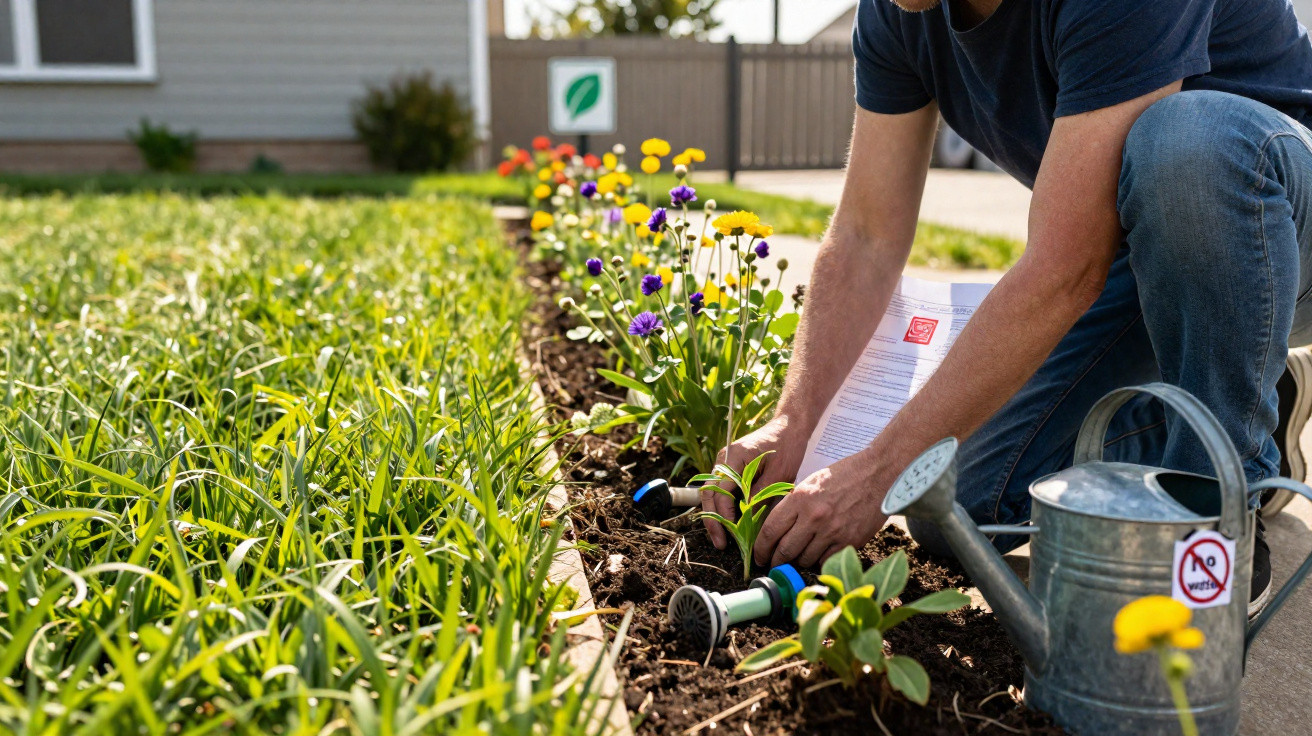
If you wish, a simple sign saying “Here we help birds and insects” can prevent misunderstandings. Neighbours often respond positively once they know that the apparent untidiness has a purpose.
Common spring-cleaning mistakes – and how to avoid them
Typical actions that make life harder for tits include:
- clearing completely beneath hedges and shrubs
- thoroughly sweeping away all cobwebs in the shed
- intensive lawn scarification in the middle of the breeding season
- using leaf blowers in April and May
Even small adjustments can have a major effect: postpone lawn scarification until autumn, do not remove all leaves but collect them in one corner, and clear cobwebs only where they are in the way or cause hygiene issues.
A few extra tips for happier birds in the garden
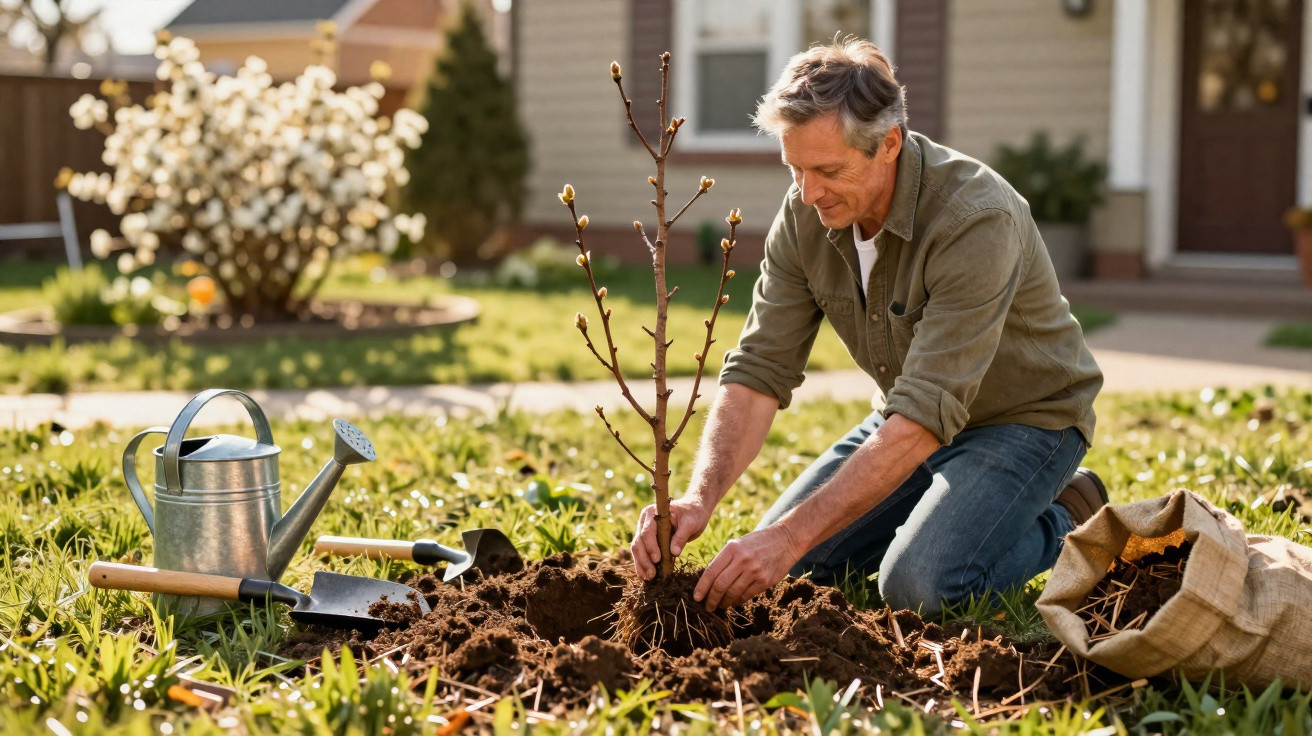
Anyone wishing to go a step further can plant native shrubs that attract insects and provide shelter, such as hazel, hornbeam, hawthorn or blackthorn. These features offer food sources, hiding places and additional nesting opportunities for a range of species.
It is also worth taking a critical look at plant protection products. Many “all-purpose” treatments affect not only pests but also the insects on which tits feed. Fewer sprays mean more food for young birds – and therefore a more stable population in your own garden.
Ultimately, success does not depend on major projects but on a different perspective: moss, cobwebs, leaves and animal hair are not signs of neglect. They show that a garden is more than a manicured green space – it is a habitat in which tits can use their 500 daily flights for their chicks rather than battling against the broom.
Comments
No comments yet. Be the first to comment!
Leave a Comment