
For many gardeners, it feels almost magical.
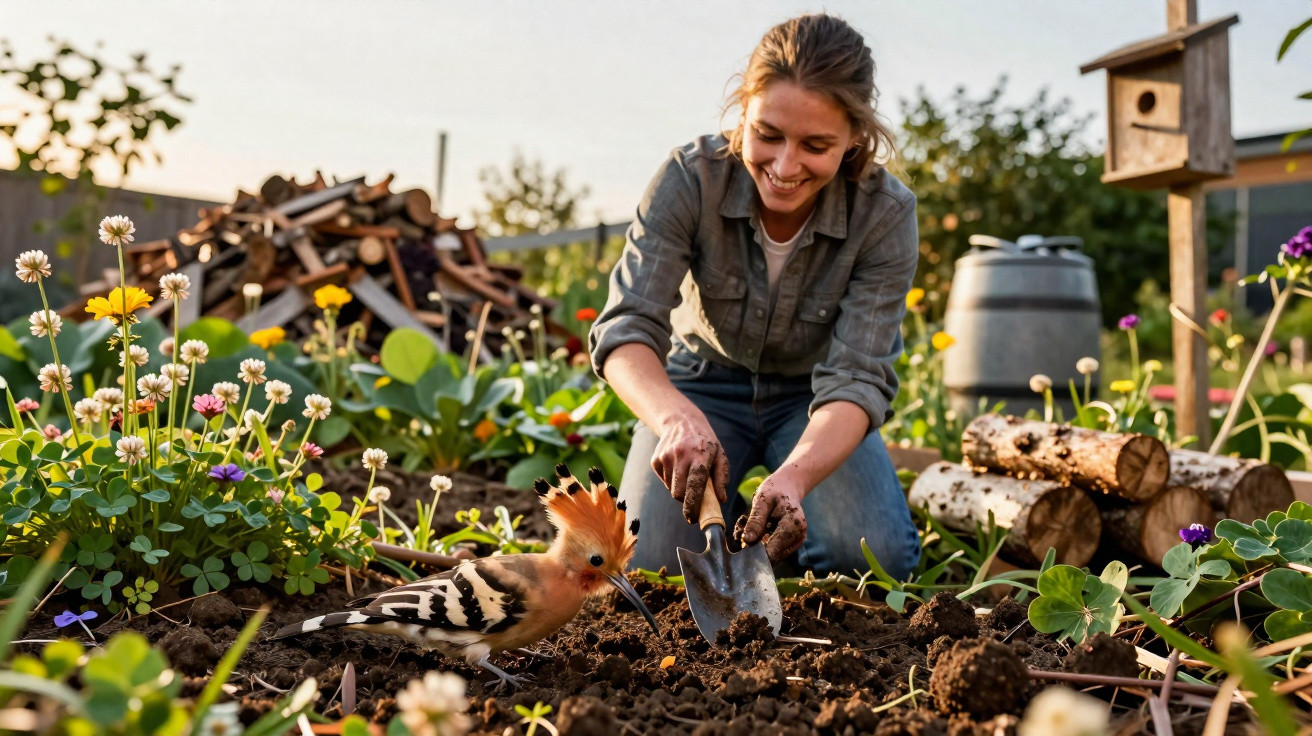
The sight could have come straight from a wildlife documentary: a slender bird with black-and-white patterned wings, a long bill and a crest it can raise. Anyone spotting such a visitor in the garden is bound to wonder whether it is chance or a sign. The appearance of the species known as the hoopoe is much more than a pretty photographic opportunity – it reveals a great deal about the soil and, to some extent, the future of the garden itself.
A ground-feeding specialist: what the hoopoe reveals about your garden
The hoopoe feeds on creatures that crawl beneath our feet. Using its long, curved bill, it probes loose soil and pulls out its preferred prey: grubs, cockchafer larvae, crickets, beetles, caterpillars and other insects that live in the ground.
“Where a hoopoe feeds regularly, there is an active, living soil ecosystem beneath the turf – and significantly less chemical treatment.”
As it eats almost exclusively ground-dwelling insects, the bird only appears where these animals are plentiful enough. This is only possible where the soil:
- has received little or no insecticide treatment;
- retains some moisture and has a loose structure;
- contains organic matter that supports soil life.
If a hoopoe returns repeatedly or even stays for several days, this suggests:
- a strong food supply in the soil;
- a garden managed with few or no pesticides;
- a reasonably peaceful setting, with limited noise and constant disturbance.
For gardeners, its visit also has a very practical benefit. Many of the larvae eaten by the bird are regarded as pests, capable of feeding on roots or damaging lawns. The hoopoe therefore acts as a small, airborne pest controller – entirely free and requiring no poison.
Why your garden? The hoopoe’s habitat requirements
This bird has fairly precise expectations of its surroundings. It favours open, sunny areas with closely cut grass, ideally broken up by strips of bare ground. Typical habitats include vineyards, traditional orchards and lightly vegetated meadows, as well as larger, quiet domestic gardens.
From the hoopoe’s point of view, the best gardens combine the following features:
- short sections of lawn;
- edge strips with low-growing vegetation or patches of open ground;
- old trees, cracks in walls or nest boxes with suitable cavities;
- a generally calm environment without persistent noise and activity.
“A garden to which the hoopoe returns functions as a small refuge within an otherwise intensively used landscape.”
The bird avoids heavily sealed, over-designed spaces with gravel gardens, artificial turf and continual activity. Anyone receiving regular visits has, perhaps without realising it, turned their plot into a small oasis for demanding species.
A migrant with exacting needs: route and distribution
The hoopoe spends winter south of the Sahara. It travels from there to Europe in spring, usually reaching central Europe during the course of the season. Sightings become more frequent from around April, and most birds remain until late summer.
In central Europe, the species is concentrated mainly in warmer, drier areas and varied cultivated landscapes. The hoopoe is still considered rare across many regions. Although the chances of seeing one increase in more southerly parts, it remains an unexpected visitor in northern areas.
Its presence north of its traditional distribution range may indicate two things:
- The particular garden provides exceptionally appealing conditions.
- The species is responding to climate change and gradually extending its breeding range.
Conservation organisations point out that populations declined sharply during the 1990s, largely because of more intensive farming and heavy pesticide use. Numbers have only begun to stabilise again since the 2000s, in some places showing a slight upward trend. Even so, the hoopoe remains scarce in many areas and is protected.
An ancient symbol of guidance and new beginnings
This striking bird is not only biologically fascinating; it also has a long symbolic history. In eastern traditions, the hoopoe is regarded as a guiding figure, a bird that leads others on a search for meaning and truth. Its crown-like raised crest has earned it the nickname “king bird”.
In historic depictions, it represents gratitude, loyalty and rising again after difficult periods. Those who hear its “hup-hup-hup” call in early spring often associate it with the beginning of the warmer season, renewal in the garden and a fresh start in everyday life.
“Many people regard the first hoopoe of the year as a small personal sign: the quiet season is ending, and something new is beginning.”
This fits with its ecological message. Wherever it appears, a fragment of living landscape has survived – despite land sealing and chemical use in many regions.
How to make your garden a safe haven for the hoopoe
Anyone hoping to see this elegant insect hunter more often can help with a few straightforward measures, without completely redesigning the garden.
Garden without poisons
The most important step is to avoid insecticides. Products intended to kill pests also remove the bird’s food supply. Choosing mixed planting, hardy varieties, mulch and mechanical methods instead will naturally encourage soil life – and, in turn, create a food buffet for the hoopoe.
Structure rather than perfection
A perfectly clipped, uniformly dense lawn may look tidy, but it offers little life below ground. A better approach is a mix of:
- areas of shorter-mown grass for feeding;
- small corners with taller growth;
- a few bare patches of soil that are not constantly raked over.
Those who wish can simply allow an edge strip to grow more naturally, with wild herbs and flowering plants. Insects find habitat there, and this activity later continues beneath the turf.
Provide nesting sites – and tolerate the smell
Hoopoes readily breed in tree cavities, crevices in walls, old sheds or purpose-built nest boxes. To protect their young, the species uses an unusual strategy: the nest cavity has a strong smell because the birds secrete a pungent substance. This deters predators, although people may find it takes some getting used to.
“Anyone wanting to help the bird needs a little tolerance for smells – the reward is a fascinating insight into a rare breeding attempt.”
What the hoopoe means for soil, climate and garden management
The fact that this bird is once again being seen more often in central European gardens can be read as a quiet signal. It shows that wildlife-friendly gardens, reduced chemical use and more varied landscapes bring benefits.
| Aspect | What the hoopoe indicates |
|---|---|
| Soil quality | High diversity of insects in the soil, few toxins, stable soil structure |
| Garden care | Restrained use of pesticides and more room for nature |
| Climate change | A possible shift in the distribution range towards more northern regions |
| Nature conservation | An indication of valuable small-scale habitats in residential areas |
For amateur gardeners, it is worth paying attention to the details. Loose, humus-rich soil containing plenty of earthworms and insect larvae keeps plants healthier, retains water more effectively and withstands dry spells for longer. These are exactly the conditions valued by the hoopoe. Taking soil care seriously – through compost, layers of mulch, minimal digging and diverse planting – creates a double benefit: resilient plants and attractive conditions for rare species.
At the same time, the bird demonstrates how strongly our small-scale actions can matter. Fewer gravelled areas, more native shrubs, a pile of deadwood, some untidy growth at the edge and a deliberate decision not to use poisons can be enough to encourage a bird from Africa to settle in the garden. For many people, this is a powerful moment: it offers a direct view of how even an ordinary domestic garden forms part of larger ecological connections – and how one bird can reveal much about soil, climate and the future design of our gardens.
Comments
No comments yet. Be the first to comment!
Leave a Comment