
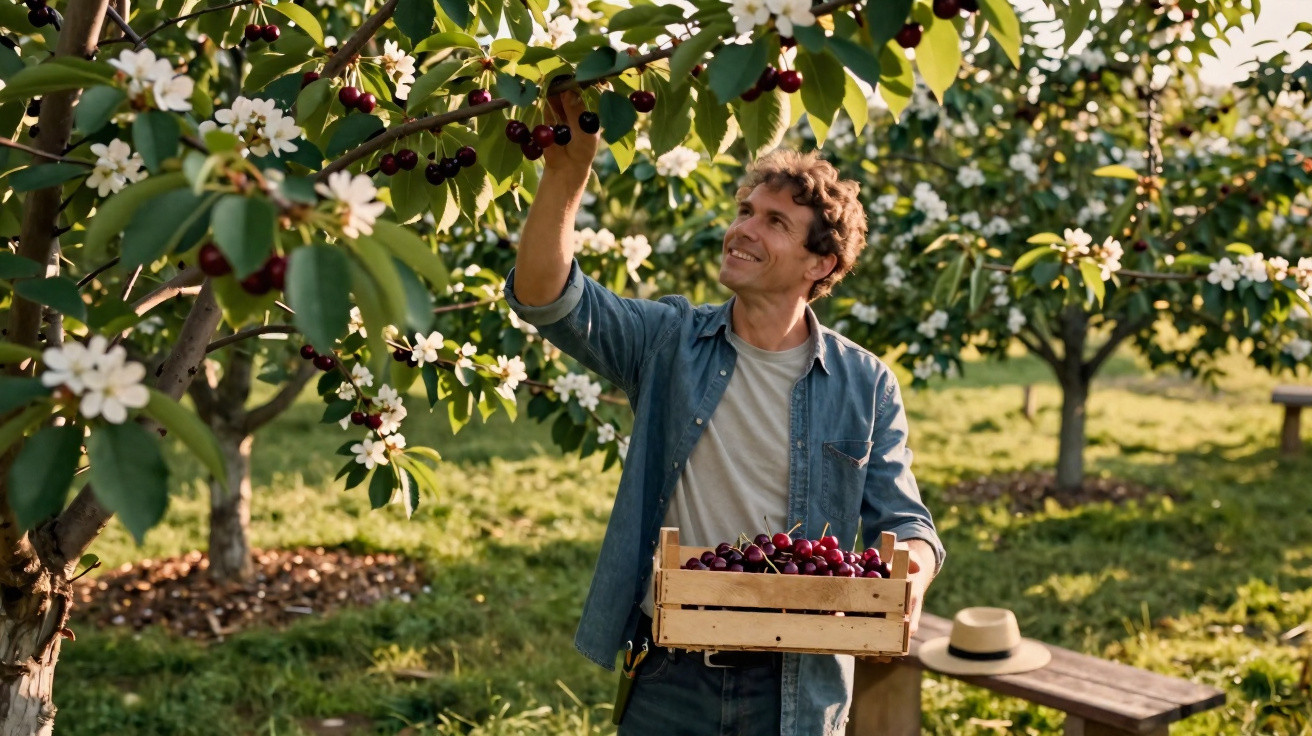
Many amateur gardeners know the frustration: the cherry blossom looks spectacular, then a frosty night or prolonged rain arrives – and the crop is lost. A cherry tree that copes better with cold, wet weather and unpredictable conditions while also producing an abundance of fruit sounds almost too good to be true. Yet such a variety does exist, having been selected in Germany as far back as the 19th century.
An almost forgotten classic: ‘Géant d’Hedelfingen’
The variety is called ‘Géant d’Hedelfingen’, and is generally known in German as ‘Hedelfinger Riesenknorpel’ or ‘Hedelfinger Riesenkirsche’. It originated around 1850 in Hedelfingen, near Stuttgart, and belongs to the sweet cherry group (Prunus avium). It usually reaches 4 to 6 metres in height and spreads to around 3 to 5 metres wide. Growth is moderately vigorous, with upright main branches and slightly drooping fruit-bearing branches.
From mid-July onwards, the tree carries its distinctive fruit: large cherries that range from deep red to almost black, with firm, crisp and exceptionally juicy flesh. They have a sweet flavour with a subtle spiciness typical of heritage varieties. The cherries are suitable for:
- eating straight from the tree;
- traditional cherry cakes and variations on clafoutis;
- jam, compote and bottling;
- juice and – for professionals – kirsch.
“One tree alone can supply a family with baskets full of cherries every year – without demanding complicated care.”
Why this cherry tree crops so reliably
The variety’s key strength lies in its unusual fruiting habit. The tree forms so-called ‘May bunches’: small clusters of flower buds arranged on short shoots. These bunches remain productive for several years, often for roughly four years in the same position.
This brings two benefits that gardeners value:
- Consistent yields on the same branches: the same shoots can provide good harvests over several consecutive seasons.
- Less pruning required: generally, it is enough to thin the crown lightly rather than carrying out complex annual fruiting-wood pruning.
There is, however, one important point to bear in mind: picking the fruit too roughly can pull away parts of the May bunches along with the stalks. Damaging these clusters means the branch may produce fewer cherries in that area over the following years.
The most important harvesting advice for this variety is therefore to pick gently – ideally with the stalk attached, without tugging at the bunches.
Frost hardy to -15 °C and late flowering
Its resilience to the climate is what makes Hedelfinger Riesenknorpel particularly appealing. The tree itself tolerates temperatures approaching -15 °C and, in many areas, even slightly lower figures if the site is suitable. For amateur gardeners, though, its relatively late flowering period is especially important.
Depending on the region, this cherry tree opens its flowers from late March into April. In cooler locations, flowering is pushed back even further. A late bloom means that the variety’s flower buds often avoid the harsh March nights during which many other cherries are already in full flower and can then be damaged by frost.
“Late flowering combined with frost-hardy wood means that the tree can still set fruit even in difficult springs.”
The variety also usually copes well with unsettled summer weather. Heavy showers in July are less likely to make its fruit split than they are with more sensitive sweet cherries. Anyone who has seen an entire tree covered in split cherries after a thunderstorm will understand how much disappointment this can prevent.
A valuable pollinating partner for other cherry varieties
Hedelfinger Riesenknorpel not only produces plentiful cherries itself; it also benefits neighbouring trees. Its very abundant flowers provide bees with generous quantities of nectar and pollen. This makes the tree something of a “turbo pollen donor” for other sweet cherry varieties in the garden.
Typical varieties that benefit from it include:
- ‘Burlat’ (an early sweet cherry);
- ‘Napoleon’ (a pale yellow-red bigarreau cherry);
- ‘Moreau’;
- ‘Van’.
If these varieties grow within the bees’ usual flight range – broadly within 30 to 40 metres – the likelihood of abundant pollination rises considerably. Gardeners planning their space carefully should therefore combine Hedelfingen with one or two other varieties that ripen at slightly different times. This extends the home-grown cherry season by several weeks.
How to plant this frost-hardy cherry tree correctly
The best planting period runs from November to March, provided the ground is not frozen. Many amateur gardeners prefer late winter or early spring, once the soil is no longer waterlogged.
Choosing the right site for Hedelfinger Riesenknorpel
This variety thrives in sunshine. A south- or south-west-facing position that is sheltered from wind and free-draining will produce the best yields. The soil should be:
- deep and loose;
- preferably loamy or sandy loam;
- well drained;
- neutral in pH.
For planting, dig a hole measuring about 60 x 60 centimetres and loosen the soil thoroughly. Mix the excavated soil with well-rotted compost rather than fresh manure. Water the tree well after planting, then mulch the root area with bark mulch or grass clippings, for example.
Selecting the rootstock
The rootstock chiefly determines the tree’s vigour:
- Vigorous rootstock (for example wild cherry): produces a large, long-lived tree suitable for traditional orchards and very large gardens.
- Less vigorous rootstocks: restrict the height, make the crown easier to reach and are the better option for domestic gardens.
In smaller gardens, it is worth choosing a dwarfing rootstock and training the tree as a half-standard or bush tree. This keeps the crop within reach without a ladder, which is especially valuable for children and older people.
Care: few interventions, considerable results
During the first years after planting, the tree needs regular watering, particularly in dry springs and summers. A substantial layer of mulch helps the soil retain moisture for longer. Applying well-rotted compost around the trunk once a year, preferably towards the end of winter, is sufficient to feed the tree.
Pruning usually only needs to involve lightly thinning the crown, taking out inward-growing or crossing branches, and carefully cutting back old areas that have cropped heavily. Avoid drastic pruning, as it merely encourages water shoots and drains the tree’s energy.
“Less is more here: light maintenance pruning and careful picking protect the May bunches and therefore the yields.”
Fewer sprays, greater ecological benefits
This variety is considered relatively robust against many common cherry diseases. It is not especially prone to fruit rot and, under normal conditions, shows little susceptibility to leaf diseases. It can never be entirely problem-free – wet summers may still encourage brown rot or leaf spot. Overall, however, it is very well suited to naturally managed gardens where the aim is to use as few chemical plant protection products as possible.
Creating a species-rich environment also helps, for instance with flowering strips, insect hotels, hedges and nesting sites for birds. This builds a natural protective barrier, allowing beneficial organisms to control many pests before they can cause significant damage.
Practical tips and common mistakes with this variety
A few points make getting started considerably easier:
- Do not plant in overly wet ground: in hollows where water collects, cherry trees quickly become vulnerable to root problems.
- Water for the first two years: although the variety is robust once established, young trees require regular watering.
- Harvest with the stalk attached: this protects the May bunches and helps the fruit keep for longer.
- Use netting to protect against birds: once the fruit begins to colour, a wide-mesh net can save an entire crop.
Those who take these points into account have a good chance of bringing home baskets full of cherries even in years affected by late frost or heavy rain. Many gardens across German-speaking regions could benefit from this old variety, but it is now offered too rarely and is simply unfamiliar to many younger amateur gardeners.
It is worth checking regional tree nurseries or variety lists for old orchards. Hedelfinger Riesenknorpel often still appears there, sometimes under a slightly altered name. Choosing this classic deliberately brings a piece of fruit-growing history into the garden – and provides more independence from the weather than might be expected from a sweet cherry.





Comments
No comments yet. Be the first to comment!
Leave a Comment