
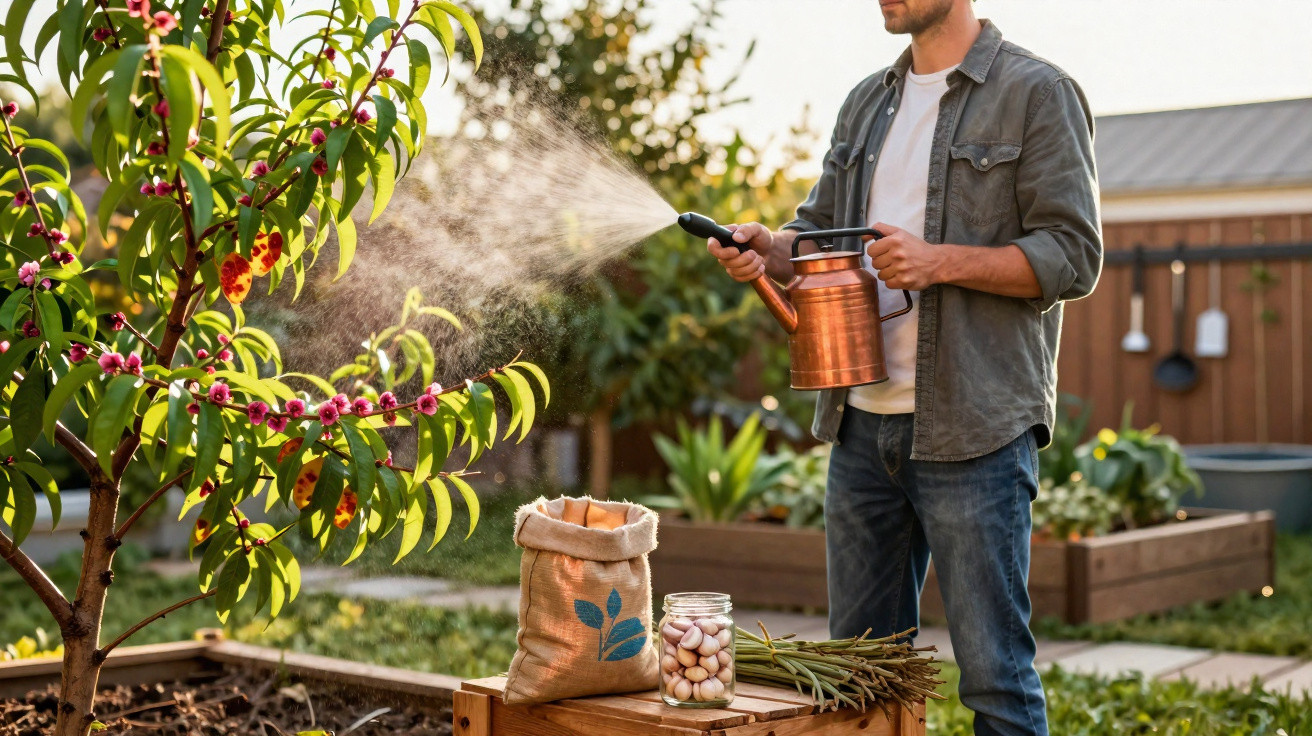
Many amateur gardeners despair over distorted leaves and a meagre harvest on their peach tree – yet one simple active ingredient can prevent the disaster.
It is the same story every year: the peach tree begins to grow, hopes are high – then, a few weeks later, its leaves droop, thicken, turn reddish and curl up. Anyone who has seen it knows how frustrating this common fungal disease can be. However, the damage can be greatly limited by using the right product at exactly the right time.
What causes the characteristic blisters on peach trees
The condition known as peach leaf curl is caused by the fungus Taphrina deformans. It remains hidden well before the first visible signs appear. The pathogen overwinters in buds, on the bark and in the soil immediately surrounding the tree.
Once the buds begin to open in late winter or early spring, the fungus strikes. It primarily attacks young, newly formed foliage. Its effects are easy to spot:
- leaves become thickened and look swollen or blistered
- the surface changes from pale green to vivid red
- leaves curl, dry out and often drop prematurely
- young shoots swell, discolour and stop growing
- fruit remains small, becomes misshapen or fails to develop altogether
The tree loses a considerable amount of foliage, reducing its ability to photosynthesise and causing a noticeable decline in vigour. If severe attacks recur over several years, a peach tree can eventually die.
“Once the foliage is visibly distorted, the fungus can hardly be stopped during that season – which is why consistent prevention is all that counts.”
Copper hydroxide: the essential protective barrier
Copper hydroxide is the most effective traditional preventative treatment used in fruit growing. This active ingredient is found in the well-known Bordeaux mixture as well as comparable copper-based sprays. It has been used in organic fruit production for decades because it prevents the fungus from penetrating young plant tissue in the first place.
Success depends less on the quantity used than on accurate timing. The copper film can only create its protective effect when it is already covering the bark and buds before fungal spores become active.
The ideal spraying schedule through the year
Anyone determined to protect their peach tree should plan three copper treatments around autumn and spring:
- Late autumn: Apply the first treatment as soon as all leaves have fallen. This is intended to substantially reduce the amount of fungus on the bark and buds before the tree enters winter dormancy.
- Early spring: Carry out the second application before the buds start to swell. At this stage, the copper film forms the main protective barrier against new infections.
- After around two weeks: A third application is worthwhile in wet springs. It renews the protection if rainfall has washed away the previous coating.
Important: spray only in dry, frost-free conditions, and thoroughly cover the entire canopy, including the trunk. Always follow the dosage stated on the relevant product packaging to avoid unnecessarily increasing copper levels in the soil.
“What is ‘magical’ about copper hydroxide is not magic but timing: anyone who reacts too late will only protect the bark, not the new leaves.”
Natural helpers: garlic, horsetail and more
Between copper treatments, many gardeners use plant-based tonics. These do not replace copper completely, but they support the tree and may reduce disease pressure.
- Horsetail decoction: It contains high levels of silica, which strengthens the leaf surface. Sprayed in diluted form over the canopy, it improves the tree’s natural resilience.
- Garlic extract: Its sulphur-containing compounds inhibit fungi and may slow the establishment of fungal colonies.
- Nettle feed: This provides nitrogen and trace elements, helping to stimulate the growth of healthy new leaves.
These preparations should be applied regularly, roughly every two to three weeks, particularly during damp periods. Their effect is milder than that of copper, but they place very little burden on soil life and the environment.
How to make your peach tree resilient over the long term
No spray can provide lasting results if the tree is weakened or growing in an unsuitable location. For long-term protection against peach leaf curl, several aspects of tree health need attention.
Site, variety and care: the quiet insurance policy
Peach trees thrive in warm, airy positions with free-draining soil. Wet, cold sites significantly increase fungal pressure. A place where the tree dries quickly in the morning is beneficial, such as in front of a house wall that receives morning sun.
When choosing a variety, it is worth considering older regional cultivars that have traditionally performed well in the local area. Many of these peaches show greater natural tolerance to peach leaf curl than modern varieties commonly found on supermarket shelves.
The tree’s nutrition depends not only on nitrogen but, above all, on trace elements and organic matter. The following are recommended:
- an annual application of mature compost around the base of the tree
- a layer of leaf litter, chipped material or straw mulch in autumn
- occasional finely crushed eggshells, which gradually release lime
- foliar feeds containing trace nutrients if leaves look pale or striped
This keeps the root system active and enables it to absorb nutrients more efficiently, even if an infection temporarily weakens the tree.
Prune properly and clear up thoroughly
Leaving infected shoots on the tree simply invites the fungus to return. Consistent hygiene throughout the year is therefore sensible:
- prune clearly distorted, heavily infected shoots back into healthy wood
- do not compost fallen diseased leaves; dispose of them with general waste or in a securely sealed manner
- shape the canopy so that light and air can penetrate well – this allows foliage to dry more quickly
An open canopy structure in particular shortens the time leaves remain wet after rain. This removes an important factor that the fungus needs to multiply.
What you should know about copper in the garden
Copper works against a broad range of fungal species, but it also accumulates in the soil. Spraying generously every year can eventually harm beneficial soil organisms as well. Copper hydroxide should therefore be used selectively and sparingly – ideally only where peach leaf curl pressure is genuinely high.
In most home gardens, the best results come from combining a suitable site, an appropriate variety, organic fertilisation, plant extracts and a small number of precisely timed copper sprays. Many amateur gardeners find that, after several years of consistent care, they can reduce the amount of copper used considerably because the tree has become more robust overall.
Anyone who has just planted a young peach tree should adopt preventative measures from the outset. A young tree that is still becoming established copes far less well with severe peach leaf curl than a vigorous mature specimen. Early protection and a good nutrient supply provide the foundation for turning the “problem peach tree” into a reliable source of aromatic summer fruit in the garden over the long term.



Comments
No comments yet. Be the first to comment!
Leave a Comment