
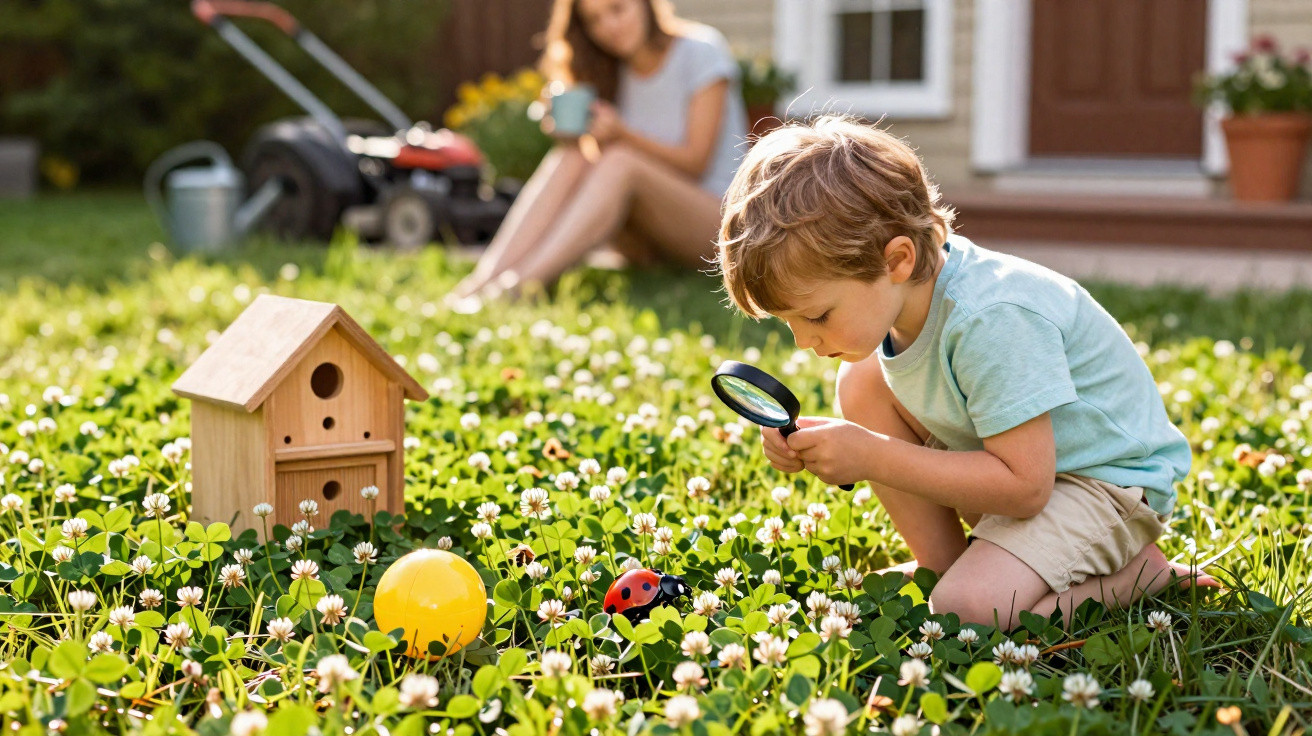
Is that really a problem?
Anyone who turns their lawn into an easy-care, permanently green area of clover soon notices one thing: the garden suddenly becomes far more alive. Bees, beetles and tiny red specks on the patio all prompt the same question: does clover encourage insect infestations, or does it perhaps do more good than harm? A realistic assessment shows that the answer is far more nuanced than many people assume.
Why clover attracts so many insects
Clover produces countless small flowers throughout spring and summer. For many insects, these blooms are effectively a free buffet: they offer plenty of nectar and pollen, flower for a long period and are easy to reach. That is extremely valuable for a healthy ecosystem.
Clover acts like an open invitation to pollinators in the garden – and therefore as a natural driver of greater biodiversity.
Common insects that love clover
Those who allow clover to grow in the lawn are likely to encounter the following groups, among others:
- Honey bees and bumblebees – they collect nectar and pollen while causing virtually no harm to the clover itself.
- Butterflies – especially on sunny days, they often settle on flowering clover patches.
- Ladybirds – they favour places where aphids are available, including denser sections of clover.
- Hoverflies – they resemble small wasps, but are harmless and highly beneficial because their larvae eat pests.
- Ground beetles – they shelter in dense vegetation and hunt slugs and caterpillars at night.
Alongside these welcome visitors, species that some garden owners view less favourably may occasionally appear: tiny clover mites, Japanese beetles, or small numbers of grasshoppers and froghoppers. In most cases, however, damage to the clover itself remains minimal.
The role different insects play in a clover lawn
| Insect group | Benefit or problem? | Effect in a clover lawn |
|---|---|---|
| Honey bees, bumblebees | Generally beneficial | Pollination, no visible damage |
| Ladybirds | Very beneficial | Eat aphids and protect nearby plants |
| Clover mites | Slightly annoying | Do not damage clover, but can be a nuisance on house walls |
| Japanese beetles | Pest | Eat leaves, usually leaving only minor feeding damage |
| Butterflies | Beneficial | Pollination and visual appeal |
Are insects in clover genuinely dangerous?
The overall pattern is clear: most creatures found among clover provide a service to the garden. They pollinate fruit trees and berry bushes, help many flowering plants set seed, and keep genuine pests under control.
Most insects in a clover lawn work for you without pay – as pollinators, pest hunters and soil helpers.
Fear of stings: how risky is clover for children and allergy sufferers?
Many parents worry that a clover lawn automatically means more stings. In reality, this is rarely the case. Bees and bumblebees are remarkably peaceful while foraging. They simply have no interest in people unless they are stepped on or trapped.
The real risk is mainly for children playing barefoot who step on a bee that is collecting food. Several measures can reduce this risk:
- Mow more frequently during the main flowering period, so fewer flowers are available.
- Keep play and seating areas relatively free of clover, while allowing it to grow around the edges.
- Establish a basic rule: avoid walking barefoot on the lawn during high summer where possible.
- Explain to children that bees should be left undisturbed.
Beneficial insects rather than chemicals: clover as part of natural plant protection
A dense carpet of clover provides shelter for numerous beneficial insects. Ladybirds find food there, hoverflies lay their eggs close to aphid colonies, and ground beetles hunt slugs at night. This natural team often removes the need to reach for chemical treatments.
Avoiding heavily fertilised, closely clipped uniform lawns provides even more support for these helpers. Clover fixes nitrogen from the air and makes it available in the soil. As a result, the area stays lush and green without a constant need for artificial fertiliser. Less fertiliser also means plants are automatically less susceptible and there are fewer pests.
When clover insects really become a problem
Some situations are widely seen as troublesome – not because plants suffer extensive damage, but because the insects are irritating or spread into the house.
Clover mites: tiny, red and fond of wall cracks
The reddish creatures, scarcely larger than a pinhead, often appear in their hundreds on warm exterior walls during spring or autumn and can cause concern. They neither eat furniture nor bite, but they can stain carpets and window sills if crushed.
To limit them, focus less on pesticides and more on creating distance:
- Maintain a vegetation-free strip around 40–50 cm wide around the house.
- Remove thick mulch layers, piles of leaves and dense greenery directly beside the exterior walls.
- Seal cracks in render and joints to reduce possible entry points.
Japanese beetles and other leaf-eating insects
Japanese beetles are appearing more frequently in some areas. Although they find clover appealing, they often prefer other plants, such as roses or fruit trees. Clover itself usually sustains only minor feeding damage.
For smaller gardens, straightforward measures are sufficient:
- In the early morning, pick beetles directly from plants and drop them into soapy water.
- Control larvae in the soil with biological treatments such as milky bacterial preparations that target only these beetles.
- Avoid broad-spectrum insecticides, as they also kill bees, ladybirds and other helpful insects.
How to manage insects in a clover lawn deliberately
Anyone wanting the benefits of clover without turning their patio into a “flight path” needs a sensible plan. With a little forethought, many conflicts can be eased.
Location, mowing height and flowering periods: the key controls
How the garden is divided up is crucial. A few rules of thumb can help:
- Establish clover areas mainly around the edges rather than beside play spaces.
- Mow earlier and slightly more often in heavily used areas to restrict flowering.
- Intentionally allow clover to flower in quiet garden corners, creating an insect magnet away from seating areas.
- Position appealing flowering plants, such as lavender or perennial beds, where insects will not be disruptive.
By placing clover deliberately, you can quite literally guide bees and their companions – away from the sandpit and towards the back corner of the garden.
Clover as part of a resilient, sustainable lawn approach
Many owners of traditional ornamental lawns struggle with brown patches, heat stress and demanding maintenance. Clover lawns, or mixed lawns containing white clover, cope far more calmly with dry spells, remain green for longer and need less fertiliser.
Combined with other hardy grasses, clover creates a durable surface that withstands playing children, pets and summer heat better than many specialist varieties sold at garden centres. In this case, increased insect activity is more likely to show that the area is alive and ecologically balanced.
What homeowners should pay particular attention to with clover and insects
Allowing clover in the lawn creates a livelier micro-ecosystem right outside the front door. More insects do not automatically mean more trouble; in most cases, they mean more natural help in the garden. Conflicts chiefly arise where flowering areas and intensive use overlap directly – for example, beside a paddling pool, barbecue area or entrance.
A few simple adjustments can put the benefits firmly to the fore: clover improves pollination, supports beneficial insects, reduces the need for fertiliser and pesticides, and makes the lawn more resilient during dry periods. Those who take a level-headed view of insects and do not regard every ant as an “infestation” will ultimately have a garden that is not only attractive, but also highly functional – for people, animals and plants.





Comments
No comments yet. Be the first to comment!
Leave a Comment