
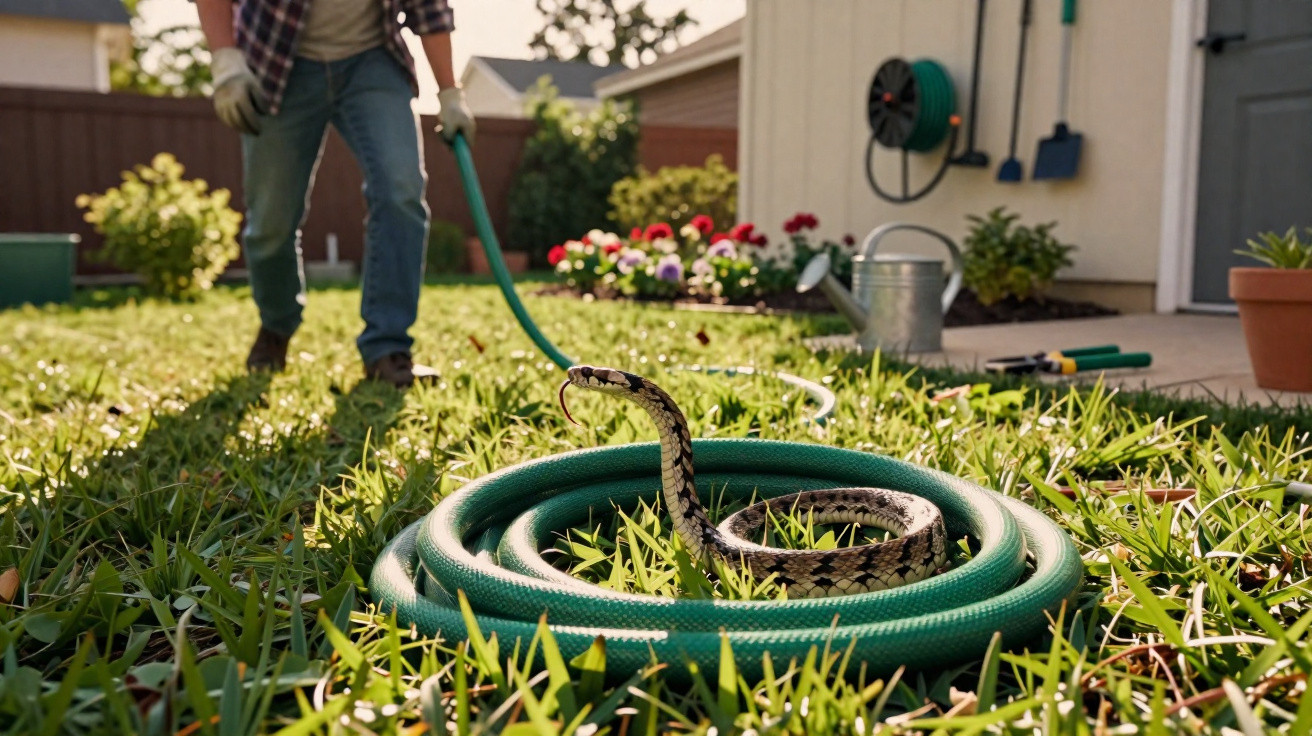
An everyday garden tool can turn into the perfect hiding place.
Anyone trimming hedges, mowing the lawn or watering flowerbeds at this time of year is unlikely to be thinking about snakes. Yet many gardens are surprisingly appealing to them. Warmth, cover and moisture are all available just outside the house. One particular item of equipment, used by almost everyone in summer, can provide an ideal refuge right beneath our feet.
Why snakes appear in gardens more often in spring
From around March, snakes emerge from winter dormancy. Still sluggish, they need to get their metabolism going and actively seek out warm, sheltered spots. Many gardens offer exactly these conditions.
- Hedges and dense shrubs
- Woodpiles and heaps of leaves
- Stone walls and dry-stone walls
- Long grass and unmown corners
Snakes are among the animals known as ectotherms, or cold-blooded animals. In other words, they cannot regulate their own body temperature and depend entirely on their surroundings. When temperatures rise, they become active; when it stays cool, they retreat into cover.
Between 25 and 30 degrees, a snake’s metabolism is working at full speed – these are precisely the temperatures they deliberately seek out in the garden.
In countries with large numbers of venomous snakes, such encounters cause numerous bite injuries each year. Contact between people and snakes is also becoming more common in Central Europe, as habitats change and hot summers occur more frequently.
The overlooked attraction: the garden hose
Few people associate an ordinary garden hose with snakes. However, this everyday tool can become an excellent shelter, particularly when it is simply left on the ground after watering.
Why a garden hose appeals to snakes
A hose lying coiled or looped combines several things that snakes favour:
- Warmth: Plastic and rubber heat up quickly in the sun and retain that warmth.
- Protection: Gaps between the loops create small, confined spaces – exactly the sort of structure in which snakes feel secure.
- Moisture: After watering, the hose is often still slightly damp inside and out, creating a warm, humid microclimate at ground level.
To a snake, it is like a small heated hideaway: sheltered from the wind, well concealed and comfortably warm. On warm days, especially after the hose has been lying in the sun, it becomes an ideal place to rest.
Before lifting or uncoiling a hose, take a moment to check whether anything is moving beneath it – this can prevent unpleasant surprises.
A quick look, or a gentle prod with a long stick, is often enough to startle an animal before your hands get too close.
Other garden items that attract snakes
The garden hose is not the only potential hazard. Many common outdoor items can draw snakes in without anyone realising it.
Common snake hotspots in the garden
- Dark tarpaulins, such as those covering wood, compost or building materials
- Metal sheets, including old roofing panels or covers
- Fibre-cement boards and comparable building materials
- Loosely stacked planks or pallets placed directly on the ground
- Piles of stones, bricks or rubble
All of these materials retain the sun’s heat while providing dark cracks and cavities. They are perfect places for reptiles that want to remain undisturbed during the day before heading out to hunt in the evening.
The more flat objects are stored on the ground in a garden, the more potential hiding places there are – and the greater the chance of encountering snakes.
Simple steps to reduce the risk in the garden
There is no need to redesign an entire garden to make it “snake-proof”. Many measures take just a few minutes and can noticeably lower the risk.
How to store garden hoses more safely
- Always hang the hose on a wall-mounted holder or hose reel after watering.
- Choose a storage point that is slightly raised, rather than directly on the ground.
- Avoid using densely planted areas as storage spaces.
- If you will be away for a longer period, store the hose dry and coiled in a shed or garage.
This straightforward step alone removes one of the most convenient garden shelters for snakes.
How to limit other hiding places for snakes
Many of these actions not only discourage snakes but also make the garden tidier and easier to maintain:
- Pull dark tarpaulins tight or store them raised up, rather than leaving them flat on the ground.
- Stand metal and fibre-cement sheets upright so that nothing can hide beneath them.
- Stack tools, planks and building materials on pallets, not directly on the soil.
- Do not place heaps of leaves or wood immediately beside a patio or seating area.
Keeping such items some distance from the house, patio or play area reduces the likelihood of encountering snakes around the places where people usually spend time.
How dangerous are snakes in the garden really?
Many species found in Central European gardens are harmless and generally shy. They mainly eat mice, frogs or insects, and usually disappear before they are even noticed. Venomous species are far less common, although they can occur in individual cases.
The basic rules apply everywhere:
- Never try to catch or handle a snake.
- Teach children not to touch unfamiliar animals in the garden.
- Keep curious pets supervised when they are in higher-risk areas.
Most bites happen when people surprise snakes – for example, while lifting stones, planks or a seemingly harmless hose.
Practical everyday garden advice
A few simple habits can help you work in the garden with greater confidence:
- Wear gardening gloves in warm weather, especially when clearing up.
- Never reach blindly beneath tarpaulins, woodpiles or stones.
- Before walking barefoot, quickly check where there is long grass or other areas with poor visibility.
- Take extra care after hot spells, when snakes are particularly active.
For families with children, it is worth discussing the subject openly: snakes are not monsters, but they should be respected – just as you would keep your distance from a hot hob.
Why a tidy garden helps in two ways
A well-kept garden does more than deter unwanted reptiles. Fewer hiding places also mean fewer mice, spiders and other creatures that many people would rather not have close to the house. At the same time, a clearly organised garden is a more relaxed place to work.
Once you recognise how attractive a discarded hose or an old metal sheet can be to snakes, your behaviour will usually change automatically. At the end of a day in the garden, it only takes a short tidy-up: hang up the hose, secure the tarpaulins and put away the tools. This significantly reduces the risk of surprising a snake the next time you reach into the garden.

Comments
No comments yet. Be the first to comment!
Leave a Comment