
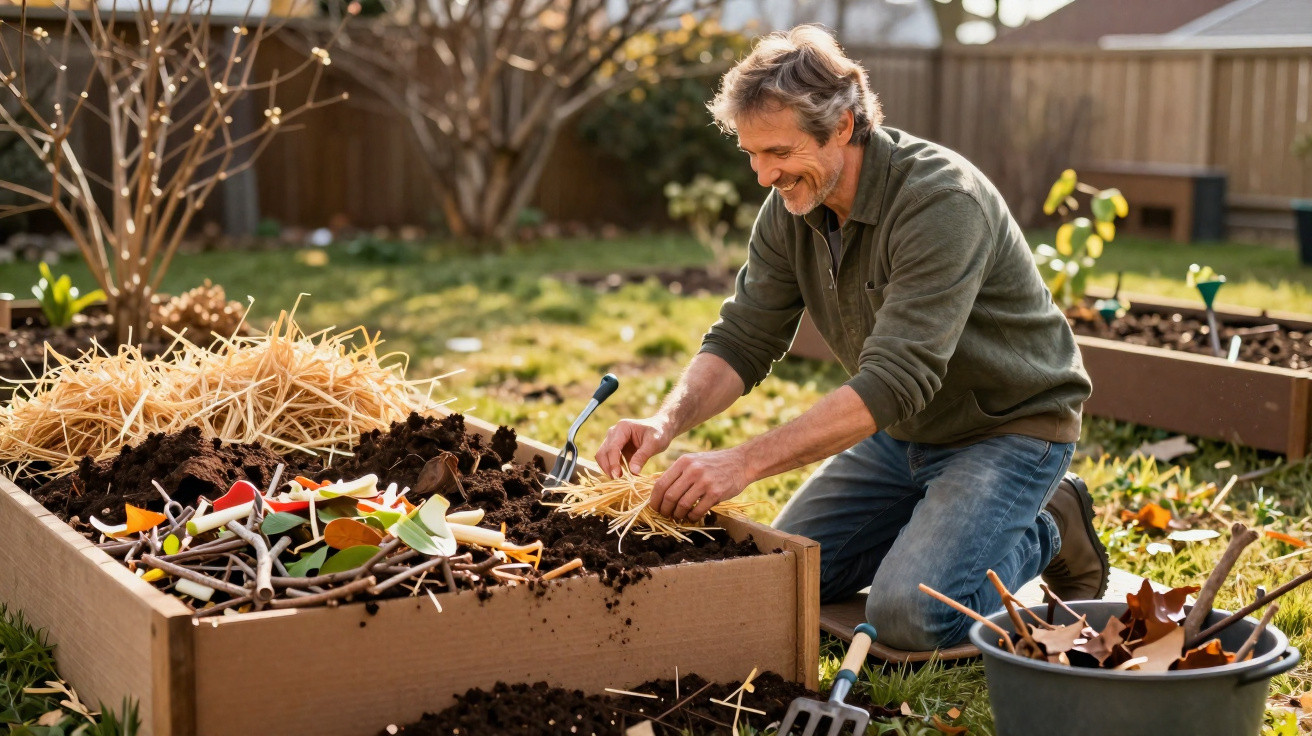
The garden may look grey and empty, yet this is exactly when increasing numbers of amateur gardeners are quietly laying the foundations for a dream vegetable bed in summer.
Rather than laboriously digging over the soil, they simply layer cardboard, leaves and kitchen scraps on top of one another – calling the result a “lasagne bed”. What initially sounds like an unusual trend is gradually becoming a small revolution in the vegetable garden.
Escape the backache trap
The familiar image of a gardener bent over a spade is remarkably persistent. Many people know the aching lower back that follows an afternoon of digging. This is precisely where the lasagne bed offers an alternative: it removes the need for strenuous digging and rotavating altogether.
Instead of turning the soil over, you build upwards. A layer of cardboard is placed on the existing ground, followed by several layers of organic matter. Gradually, this creates a raised growing area without requiring much work on the soil underneath.
“Anyone who relies on lasagne beds protects their back – and leaves the real soil cultivation to nature.”
This is easier on the body, but it also avoids severely disrupting the soil structure, as digging does. Microorganisms are disturbed, earthworm tunnels are broken, and the circulation of air and water suffers. With a lasagne bed, this delicate system remains largely undisturbed.
How a lasagne bed works
Building ideal soil layer by layer
The method takes its lead from the forest floor. Leaves, branches and plant remains fall onto the ground there, slowly decompose and form a dark, loose layer of humus. A lasagne bed replicates that process, only in a more concentrated and deliberate way.
The base is generally made from a layer of brown, unprinted cardboard; remove any tape and coloured printing first. This is followed by alternating layers of so-called “brown” and “green” materials:
- Brown (carbon-rich): cardboard, straw, dry leaves and shredded twigs
- Green (nitrogen-rich): fruit and vegetable scraps, coffee grounds, grass cuttings and plastic-free tea bags
A degree of balance matters: too much dry material slows decomposition, while an excess of wet kitchen waste can easily cause rotting and unpleasant smells. Alternating layers work best – roughly a hand-width of brown material, then a hand-width of green, stacked like a sandwich.
“At its heart, a lasagne bed is a large, shallow compost heap that has been planned as a growing space from the outset.”
How deep the layers should be
At first, the whole arrangement can appear rather substantial. A height of 30 to 40 centimetres is entirely normal. Over the winter, the material settles considerably. What remains is a dark, crumbly layer around 15 to 20 centimetres deep, which feels almost like high-quality compost.
If desired, finish the uppermost layer with some mature compost or ordinary garden soil. This gives microorganisms a helping hand at the start and makes planting easier later on.
An open composting area instead of a full car boot
One major benefit of this approach is that the garden becomes a kind of open recycling station. Material that previously ended up in the car boot for a trip to the recycling centre now goes straight onto the bed.
Suitable materials include:
- Cardboard packaging from online deliveries, provided it is brown and tape-free
- Leaves collected from lawns and paths
- Fruit and vegetable kitchen waste
- Coffee grounds and paper filters
- Grass cuttings applied in thin layers
This reduces the amount of waste produced and often makes expensive bags of compost from the garden centre unnecessary. It also saves numerous car journeys – a significant saving of both time and money, especially in larger gardens with plenty of prunings.
“What feels like annoying waste in everyday life becomes a free source of nutrients in a lasagne bed.”
Why late winter is the best time to begin
The key question is when to make one. Surprisingly, many experienced gardeners favour late winter, from January through to March.
There are several reasons for this:
- Moisture: Rain and melting snow soak the cardboard and leaves. This softens the layers and encourages fungi and bacteria.
- Time: Decomposition takes several weeks to months. Those who begin in winter will have a largely broken-down bed by April or May.
- Less watering: If you started in the height of summer, regular watering would be essential. In winter, the weather does that job for you.
Anyone who creates a lasagne bed in January can expect to make their first plantings in late spring. By then, the material will have settled and the first generation of soil life will already have moved in.
The hidden soil army: earthworms and microorganisms
Once the bed has been layered, intensive activity begins below the surface. Earthworms find abundant food in the moist organic matter and move into the new layers in large numbers.
As they travel up and down, they create countless channels, aerate the soil and blend the different materials together. Their castings are regarded as one of the finest natural fertilisers available – rich in nutrients and easily reached by plant roots.
“Every earthworm replaces a small garden tool – and works for free, day and night.”
At the same time, bacteria and fungi turn organic matter into humus. The resulting humus-rich layer acts like a sponge, holding substantially more water than exhausted, bare soil. During increasingly frequent summer droughts, this is an effect that should not be underestimated.
Fewer weeds and a quicker spring start
A common drawback of traditional vegetable beds is the constant battle against weeds. The lasagne bed reduces this issue from the beginning. The lower cardboard layer covers existing turf and wild plants like a light-blocking carpet.
Deprived of light, many plants beneath this barrier gradually die off. Their roots decompose and, in turn, enter the bed’s nutrient cycle. This creates a form of double use: weeds are not removed but reused.
The advantage becomes particularly obvious in spring. The bed is dark, loose and generally free of persistent perennial weeds. As the growing area is slightly raised, it warms up more quickly than the surrounding ground. Tomatoes, courgettes or lettuce can be planted directly into the loose layer – usually, a small opening made with your hand is enough.
Lasagne beds: an introduction to “lazy” gardening
Anyone who has seen how much less work a well-built lasagne bed requires often changes their view of gardening completely. The focus is no longer on physical effort, but on observation and smart planning.
Rather than digging the bed again every year, simply top it up with fresh layers after the season ends. The basic structure remains in place, while the proportion of humus in the soil increases year after year. Many gardeners report that after two or three years, they hardly need to hoe or weed at all – they simply harvest and replant where necessary.
Common mistakes – and how to avoid them
A few typical errors can easily occur, especially when starting out. Keeping them in mind prevents frustration:
- Grass cuttings applied too thickly: These create rotten layers. Scatter them only thinly and combine them with leaves or cardboard.
- Printed cardboard: Avoid colourful or glossy surfaces, as they often contain potentially problematic inks.
- Layers that are too dry: If winter is unusually dry, give the bed an occasional helping hand with a watering can.
- Large pieces of wood: These decompose very slowly. It is better to shred them finely or compost them separately.
Combining a lasagne bed with other garden ideas
Lasagne beds work well alongside familiar gardening approaches. Anyone with raised beds can layer them according to the same principle. The difference is that everyday waste and leaves, rather than heavy woody prunings and soil, make up most of the filling.
The technique is also appealing for people with limited space, such as those with a terraced-house garden. A narrow bed along a fence is enough to make useful use of a surprising amount of kitchen waste while also growing fresh vegetables.
A small wormery or a traditional compost heap can also be useful additions. Anything unsuitable for the lasagne bed can go there instead, later providing extra compost for new layers.
Why starting at the end of winter is genuinely worthwhile
Anyone walking around the garden with cardboard and bags of leaves in a grey January may receive a few puzzled looks from neighbours. By summer, however, the picture changes: while conventional beds dry out more quickly in hot weather, lasagne beds retain moisture for longer and feed plants more evenly.
The effort remains manageable: spend a few hours collecting materials, layering them and pressing them down lightly, then let nature work for months. This combination of convenience, resource use and reliable harvests explains why more and more gardeners leave the spade standing at the end of winter and build their first lasagne bed instead.




Comments
No comments yet. Be the first to comment!
Leave a Comment