
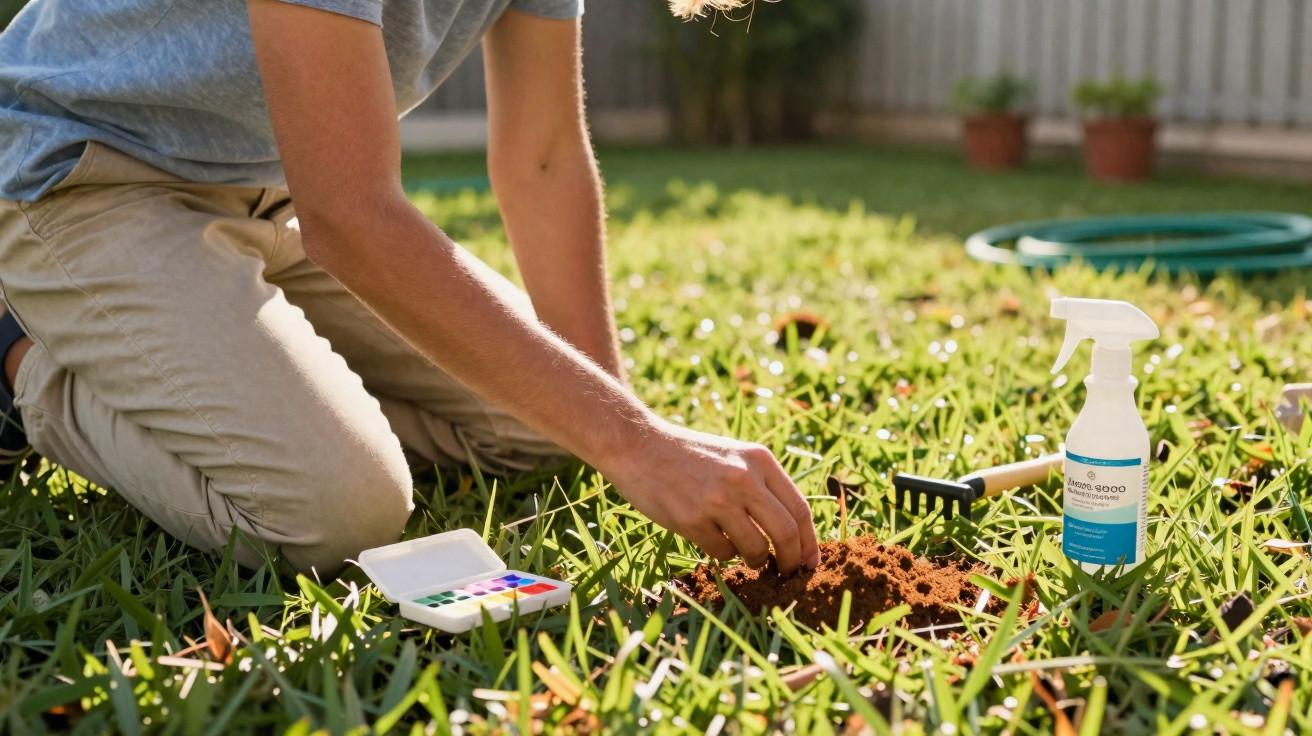
Brown patches in the garden can arise for several reasons, including too little water, overwatering, fungal disease, pet urine, pests, compacted soil or poor fertilising. Before using any product, the first priority is to establish what is causing the issue.
Not all brown grass is dead
When grass turns brown, it may simply be stressed or dormant. Intense heat, drought and insufficient watering can cause a lawn to lose its colour as it conserves energy.
However, patches that spread quickly, have circular edges or emerge after humid days may point to fungal disease. Small, concentrated areas, meanwhile, can be associated with dog urine, insects or poor soil conditions.
- Watering: too little water dries the grass out, while too much creates favourable conditions for fungi.
- Pets: concentrated urine can scorch small sections of the lawn.
- Pests: insects and grubs damage roots, leaving dry, bare patches.
- Soil: compaction and nutrient deficiencies make recovery more difficult.
Diagnose brown patches before choosing a treatment
Before trying to remove brown patches, look at their shape, position and how quickly they have developed. Patches beside paved paths may be caused by heat radiating from the surface, whereas circular marks can signal a fungal disease.
It is also worth gently pulling the brown grass. If it comes away easily, the roots may be dead or damaged by pests. If it remains firmly rooted, it may only be under stress and could still recover.
Fungal diseases need specific care
Diseases such as brown patch and large patch commonly develop during warm, humid periods, especially when the lawn receives excessive water or remains wet overnight.
Do not treat without knowing the cause
The cause determines the repair. If fungus is responsible, increasing watering can worsen the patch rather than restore the grass. If drought is the issue, using fungicide will not solve it and will only waste time and money.
Where fungus is suspected, reduce night-time watering, improve air circulation and avoid applying too much nitrogen fertiliser. In persistent cases, advice from an agronomist, gardener or local agricultural advisory service can help you select the right treatment.
How to restore damaged lawn areas
If the grass is only dry, water deeply in the morning and monitor its response over the following days. Light, frequent watering wets the surface but does not encourage deep root growth.
If the area is dead, remove the dry material, lightly loosen the soil, address compaction and replant using seed or turf that is suitable for the grass type already in the garden.
Prevention keeps the lawn even
To prevent further brown patches on the lawn, water in the morning, mow at the correct height, avoid excessive fertilising and arrange a soil test if the problem keeps returning.
Ultimately, removing brown patches for good depends less on a single remedy and more on an accurate diagnosis. With appropriate watering, healthy soil, correct mowing and treatment tailored to the cause, the garden can become greener and more even again.
If this advice could help someone restore their lawn, share it with anyone trying to save their garden from brown patches.





Comments
No comments yet. Be the first to comment!
Leave a Comment