
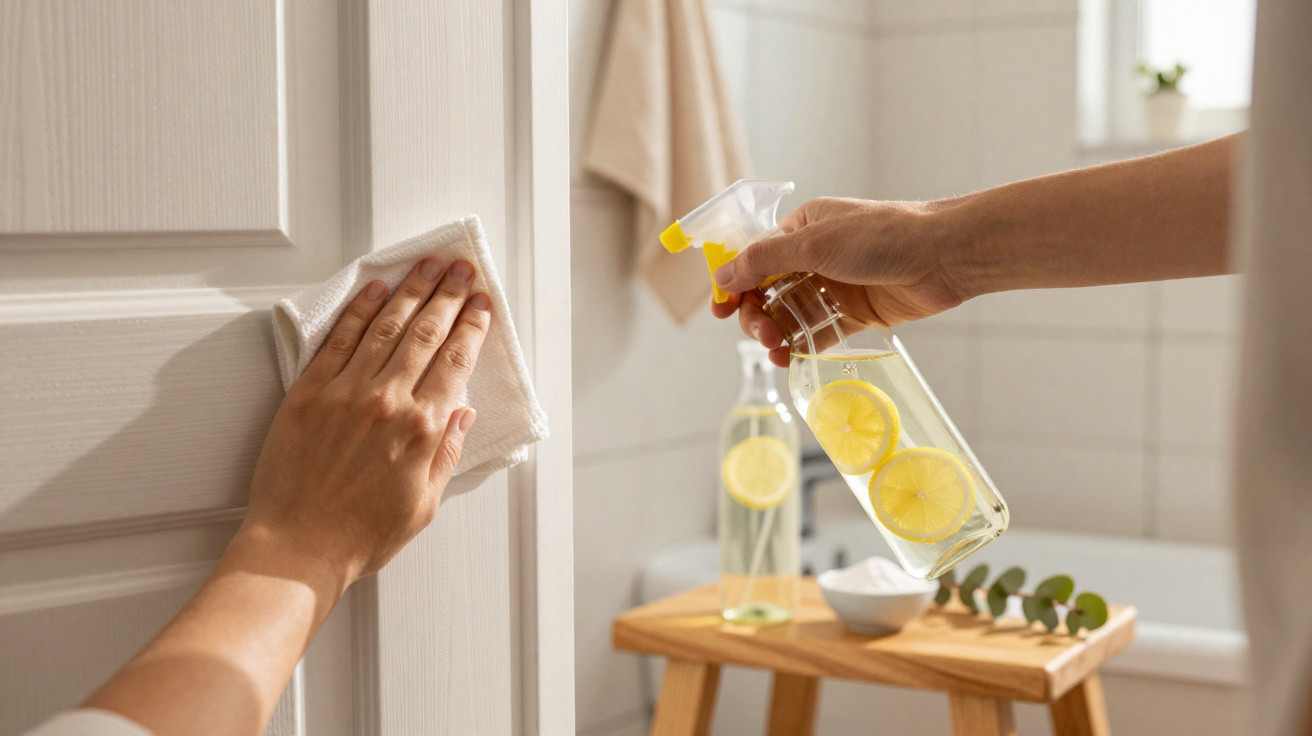
Pouring vinegar onto the bathroom door is a household habit that has become increasingly common in many homes. It may seem unusual at first, but it addresses typical issues in this room: managing moisture, minimising unpleasant smells, making fungal growth less likely, and simplifying the removal of everyday marks and splashes.
Why does using vinegar on the bathroom door work so well?
White vinegar contains acetic acid, which can neutralise odours, break down light soap deposits, and reduce the presence of certain fungi and bacteria. It is not a replacement for disinfectant during more intensive cleaning, but it is a useful addition to regular upkeep.
On surfaces such as laminated MDF, painted doors, and synthetic finishes, a diluted mixture helps lift water splashes and fingerprints without leaving a sticky film. The lower section of the door, which is more exposed to steam and moisture from the floor, is usually the area that benefits most from this routine.
Watch a video from the YouTube channel The Cat’s Leap in Construction about using white vinegar to protect wooden and metal surfaces from moisture and mould damage:
https://www.youtube.com/watch?v=qMiwKIn0N7w
What are the benefits of vinegar for cleaning the bathroom door?
The benefits of vinegar are generally noticed over time, helping to maintain the door’s appearance and keep the room feeling fresher. In many households, it is regarded as a straightforward trick for extending the door’s lifespan, particularly in small bathrooms or spaces with limited ventilation.
Among the practical, easily noticeable results reported by people who have made a habit of using vinegar on the bathroom door are:
- Reduced odours: helps neutralise smells that settle on the surface.
- Support with moisture control: makes conditions near the skirting less favourable for fungi.
- Removal of light marks: water and soap splashes can be wiped away more easily.
- A drier finish: once dry, it does not usually leave an oily or tacky layer.
How can vinegar be used safely on the bathroom door?
Dilution is essential for safe application, as using vinegar neat may stain or wear down certain materials. A basic solution is usually enough for most doors with standard finishes, allowing for a quick clean that takes only a few minutes.
- Make the solution: combine equal parts white vinegar and water in a clean spray bottle.
- Select the cloth: use a soft cloth or microfibre cloth that will not scratch the surface.
- Apply it to the chosen area: lightly spray the door, or dampen the cloth and wipe it across the entire surface.
- Rub gently: use light movements to loosen marks and splashes.
- Allow it to dry: keep the bathroom ventilated so the door can dry naturally.
When is vinegar unsuitable for the bathroom door?
Not every door responds well to frequent contact with acidic products, even when they are diluted, so testing the mixture on an inconspicuous area is essential. Unprotected solid wood doors, highly porous materials, and certain natural stones may stain, lose their sheen, or gradually wear down.
It is also worth considering how often it is used: in very humid bathrooms, applying it two or three times a week is normally enough; in drier rooms, weekly cleaning is generally sufficient. This makes it possible to benefit from vinegar’s practical and economical qualities without damaging the door material or affecting the bathroom’s appearance over the years.



Comments
No comments yet. Be the first to comment!
Leave a Comment