
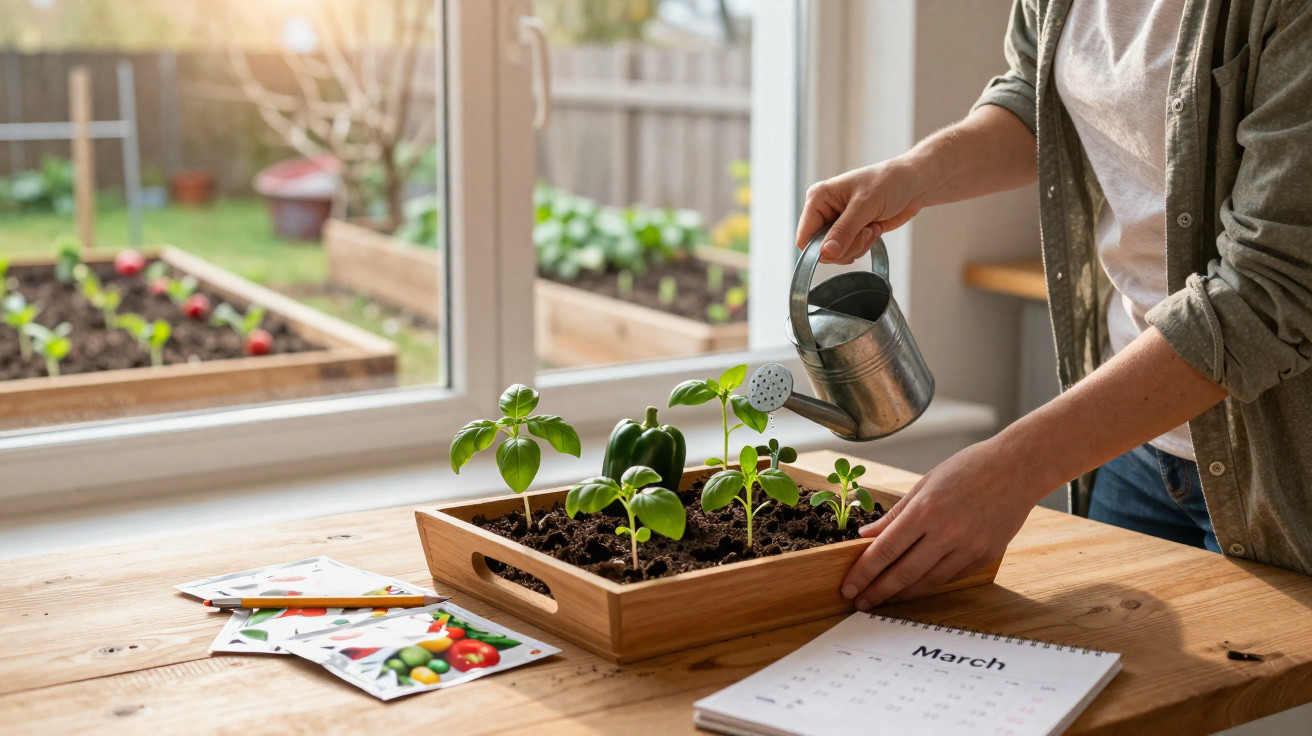
Many amateur gardeners patiently wait until mid-May before getting started, then wonder why their harvests are disappointing. By beginning in March with a few straightforward, time-tested crops, you give your plants a head start of several weeks and set yourself up for a summer of crisp radishes, fragrant tomatoes and plump peppers.
Why March determines your summer vegetable garden
Early spring lays the groundwork for the whole growing season. These weeks decide whether your plants will crop vigorously at the height of summer or lag behind at a snail’s pace. Delaying everything until the traditional mid-May frost date wastes valuable time.
“Sowing in March gives plants up to six extra weeks of growth – a huge advantage for flavour, yield and resilience.”
Plants started early develop more robust root systems, reach further down into the soil and therefore offer several benefits:
- They cope better with hot spells because they can draw water from deeper layers.
- They withstand aphid attacks and fungal diseases more effectively.
- They require considerably fewer chemical treatments.
The key is not to sow “everything” indiscriminately, but to choose the crops that particularly benefit from an early start.
How to reliably wake up seeds at the end of winter
The three essentials for dependable germination
For reliable germination, seeds need a simple trio: warmth, consistent moisture and enough light. If any one of these is missing, many seeds will germinate slowly or become mouldy.
For sowing, household items are often all you need: empty yoghurt pots, old plant pots or cardboard fruit trays. What matters is using a light, fine growing medium that will not suffocate the roots. Special seed compost from a DIY shop or garden centre is ideal because it is low in nutrients and has a good structure.
Moisten the compost before sowing so that it is evenly damp but not dripping wet. This makes fine seeds easier to distribute without them ending up in dry patches.
Choosing the right spot indoors
A normal bright windowsill is enough for many seeds. A south-facing window is best, but an east- or west-facing one also works provided the room stays above 18°C. Avoid direct heat from a radiator underneath, as it dries pots out too quickly.
If you do not have a genuinely bright position, a basic LED grow light can help. It costs less than a large tray of professionally raised seedlings and can be used for years.
Heat-loving favourites: what must be started indoors
Tomatoes, peppers and aubergines need living-room temperatures
Tomatoes, peppers and aubergines are the undisputed stars of the summer vegetable garden. These “sun-lovers” suffer most when started too late or planted into cold soil.
“Tomatoes, peppers and aubergines should be raised indoors from early to mid-March – they are happiest at around 20°C.”
Proceed as follows:
- Fill a shallow tray or small pots with seed compost and moisten it.
- Scatter the seeds thinly, press them down lightly and cover with only the thinnest layer of compost.
- Use a spray bottle to moisten them rather than watering, otherwise the seeds may wash away.
- Cover with film or a transparent lid until the first seedlings appear.
- Then remove the cover to prevent mould, and place them somewhere very bright.
When young plants are kept in insufficient light, they become leggy, thin and prone to falling over. A slightly cooler but exceptionally bright place is better, as it produces sturdy, compact plants.
Basil: summer flavour belongs on the windowsill too
Tomatoes without basil are like a barbecue without a grill. The good news is that basil has similar requirements and can be started alongside tomatoes.
Sow basil densely in trays or pots on the windowsill. Press the seeds down lightly rather than covering them heavily with compost, as basil prefers to germinate in the light. Keep the compost gently moist at all times, but prevent waterlogging. After a few weeks, dense green cushions will form, ready to move into larger pots or the bed later on.
Direct sowing in the bed: the tough crops for March soil
Radishes and carrots: the smart pairing for loose soil
Once the soil is no longer soaking wet and crumbles in your hand, the outdoor season can properly begin. Radishes are ideal pioneers here. They grow exceptionally quickly and loosen the soil around slower-growing neighbours.
“Mixing radishes and carrots in one row makes the best use of space and improves soil structure – without a spade.”
Radishes germinate swiftly, while carrots take their time. By the time the radishes are ready for the table after only four weeks, the carrots below have quietly developed their roots. The radishes create small gaps that allow carrot roots to expand more easily.
| Crop | Outdoor start | First harvest |
|---|---|---|
| Radishes | Mid to late March | From late April |
| Carrots | Mid to late March | From June |
Peas and spinach: early starters that enjoy cool weather
Peas and spinach are among the crops that are not bothered by cool nights. In fact, they do not like excessive heat at all. That is exactly why they suit early spring so well.
Sow peas alongside a fence, trellis or simple branches pushed into the soil. The plants will climb upwards and make use of vertical space. Spinach can be broadcast sown: scatter the seeds loosely across the surface and rake them in lightly.
Both crops cover the soil quickly. This helps prevent it drying out, suppresses some weeds and puts the first vitamins on the plate sooner.
Helping young plants through their delicate early stage
Watering and thinning properly: less is often more
New seedlings do not cope well with stress. Too much water can make them collapse or rot, while forceful watering-can streams can tear their roots.
“A simple spray bottle is the best ‘tool’ for young seedlings – it moistens gently without turning everything upside down.”
Another task that many people find difficult is thinning. If too many seedlings are crowded together, they compete for light, water and nutrients. As a result, all of them remain weak.
Act in good time and remove the weaker specimens decisively. You will be left with fewer but much stronger plants, with better airflow and consequently less disease pressure.
Moving from indoors outside: harden off instead of causing shock
Moving from the living room to the garden can be a culture shock for young plants. Indoors, they have not experienced gusts of wind, cold nights or intense midday sun.
Help plants get used to outdoor conditions as follows:
- For several days, put them outside only during the daytime, in a bright spot that is not in full sun.
- Bring them back indoors in the evening while nights are still very cool.
- Increase the time spent outside a little each day.
- After around ten days, robust plants can remain in the bed permanently.
This acclimatisation period makes stems and leaves more resilient. Later, the plants are less affected by wind or sudden drops in temperature.
How March effort pays off from spring to late summer
Plan a harvest sequence from spring to high summer
Sow wisely in March and you can harvest almost continuously:
- Radishes and spinach are ready for salads by late spring.
- Peas provide crisp pods from late May and throughout June.
- Tomatoes, peppers and aubergines follow from June, often until the end of August.
This creates a genuine “harvest wave” rather than a single brief peak. It also makes life easier in the kitchen, because everything does not ripen at once.
Maintain abundance with succession sowing and mulch
Experienced gardeners swear by succession sowing: rather than sowing one large batch of seeds at once, they make a new row every two to three weeks. This means plants are always at different stages of growth and fresh produce keeps coming.
Another method for reliable yields is mulch. A layer of grass clippings, shredded prunings or straw keeps the soil moist, protects it from overheating and supports soil life. Especially in hot summers, this greatly reduces watering and helps plants cope better with stressful days.
Extra practical tips for a relaxed March garden
Use small spaces cleverly – including a balcony
The March crops described work not only in a large garden. Tomatoes, peppers, basil and even peas grow extremely well in containers. Sufficiently large pots and regular watering are essential.
Radishes and spinach also grow in window boxes, as long as the compost is deep enough. By using different sowing dates, you can enjoy fresh accompaniments for weeks from just a few metres of balcony railing.
Mistakes you can avoid
Common March pitfalls are easy to prevent:
- Sowing too densely: use fewer seeds and grow stronger plants.
- Heavy, wet soil in the bed: wait to sow until the soil no longer smears.
- Placing germinating pots somewhere too dark: this causes long, unstable shoots.
- Planting out young plants without hardening them off: sun scorch and stalled growth can follow.
Keep these points in mind and start a few classic crops in March at the right time, and you may discover for the first time just how productive a small vegetable garden can be in summer – without exotic varieties or expensive specialist equipment.


Comments
No comments yet. Be the first to comment!
Leave a Comment