
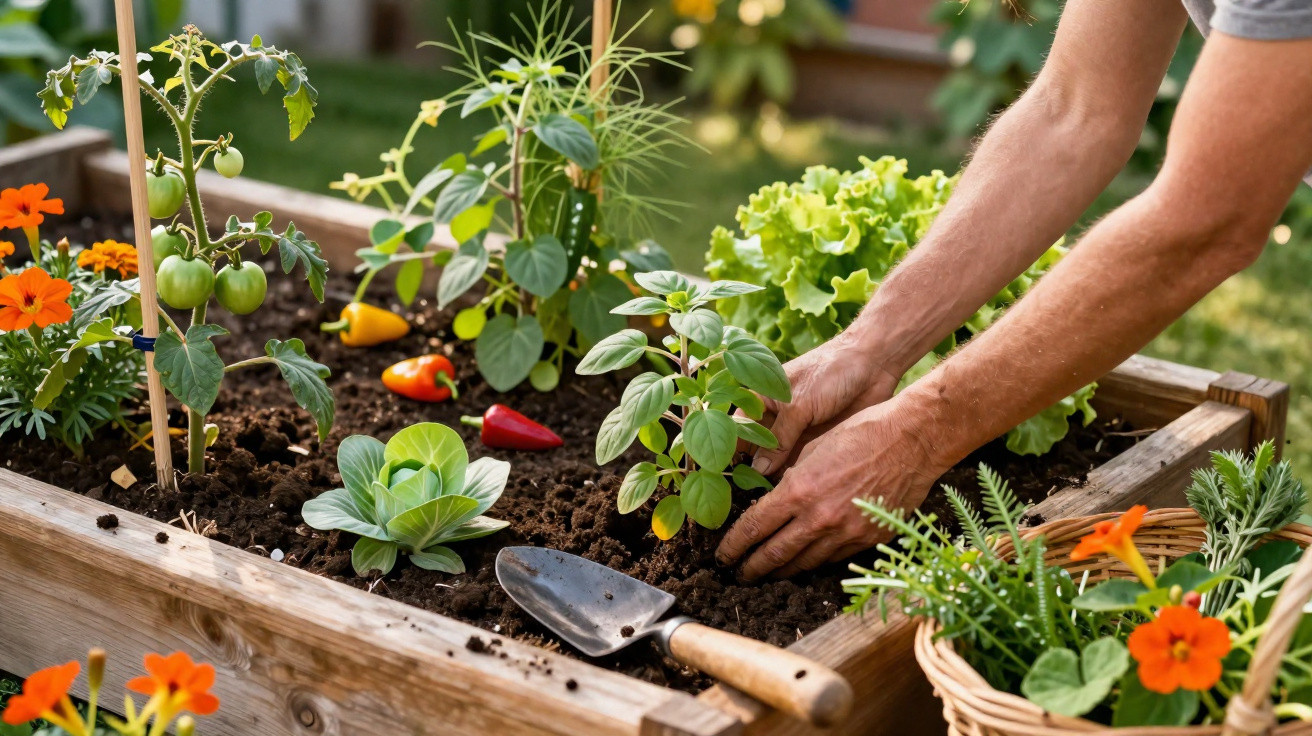
Many home gardeners grow this fragrant subshrub solely for the herb bed. However, positioning oregano deliberately beside particular vegetables, herbs and flowers creates a small natural defence system against aphids, caterpillars and mites – without chemicals. Its scent confuses pests, attracts beneficial insects and can even improve the yield and flavour of certain neighbouring plants.
Why oregano is an excellent companion plant
Native to the Mediterranean, oregano thrives in sun, warmth and free-draining, relatively poor soil. Those very conditions make it an ideal component of companion planting.
“Oregano’s essential oils act like an invisible protective shield: they deter many pest insects while also attracting pollinators and beneficial insects.”
It forms low cushions, spreads along the ground and acts as living ground cover. This helps keep weeds and evaporation under control, so the soil does not dry out as quickly while remaining well aerated.
Strong companions: vegetables that benefit from oregano
Tomatoes: a classic pairing with twofold benefits
The best-known combination is oregano and tomatoes. Planted between tomato supports or around them, the herb offers several advantages:
- its strong fragrance masks the scent of tomato plants
- caterpillars such as the tomato hornworm, as well as aphids, struggle more to locate the plants
- light shade from tomato foliage benefits oregano during high summer
- oregano’s antimicrobial compounds may reduce fungal problems nearby
A spacing of around 30 to 45 centimetres from the base of each tomato plant is ideal. This gives both plants sufficient light, water and nutrients.
Sweet peppers and chillies: better fruit set, fewer pests
Sweet peppers and hot chillies are particularly well suited to oregano. Low oregano cushions do not block light from the taller pepper plants, while insects help pollinate more flowers.
A particular benefit is that oregano oils deter spider mites and aphids, which especially like to attack sweet peppers and chillies on warm days. Planting them 25 to 35 centimetres apart creates a stable microclimate in the bed.
Cabbages and brassicas: a shield against cabbage whites
Cabbage-family vegetables, including white cabbage, red cabbage, broccoli, cauliflower and Brussels sprouts, can quickly suffer from cabbage whites and other brassica pests. Oregano helps to confuse them:
- its intense scent makes it harder for butterflies to find their host plants
- oregano attracts parasitoid wasps, which eat pest eggs and larvae
- several small clumps of oregano between cabbage plants create scented barriers
Gardeners who place an oregano plant every one to two metres along cabbage rows generally notice considerably less caterpillar damage.
Cucumbers and cucurbits: help against beetles and bugs
Cucumbers, courgettes, pumpkins and other trailing plants readily attract cucumber beetles and squash bugs, which can spread disease. Oregano positioned around the bed edges disrupts the insects’ scent cues.
| Vegetable companion | Main benefit | Recommended spacing |
|---|---|---|
| Tomatoes | Fewer caterpillars and aphids | 30–45 cm from the base |
| Sweet peppers / chillies | More pollinators, fewer mites | 25–35 cm |
| Cucumbers | Reduced cucumber beetle damage | 45–60 cm |
| Courgettes / pumpkins | Confuses squash bugs | 60–75 cm from the trailing area |
Important: plant oregano at the edge rather than in the middle of spreading stems. This prevents competition for space and allows the vines to spread freely.
Ideal herb companions and flowering helpers
Basil: a culinary dream team with minor compromises
Basil and oregano often end up together in the frying pan, and they complement one another in the garden too, although their needs differ slightly. Basil prefers consistently moist soil, whereas oregano copes better with drier spells.
In practice, the combination works if watering is targeted: water closer to the base of the basil, allowing oregano to benefit without being permanently soaked. In return, the pair attracts a wide range of beneficial insects and provides a harvest combination for Mediterranean dishes right next to each other.
Thyme: the perfect duo for sunny, lean sites
Thyme and oregano have almost identical preferences: full sun, free-draining soil, little fertiliser and virtually no waterlogging. Together, they create an aromatic strip in the bed that deters numerous pest insects and attracts bees.
“Anyone who plants a sunny strip of the garden with oregano and thyme will have a long-lasting, almost maintenance-free herb corner that offers strong protection for nearby vegetables.”
The fine leaves of thyme contrast attractively with oregano’s broader foliage, making the combination equally suitable for rock gardens or path edges.
Marigolds: double protection above and below ground
Marigolds are considered all-rounders in the vegetable garden. Combined with oregano, their protective effect is strengthened:
- marigolds produce compounds that deter nematodes in the soil
- their flowers attract hoverflies and lacewings
- these beneficial insects consume large numbers of aphids on neighbouring plants
- oregano adds scented protection against further pests
Vegetable beds benefit greatly when oregano bushes and rows of marigolds are planted alternately.
Nasturtiums: a trap plant with built-in pest control
Nasturtiums are classic “sacrificial companions”: many aphids flock to their soft leaves rather than to tomatoes, beans or cabbages.
Growing nasturtiums and oregano close together delivers several effects:
- aphids concentrate on the nasturtiums
- oregano attracts ladybirds and other predators
- beneficial insects find an abundant food source on the nasturtiums
- surrounding vegetable plants remain noticeably cleaner
Plants best kept away from oregano
Fennel: chemical stress for its neighbour
Fennel releases substances into the soil through its roots and leaves that can inhibit the growth of other plants. Oregano is among those affected: near fennel, it remains small, has less flavour and grows weakly.
As a rule of thumb, allow at least 1.20 metres between fennel and oregano, preferably more. This keeps the two from interfering with one another.
Lettuce and other thirsty leafy vegetables
Lettuce, loose-leaf lettuce, rocket and baby spinach need consistently moist conditions. If the bed is regularly watered deeply, oregano suffers: its roots can rot easily, and the plant may become woody or die.
Conversely, adapting the watering schedule to oregano stresses the lettuce. Too little water causes bitterness and premature bolting. A better approach is to give lettuce its own well-watered bed and reserve a sunny, dry corner for oregano.
How to get the most from oregano in the vegetable bed
Control its growth and harvest regularly
Over time, oregano develops dense mats that can overwhelm smaller plants. Gentle containment is therefore part of its care:
- cut it back hard twice a year
- pull runners from rows when they spread into the vegetables
- harvest small amounts frequently rather than large quantities infrequently
Each cut encourages bushier, more aromatic regrowth. Allowing oregano to flower fully early in the year noticeably reduces the flavour of its leaves.
Plan the position carefully
Gardeners who plan their layout thoughtfully gain particularly strong benefits from oregano:
- used as edging around beds, it forms a natural scented barrier
- along paths, brushing against its leaves releases fragrance and deters flies and mosquitoes
- beneath fruit trees, its ground cover helps suppress weeds and draws pollinators into the canopy
- beside the compost heap, its scent blends with any unpleasant odours
- in rock gardens, it makes ideal use of naturally good drainage
Soil and fertiliser: less is more
Heavy clay soils cause problems for oregano. Mixing in sand, grit and a little compost allows rainwater to drain away quickly. Avoid generous nitrogen applications: they produce soft, watery growth, reduce flavour and weaken protection against pests.
Many gardeners are surprised by how robust oregano remains in relatively poor areas – and it is precisely there that it has its strongest effect as a protector of vegetable crops. Anyone who understands and uses these qualities wisely can turn a simple culinary herb into a quiet, highly effective garden helper.

Comments
No comments yet. Be the first to comment!
Leave a Comment