
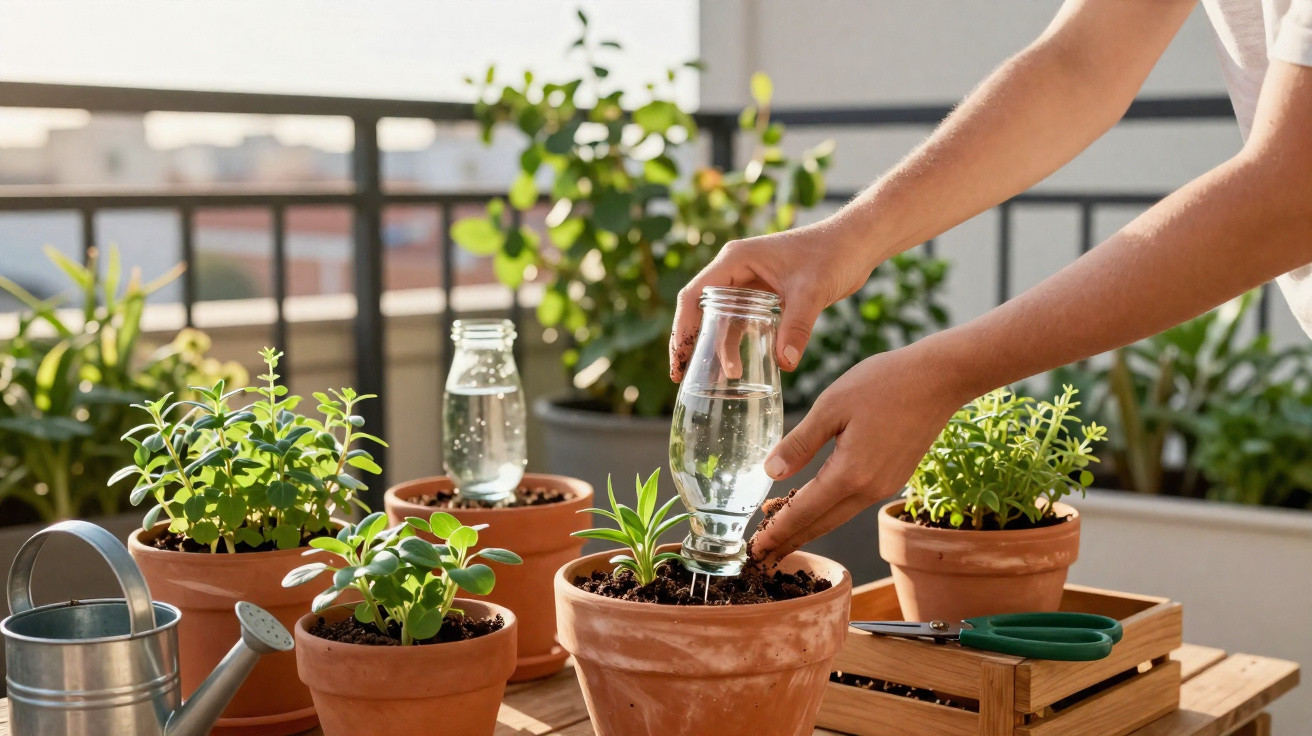
If you work long hours or go away for a few days, you will know the problem: you return to find your once-green favourites drooping over the edge of their pots. Rather than buying expensive irrigation systems, you can turn a simple water bottle into a surprisingly dependable mini watering device. It keeps the compost moist for days – provided you avoid one commonly overlooked mistake.
How the bottle trick works
The principle could hardly be simpler: place a plastic bottle filled with water upside down in the soil. Small holes in its cap allow water to seep gradually into the root zone.
Unscrew the cap, then use a thin nail or skewer to make several tiny openings in it before screwing it back on. Fill the bottle with water, turn it upside down and push the neck several centimetres into the compost in a pot or bed.
“The soil draws in water only as it dries out – when it is moist enough, the flow almost stops by itself.”
This works through the combined effect of gravity and capillary forces in the soil. Dry compost draws in water, while damp compost slows the supply. The result is a small, natural cycle that can replace regular watering without requiring you to stand over it constantly.
Benefits over conventional watering
Most people water from above, often adding too much water at once or doing it too infrequently. The bottle trick addresses several common issues at the same time:
- Less evaporation: Water reaches the root area directly rather than sitting on the surface.
- Hardly any waterlogging: Water is released slowly instead of soaking in all at once.
- Even moisture: The plant is supplied consistently rather than being “flooded”.
- Less stress for busy people: There is far less need to check the compost every day.
Especially during hot summers or on south-facing balconies, this gentle drip effect can mean the difference between crisp leaves and brown, curled remains.
Step by step: setting up the system correctly
For most pots, a bottle holding between 0.5 and 2 litres will do. More important than the bottle capacity is the number and size of the holes in the cap.
Basic setup for a bottle watering device
- Rinse out a plastic bottle and remove its label.
- Take off the cap and pierce several very small holes with a thin nail.
- Fill the bottle completely with water and screw the cap back on tightly.
- Use a stick to make a pilot hole in the compost so that you do not compress the roots.
- Insert the bottle upside down, with its neck disappearing several centimetres into the compost.
For larger planters, one further adjustment is useful: cut off the base of the bottle. You can then top it up from above without removing the whole arrangement and disturbing the soil.
Adjusting the bottle to the plant and pot
The right setup depends on three factors:
- Bottle size: Small pots are better suited to 0.5-litre bottles, while large planters can handle 1.5–2 litres.
- Number of holes: The more openings there are, the faster the bottle empties.
- Hole diameter: Tiny holes provide a slow drip, while larger ones release a lot of water in a short time.
Test the arrangement for one or two days before leaving for an extended period. Check how long the bottle takes to empty and how damp the compost feels. This will show whether your plant needs a greater or smaller supply of water.
Which plants are ideal for the bottle trick
The bottle trick is particularly suitable for varieties that prefer consistently moist compost and react badly to drought stress.
Plants that benefit from the drip system
- Vegetables such as tomatoes, cucumbers, courgettes, peppers and aubergines
- Popular houseplants including Monstera, ficus, pothos, philodendron and calathea
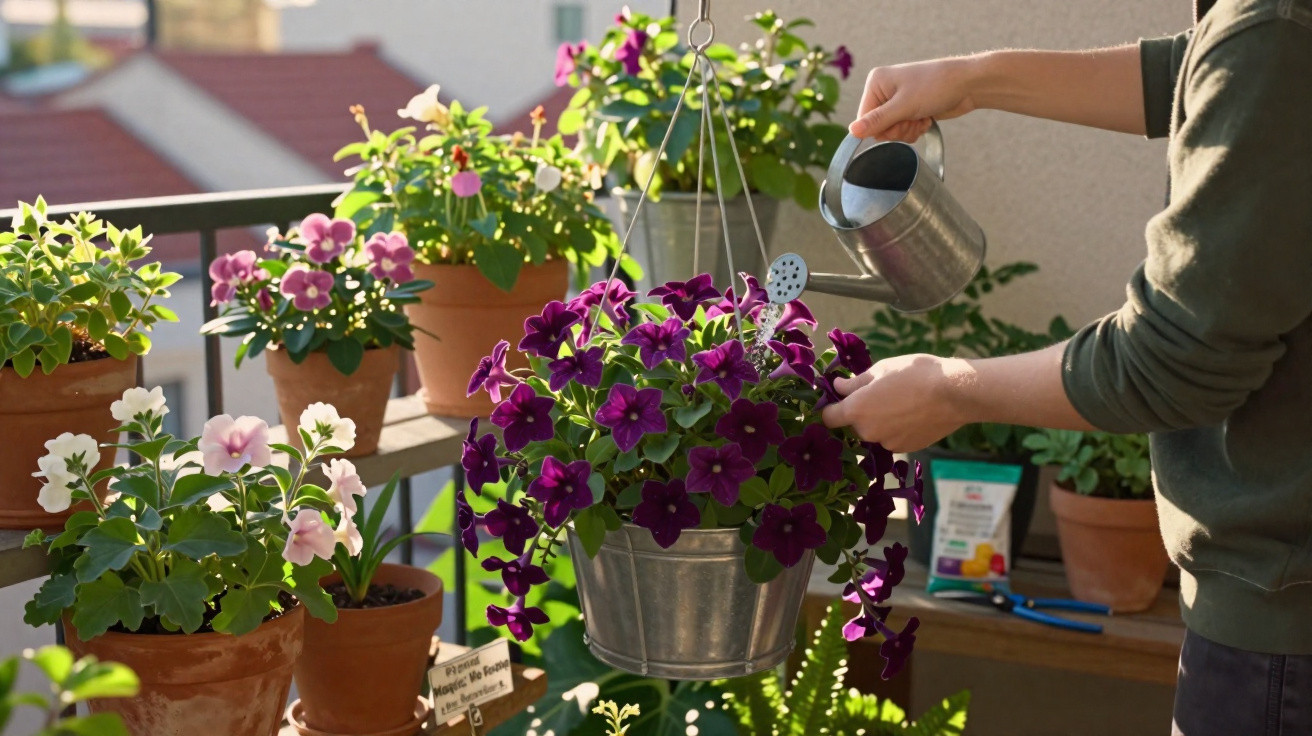
- Balcony favourites such as geraniums, petunias, begonias and fuchsias
- Potted herbs including basil, chives and parsley during the peak growing season
Thirsty tomatoes in containers and hanging balcony planters in particular will reward this kind of system with noticeably stronger growth and less drought damage to leaves and flowers.
Plants for which you should avoid the method
Some plants strongly dislike waterlogging. For these, a constant supply of water can become risky.
- Cacti and many other succulents
- Mediterranean herbs such as rosemary, lavender and thyme
- Plants in very small pots with little growing medium
- Newly repotted young plants and delicate seedlings
These plants prefer a thorough watering at wider intervals rather than permanent moisture. In small pots, there is also a risk that the bottle neck will damage the delicate root area.
Why the bottle method saves water and helps the environment
When you water with a bottle, you no longer pour unnecessary water onto the surface, where it can evaporate unused or run out through the drainage holes. Instead, the moisture is directed straight to the roots.
“Targeted drip irrigation significantly reduces water use while also extending the life of old plastic bottles.”
Instead of buying new plastic containers, you reuse bottles you already have. This fits well with the zero-waste approach and reduces rubbish. The method becomes even more effective if you also add mulch to the compost surface, such as bark pieces, grass cuttings or coconut fibre. This layer slows drying out, particularly in the midday heat.
In very dry pots, adding water-retaining materials to the growing medium can help, for example hydrogel beads. They absorb water from the bottle and release it gradually. This extends the period for which the compost remains comfortably moist.
The most common mistake with the bottle trick
The biggest pitfall is choosing the wrong combination of bottle size and number of holes. This is where many amateur gardeners go wrong, with consequences for their plants.
| Mistake | Consequence |
|---|---|
| Too many / overly large holes | The bottle empties quickly, the compost becomes too wet for a short time and then turns bone dry again later. |
| Too few / overly small holes | Hardly any water flows through, so leaves wilt despite the “watering system”. |
| A much too large bottle in a tiny pot | Risk of constant wetness and rotting roots. |
If you are using the trick for the first time, do not put the bottle in immediately before you leave. Test it a few days beforehand instead. That gives you time to make adjustments: add a hole, make one hole smaller or choose a different bottle size.
Practical tips for everyday use and holidays
For day-to-day use, the bottle can stay in the pot permanently. Many gardeners combine the system with conventional watering: on exceptionally hot days, they add water from above, while on normal days the drip supply is enough.
Before a longer holiday, it is worth running through a brief checklist:
- Moisten the compost thoroughly one or two days before departure.
- Test the bottles in advance and adjust the number of holes if necessary.
- Use two bottles for large planters if they dry out quickly.
- Treat drought-loving plants separately and water them only lightly.
If you have lots of pots, several bottles can create an entire balcony watering system. Even so, every plant is different: what is perfect for a tomato may already be too much for rosemary.
Why a simple trick removes so much stress
The bottle trick may sound like an improvised DIY solution, but it makes everyday life noticeably easier: there is less guilt when you arrive home late and less need to search for neighbours to water while you are away. At the same time, it helps you develop a better understanding of the water requirements of different plants.
Anyone who spends a little time on the initial test will soon find the right combination of bottle, hole size and location. Many people then notice that their plants cope much better with hot spells – and that an old water bottle in a pot can sometimes achieve more than an expensive irrigation system from a garden centre.
Comments
No comments yet. Be the first to comment!
Leave a Comment