
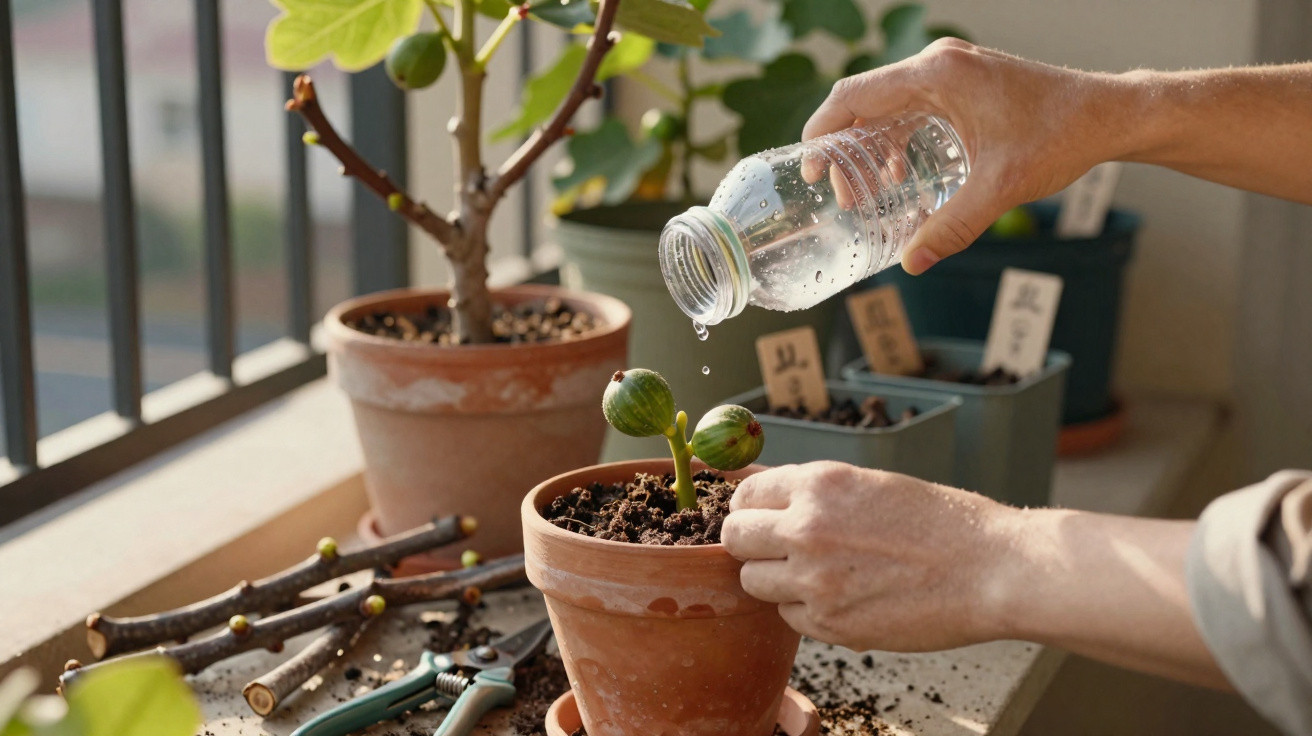
Many amateur gardeners assume that a new fig tree requires money, space and, above all, experience. In reality, one well-timed action in late winter is enough to create a second tree from one you already own. Anyone who knows the right timing and method can establish their own small fig grove – even as a complete beginner.
Why late winter is the ideal time
Fig trees can look lifeless in February, with bare branches and a canopy that appears frozen in place. Yet plenty is already happening inside the wood. Sap is beginning to rise, while the shoots are accumulating stored energy.
“The best time for new roots is just before the tree ‘wakes up’ – in other words, shortly before its buds begin to break.”
This transitional stage is precisely the right time to take and root hardwood cuttings. When a branch is removed before growth starts, the energy stored in its wood is directed chiefly into producing roots. If you wait until leaves have already emerged, some of that energy goes into the new canopy instead, making successful establishment more difficult.
February is particularly suitable in mild areas. In colder locations, take the cuttings no later than early March, provided the buds are still closed and there is no prolonged frost.
Choosing the right branch: no new tree without a healthy foundation
Fig trees can be propagated very reliably from hardwood cuttings. Selecting a suitable shoot is therefore the most important step.
How to identify the ideal shoot
- It grew in the previous year, rather than being fresh, green new growth.
- It has already become woody, feels firm and is grey to brown in colour.
- It looks healthy, with no cracks, damage or dark marks.
- It has several clearly visible buds along its length.
Very young shoots that are still green and soft are prone to rotting and dry out quickly. They are far less suitable than strong branches that have already become woody.
Cutting hardwood cuttings correctly
From a suitable branch, cut several sections measuring around 20 to 25 centimetres each. As a guide, they should be roughly pencil-thick. Every section needs three to four visible buds.
When making the cuts, follow these rules:
- At the bottom: make a straight, horizontal cut just below a bud.
- At the top: make an angled cut about one centimetre above the final bud.
The angled top cut has a useful purpose: it lets you see immediately which end is the top, preventing you from planting the hardwood cuttings upside down by mistake.
The ideal potting mix: loose but not overly rich
Although figs can be rooted directly in a garden bed, using a deep pot is more reliable. It gives you much better control over moisture, frost protection and positioning.
Substrate for strong roots
“A loose, well-aerated growing medium encourages root formation and prevents waterlogging – fig trees really do not like wet feet.”
A straightforward mix works particularly well:
- 2 parts potting compost or garden soil with a high humus content
- 1 part sand or perlite for drainage
For a 5-litre pot, this is approximately 3.3 litres of soil and 1.7 litres of sand. The mixture should feel light, crumbly and not sticky.
Planting and watering the hardwood cutting
Use a stick or your finger to make a planting hole first, so the wood does not split as you insert it. Place the hardwood cutting deeply enough for around two thirds to three quarters of it to be below the surface. At least one bud must remain above the compost.
Firm the soil gently around it, then water carefully. The growing medium should be moist, never soaking wet. Excess water must be able to drain away through the base. A pot with no drainage holes is a sure route to rot.
Mini greenhouse for figs: create your own tree nursery with a bottle
For your future fig tree to get off to a good start, it needs high humidity without excessive wetness around the roots. A simple trick can achieve this, even on a balcony.
A plastic bottle as a protective cover
Cut the bottom from a large PET bottle and place it over the hardwood cutting like a bell jar. Leave the cap slightly loosened or make a small hole in it. This creates a mini greenhouse:
- The air inside stays humid for longer.
- The cutting is protected from drying out.
- Wind and changing temperatures affect it less severely.
If too much condensation forms inside, open the cap a little further or remove the cover temporarily. Mould on the surface of the growing medium indicates that it is too wet.
Mistakes many people make – and how to avoid them
Fig hardwood cuttings are robust, but many attempts still fail because of common beginner mistakes.
Too much water, too little patience
“The most common reason hardwood cuttings fail is not dryness, but constant moisture.”
Keep the growing medium only lightly moist. If the pot feels noticeably heavy, it usually contains enough water. Allow the surface to dry before watering again.
Another classic error is pulling on shoots to check whether roots are forming. This tears off delicate new roots and sets the plant back. Instead, look for visible signs. If several fresh leaves emerge in spring and the shoot grows noticeably, rooting is usually progressing well.
The right time to plant out
Even if the cutting is growing enthusiastically by early summer, it is not yet ready for its final position. Fig trees need time to develop a stable root system. Wait until the following autumn:
- The plant has completed an entire growing season.
- Its roots will have filled the pot more thoroughly.
- The tree will cope more robustly with winter outdoors.
Only then should you plant the young fig tree in a bed or move it into a larger container.
Suitable varieties for balconies, gardens and cold regions
A hardwood cutting is a genetic clone of the parent plant. Propagating a particular variety therefore gives you exactly the same characteristics: growth height, fruit colour, yield and ripening period.
Two fig harvests a year, or one strong crop?
In principle, fig trees can be divided into those that produce one harvest and those that produce two harvest periods each year:
- Varieties with two harvest periods usually fruit in early summer and then again from late summer into autumn. They are well suited to warmer sites with long, sunny summers.
- Varieties with one main harvest often deliver more dependable yields in cooler areas, because their fruit ripens in time before the first frosts.
For small gardens or terraces, a compact-growing variety that can be kept easily in a container is worthwhile. Those with plenty of room can choose a more vigorous, fast-growing option that can become truly impressive after several years in place.
Better chances of success for beginners
If you feel unsure, make the odds work in your favour: rather than taking just one hardwood cutting, simply take several from the same tree. Three or four shoots in one pot or across several pots greatly improve the likelihood that at least one will thrive.
A quick hygiene measure before cutting is also worthwhile: wipe your cutting tools with alcohol or a disinfectant solution. This reduces the risk of introducing fungal spores or bacteria into the fresh cut surface.
What fig enthusiasts should also know
Anyone new to figs can quickly come across unfamiliar terms. When people refer to “woody shoots”, they simply mean branches that have passed their green, soft stage and already carry firm, brown bark. These are exactly the shoots that store substantial reserves of energy – making them ideal for propagation from hardwood cuttings.
Winter hardiness and position are another consideration. During their first year, young potted figs are best kept in a sheltered spot away from wind, such as against a house wall. In very cold regions, light winter protection made from horticultural fleece or a thick layer of leaves over the root area helps once the young tree has been planted in the garden.
Combining figs with other plants is also interesting: once the fig tree is growing in a bed, you can let low-growing herbs such as thyme or oregano cover the soil beneath it. They provide some shade, but dry quickly in summer, encouraging the warm, dry microclimate that fig trees love.
One fig tree in the garden can gradually become a small collection over the years. A well-fruiting specimen can produce several descendants from hardwood cuttings – for giving away, swapping or planting in other corners of your own garden. And it all begins with one simple cut on a grey winter day.
Comments
No comments yet. Be the first to comment!
Leave a Comment