
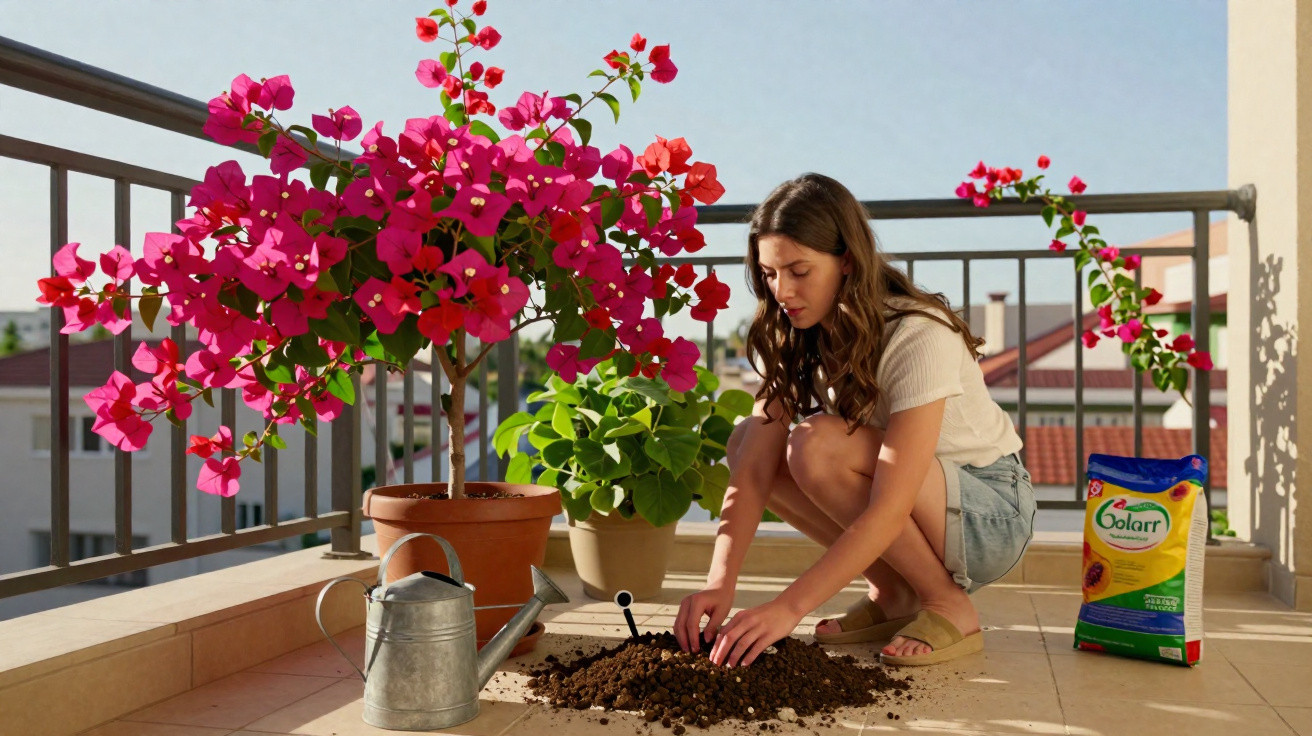
The vivid bracts of bougainvillea are the dream of many patio and balcony gardeners. Yet, instead of a burst of pink colour, they often get nothing but lush green foliage. This issue is rarely caused by an exotic disease; it is usually down to a habit that is extremely common among hobby gardeners – one that effectively stops the plant from producing blooms.
When bougainvillea stays stubbornly green
A bougainvillea shrub may look flawless, grow vigorously and appear completely healthy, yet still refuse to flower. That is what makes the problem so frustrating: at first glance, everything seems to be right.
The plant originally comes from warm, relatively dry regions. It thrives on sunshine, heat and brief, heavy downpours – not permanently damp compost or a semi-shaded balcony.
“In summer, a bougainvillea needs at least six hours of direct sunlight a day – otherwise it will not even consider flowering.”
During the growing season, temperatures between 20 and 30 degrees are ideal. Once the thermometer drops towards 5 degrees, the plant needs to be moved to a sheltered position; frost can cause serious damage. A spot beside a south- or south-west-facing wall that warms up during the day creates a small, warm microclimate – exactly what this shrub enjoys.
The compost is just as important. Bougainvillea does not like having “wet feet”. It needs:
- a pot with a large drainage hole
- loose, sandy compost or soil improved with expanded clay
- no saucer that remains filled with water
- distinct dry spells between watering
Even so, many people are left wondering why the plant produces such abundant leaves but no colourful bracts.
The hidden flowering killer: too much water and fertiliser
A typical scenario is a sunny summer patio during a heatwave. Worried about the plant, its owner waters it every other day and adds a dose of all-purpose fertiliser each week. It may sound caring, but for flowering it is disastrous.
In these cases, the outcome is always much the same: long, sturdy shoots, immaculate foliage and plenty of growth. The colourful bracts, however, are entirely absent. The shrub channels all of its energy into green growth rather than reproduction.
“The more water and nitrogen, the more greenery – and the fewer flowers.”
Botanically, this makes sense: when resources are plentiful, the plant prioritises growth. It effectively “knows”: I am doing well, there is no stress and no shortage – so there is no reason to expend energy on producing flowers. It switches strategy only when conditions become a little leaner.
That switch can be used deliberately. Slightly dry areas around the roots signal that resources may become scarce and that it is better to focus on offspring. The plant responds by producing its spectacular bracts.
The “controlled dryness” method: getting bougainvillea to flower again
Before changing the watering routine, the basic conditions need to be correct. This means:
- a fully sunny position with no shade
- free-draining growing medium, ideally with sand, lava grit or expanded clay
- a pot with a drainage hole and no saucer that stays wet permanently
During the warm months, fertiliser is the second factor to adjust. Rather than using a universal all-purpose fertiliser at short intervals, use a restrained amount of bloom-focused fertiliser with more potassium and less nitrogen. Fertilising should stop from mid-September so that the plant does not continue producing leaves endlessly.
How to water correctly for maximum blooms
In summer, the basic rule is to water only once the top layer of compost has dried out. In practical terms:
- push a finger 3–4 centimetres into the compost
- if this area feels dry, it is time to water
- then water thoroughly once, until water runs out from the bottom
- empty the saucer completely after around 30 minutes
So, the plant should not receive small daily sips; instead, give it alternating dry periods and “thunderstorm rain”. This variation encourages flowering far more effectively than constant moisture.
From November to March, bougainvillea can be kept somewhere cool and bright, at roughly 10 to 15 degrees. It needs very little water during this period. Extend the intervals between watering until the compost is almost completely dry, without allowing the plant to dry out entirely. The winter location should be cool rather than comfortably warm, otherwise the shrub suffers and will be lacklustre in spring.
How to recognise the right time to water
Anyone who does not want to rely on a calendar or watering schedule should consistently check the compost rather than the clock. The finger test is part of the standard routine for every bougainvillea enthusiast.
“The pot tells the truth: water only when the compost feels dry – not because it is ‘time again’.”
A slight drooping of the leaves can indicate that the plant is beginning to get thirsty. If leaves turn brown or curl tightly, however, the dry period has lasted too long. The plant then needs water immediately – and a slightly shorter cycle in future.
The aim is a repeating pattern: a few days of dry compost followed by a thorough soaking. This mirrors summer rain in dry regions, the bougainvillea’s natural environment.
Common mistakes that hold back flowering
Alongside incorrect watering, several familiar mistakes can reduce the floral display:
- Automatic watering – this usually leaves a constant level of residual moisture and removes the plant’s “stress signal”.
- A permanently full saucer – this encourages root rot and weakens the entire plant.
- An oversized pot – the plant first develops a huge root system before it turns its attention to flowering.
- Pruning at the wrong time – hard pruning shortly before flowering removes the shoots on which the bracts form.
- Wintering in a warm living room – dry central-heating air and the lack of a rest period put the shrub under strain.
For pruning, the rule is to thin the plant lightly after a flowering period, cutting back dead and very long shoots. A harder prune is better left until late winter, shortly before the plant starts growing again.
What really lies behind bougainvillea “flowers”
Many people mistake the bright blocks of colour for flowers, but botanically they are bracts. The actual flowers are comparatively small, whitish to cream-coloured, and sit in the centre of these colourful displays.
The bracts are responsible for attracting insects, much like those of poinsettias or lantanas. For gardeners, this means that it is not the flower itself but these coloured bracts that respond particularly strongly to light, dry periods and nutrient supply.
A practical example for the balcony
Anyone hoping to get their bougainvillea flowering this year can proceed step by step:
- Check the pot: are the drainage holes clear, and is the compost loose enough?
- Move the plant to the sunniest available position, ideally with a reflective wall behind it.
- Cut back on universal all-purpose fertiliser and switch to potassium-rich feeding.
- Change the watering routine: no daily small amounts, but dry-and-water cycles.
- Turn off automatic watering, or at least bypass it for this pot.
The plant may respond within just a few weeks, especially if it is strong and healthy. By contrast, anyone who constantly “spoils” it will often wait in vain for an explosion of colour.
Interestingly, this principle does not apply only to bougainvillea. Many Mediterranean container plants – including oleander, plumbago and lantana – reward short dry spells with more abundant flowering. Keeping this in mind makes it possible to turn entire patios into seas of flowers through more restrained watering, without buying extra fertiliser or constantly acquiring new plants.
Comments
No comments yet. Be the first to comment!
Leave a Comment