
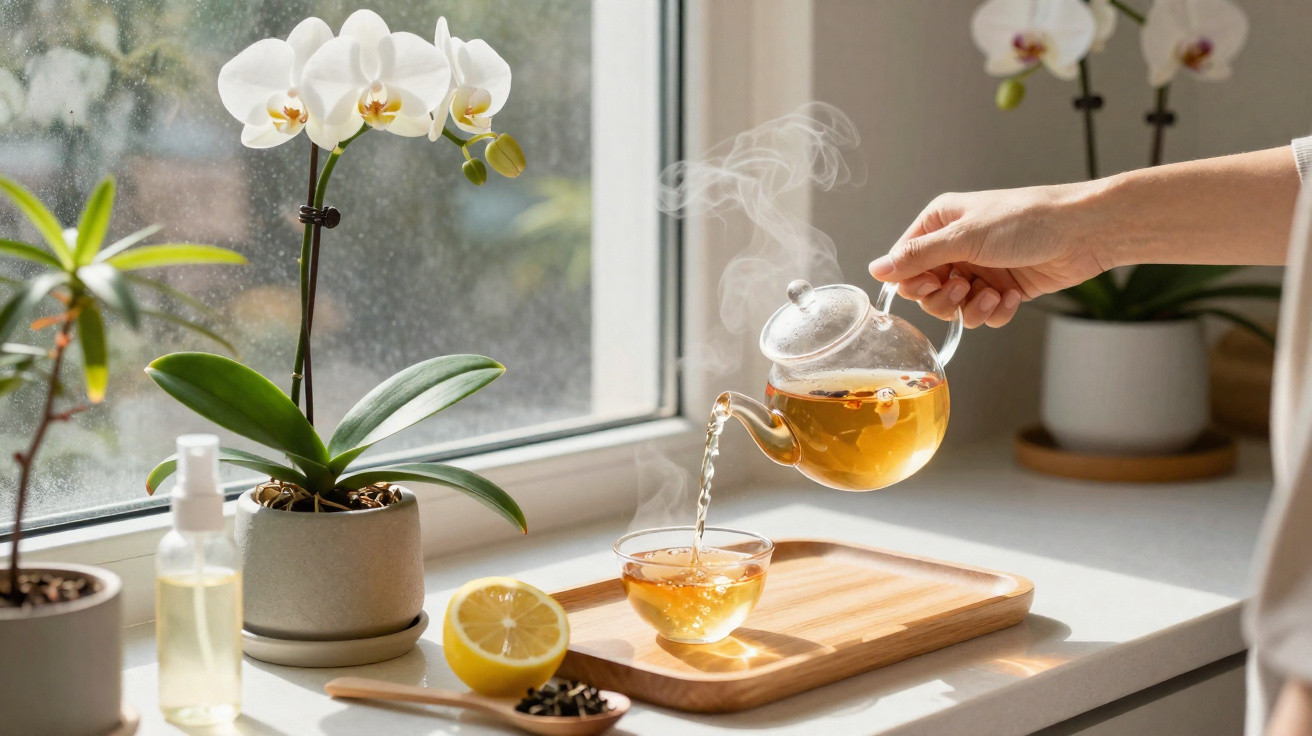
When the heating is on and the days are grey, even your favourite orchid can quickly start to look tired and lifeless.
At precisely this time, an unassuming ritual from Japan promises a surprising revival.
Many plant lovers will recognise the situation: the orchid was a real showpiece in summer, then loses its lustre in autumn, and by winter all that remains is a sad clump of leaves. Rather than producing fresh flowers, it develops limp leaves, dry roots and becomes a source of frustration on the windowsill. Japanese hobby gardeners rely on an age-old method during this very phase, using simple household ingredients to restore the plant’s vigour – with no specialist fertiliser and no gimmicks.
Why orchids often become weak in winter
Orchids are naturally tropical plants. Indoors, however, they are usually kept in dry, centrally heated rooms, receive too little daylight and are often watered incorrectly. This causes stress – and a stressed orchid will not produce new flowers.
- Dry heated air draws moisture from leaves and aerial roots.
- Short, dark days slow the development of new flowering shoots.
- Excess water causes roots to rot, while too little makes them shrivel.
- Limescale-rich tap water gradually prevents nutrient uptake.
As a result, the plant survives but switches into a type of “power-saving mode”. This is where the Japanese ritual comes in: it is intended to get the plant’s sap flowing again without placing the orchid under further strain.
The heart of the method: gentle stimulation rather than a heavy dose of fertiliser – using ingredients found in almost every kitchen.
The Japanese orchid ritual: a gentle wake-up call instead of miracle fertiliser
In many Japanese households, a straightforward care ritual forms part of the winter orchid routine. It uses a mild tea infusion to stimulate roots and leaves without scorching them or overloading them with salts.
Ingredients you need
- 1 litre of room-temperature spring water or rainwater
- 1 bag of unflavoured green tea, ideally organic
- 2–3 drops of lemon juice (optional)
Green tea contains natural antioxidants and small quantities of minerals. These provide a light boost without shocking sensitive roots with concentrated fertiliser. Lemon juice lowers the pH level very slightly, making the water more similar to conditions created by tropical rainfall.
Equipment that makes a difference
- A clean spray bottle or small watering container with a narrow spout
- A bright position away from direct midday sun
- A soft cloth for gently wiping the leaves
The key is not an exotic additive, but the application method: small amounts, used precisely and regularly, rather than infrequent, heavy watering sessions.
How to use the tea method step by step
Choosing the right time for the “wake-up call”
Watch your plant carefully. Typical winter warning signs include:
- leaves becoming soft and slightly wrinkled
- roots that look dull, silvery and dry
- no new flowering shoots for a long time despite the plant otherwise being healthy
Schedule the ritual for the morning, when room temperatures are around 18 to 22 degrees. The orchid should not have been watered for two to three days beforehand, so that its roots readily absorb the infusion.
Applying the Japanese tea method in detail
- Brew the green tea with hot water, leave it to steep for 5–10 minutes, then allow it to cool completely to room temperature.
- If desired, stir in the lemon drops and filter the liquid so that no particles end up in the container.
- Pour it into a spray bottle or watering container with a fine spout.
- Lightly mist the leaves and aerial roots, while avoiding the central crown of leaves so that water cannot collect there.
- Use a cloth to remove any drops running off the leaves.
- Moisten the growing medium only minimally; never soak it.
Once every two weeks is entirely sufficient – consistency matters, not quantity.
Many hobby gardeners report that, after several weeks, their plants develop stronger leaves, plumper roots and, later, one or more new flowering shoots. The tea infusion is not a replacement for fertiliser, but it can act as a boost alongside an otherwise sensible care routine.
How to strengthen your orchid for the long term – not only in winter
Anyone using the tea method should adapt the rest of their care routine accordingly. Even the best boost achieves little if the plant is still left in dry heated air or standing in water.
Three simple habits with a big effect
- Less is more when fertilising: During the colder months, a heavily diluted specialist fertiliser roughly once a month is enough – or stop altogether if the plant is visibly dormant.
- Wipe the leaves regularly: Dust obstructs respiration. A slightly damp cloth, with no leaf-shine product, is perfectly adequate.
- Turn the pot weekly: Rotating it by a quarter turn each week ensures every side receives equal light and prevents uneven growth.
Common mistakes that weaken your orchid again
- Waterlogging in the pot – it is better to keep it slightly drier than to water constantly “out of sympathy”.
- Placing it directly above a radiator or in a draughty area by the window.
- Hard tap water containing plenty of limescale – filtered, soft water is a better choice.
This combination of gentle stimulation and a low-stress environment helps the plant retain its renewed strength instead of fading again after a brief improvement.
What explains the effect of tea and lemon water
Green tea provides traces of potassium, manganese and other minerals that plants can generally use well. In its highly diluted form, these act like a mild nutritional supplement. The antioxidants in tea may counteract free radicals on leaves caused by dry air and light stress.
The lightly acidic pH created by lemon juice resembles rainwater in tropical regions. Many orchids favour this mild acidity because certain nutrients then become more readily available. If you are unsure, simply begin without lemon and gradually try one drop per litre.
| Aspect | Ordinary tap water | Japanese-style tea infusion |
|---|---|---|
| Limescale content | often high | low (when soft water is used) |
| Nutrient density | hardly any trace elements relevant to plants | mild minerals from tea |
| pH level | usually neutral to slightly alkaline | slightly acidic with lemon drops |
Who can benefit most from the Japanese orchid trick
The ritual is particularly worthwhile for owners of Phalaenopsis orchids kept on windowsills in typical urban flats. Although this widely available variety is robust, it responds noticeably to dry air and unsuitable watering habits. Here, the tea method can work like a reset, returning the plant to active growth.
Anyone keeping several orchids can compare the effects easily: give one plant the tea infusion regularly and leave another without it. After a few months, this makes it possible to assess objectively whether the leaves become glossier, the roots appear fuller and the flowering is more abundant.
It is also interesting to combine the approach with other gentle care measures: a humidifier during periods of central heating, a thin layer of expanded clay in the decorative pot to increase humidity slightly, and light pruning of dead roots before starting the ritual. Together, these steps create a care package that carries orchids through the toughest part of the year – until they seemingly begin their flower display again out of nowhere in spring.






Comments
No comments yet. Be the first to comment!
Leave a Comment