
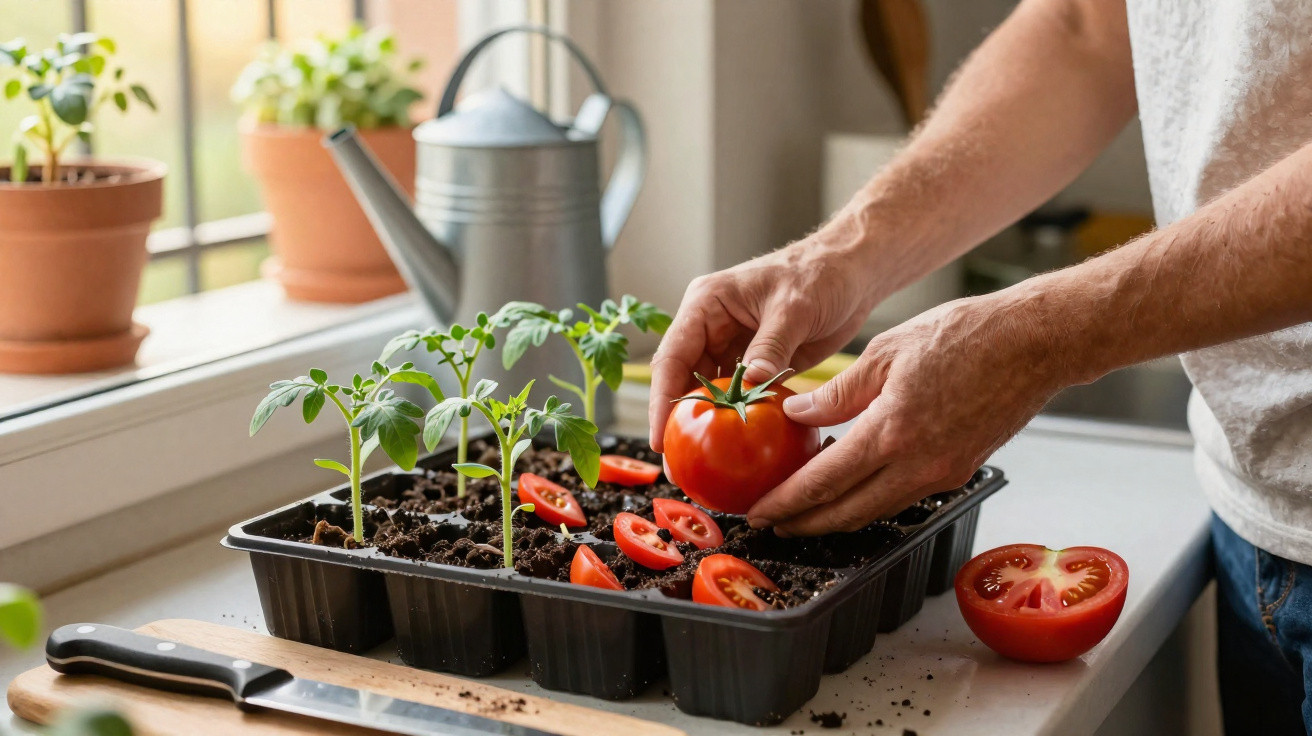
Many amateur gardeners dream of picking fragrant tomatoes straight from the balcony or garden bed, but do not want to spend a fortune on seeds and young plants. British gardening expert Simon Akeroyd has demonstrated a remarkably simple way to turn one shop-bought tomato into an entire tray of new plants, using materials found in almost every home.
Why a single tomato is suddenly worth a closer look
Tomatoes are a staple in most fridges, ending up in salads, sauces and sandwiches. Yet few people consider that every fruit contains dozens of viable seeds when they slice one open. With food prices rising, this becomes especially appealing: by deliberately reusing a tomato, you could grow a generous summer crop without buying separate seeds.
Akeroyd's method requires a very basic setup: an ordinary supermarket tomato and a clear plastic punnet, such as the type often used for grapes, berries or tomatoes. In effect, that is all that is needed to raise a whole supply of young tomato plants.
The idea: tomato slices instead of packet seeds – kitchen leftovers can produce dozens of small plants within days.
How the tomato slice trick works, step by step
At its heart, the trick simply uses ordinary tomato seeds. Rather than scraping them out individually, however, you leave them inside slices of the fruit. This saves time, avoids fiddly work and is easy enough to try with children.
What you will need
- 1 ripe supermarket tomato, preferably not straight from a very cold fridge
- 1 plastic tray with drainage holes in the base, such as a fruit or tomato punnet
- Seed compost or fine-textured potting compost
- A spray bottle or small watering can
- A bright spot on a windowsill or in a greenhouse
Instructions: from slices to a tray of seedlings
- Fill the tray to around two-thirds full with lightly moistened seed compost.
- Cut the tomato into four or five slices, each roughly 5 mm thick.
- Lay the slices flat on the compost surface, leaving a little space between them.
- Cover them with a thin layer of compost, using only enough to hide the slices.
- Water or mist gently until the compost is evenly moist but not soaking wet.
- Place the tray somewhere warm and bright, such as a sunny windowsill.
In favourable conditions, the first seedlings should emerge after around 10 to 14 days. They will often resemble a proper carpet of tiny tomato plants.
What matters after germination
Once a green covering has appeared, the key stage begins: choosing the best plants from the mass of seedlings. Trying to save every single one can quickly become overwhelming and may result in weak tomatoes that are more prone to disease.
Selecting the strongest tomato plants
- Wait until the seedlings have developed their first proper tomato leaves in addition to their seed leaves.
- Choose only sturdy, upright seedlings that do not appear overly leggy, long and thin.
- Prick out the seedlings carefully, always holding them by a leaf rather than the stem.
- Plant them into small pots filled with low-nutrient, loose compost, then water them in.
Less is more here: keeping only the strongest seedlings gives you sturdier plants and a better harvest later on.
Any remaining, weaker seedlings can simply stay in the tray before eventually being added to the compost heap. This keeps the task manageable and prevents the young plants from becoming overcrowded.
The right timing in the United Kingdom
Although the original advice is designed for the British climate, the main consideration is still the risk of frost.
| Region | Best period to start | Planting outdoors |
|---|---|---|
| Southern England and other mild, low-lying areas | Late February to March on a windowsill | From mid to late May, once frost is no longer expected |
| Northern, upland and colder areas | March to early April | Late May to early June |
Tomatoes are sensitive to frost. Keep the plants indoors or in a greenhouse until there is no longer any danger of sub-zero temperatures. Before moving them outside permanently, an acclimatisation period is useful: put the young plants outdoors during the day for several days, then bring them back in at night so they can adjust to wind and fluctuating temperatures.
Care: turning slice-grown plants into productive tomato plants
Once the tomatoes are established in a garden bed, raised bed or large container, they need the same care as any other tomato plant.
Position, water and nutrients
- Position: Choose the sunniest possible place, protected from prolonged rain and strong winds.
- Watering: Keep the compost or soil consistently moist, but avoid waterlogging. Ideally, water the soil directly rather than wetting the leaves.
- Feeding: After several weeks, support the plants with tomato feed or well-rotted compost.
- Support: Use canes, spiral supports or strings to stop the plants from bending or snapping.
If you are growing cordon tomatoes, regularly remove the side shoots that form in the leaf joints. This directs the plant's energy into fewer stems and produces larger fruit. Bush tomatoes can spread more widely and generally need less side-shoot removal.
Which tomato is suitable for the trick?
In principle, you can use any ripe tomato available at the supermarket. A few details can improve your chances of success:
- Avoid tomatoes from heavily chilled shelves where possible; let them come up to room temperature first.
- Select fully ripened fruit rather than tomatoes that are very firm and still pale.
- If you want plants that are more likely to resemble their parent, choose a clearly labelled traditional variety, such as a vine or Roma tomato, instead of an unidentified mixed pack.
There is one point amateur gardeners should bear in mind: many supermarket tomatoes are hybrid varieties. Their offspring may differ from the original plant, for example in size or flavour. For a home garden, this is often not a problem and may simply be a small surprise.
Benefits, risks and useful extras
The tomato slice trick is ideal for anyone who wants to experiment with growing their own vegetables without immediately spending money on seed packets and specialist equipment. It is particularly enjoyable for families with children, as the results become visible quickly.
There are still a few pitfalls. Compost that is too wet encourages fungal problems, including damping-off disease in seedlings. Keep it lightly moist instead, while ensuring good air circulation. Anyone with a very dark home can use a simple grow light to prevent seedlings from becoming leggy.
A similar principle can also work with other vegetables and herbs. Seeds from peppers or chillies, seeds from butternut squash, or dried seeds from pepper rings on a pizza can often be grown on as well. It is not always as reliable as it is with tomatoes, but it is worth trying for curious amateur gardeners.
The calculation is straightforward: one tomato will usually cost less than a packet of seeds, yet this trick can easily yield a dozen or more new plants. Give them a little sunshine, water and care, and by high summer you may be harvesting the reward directly from the vine: warm, fragrant and far more flavoursome than most tomatoes from the chilled aisle.
Comments
No comments yet. Be the first to comment!
Leave a Comment