
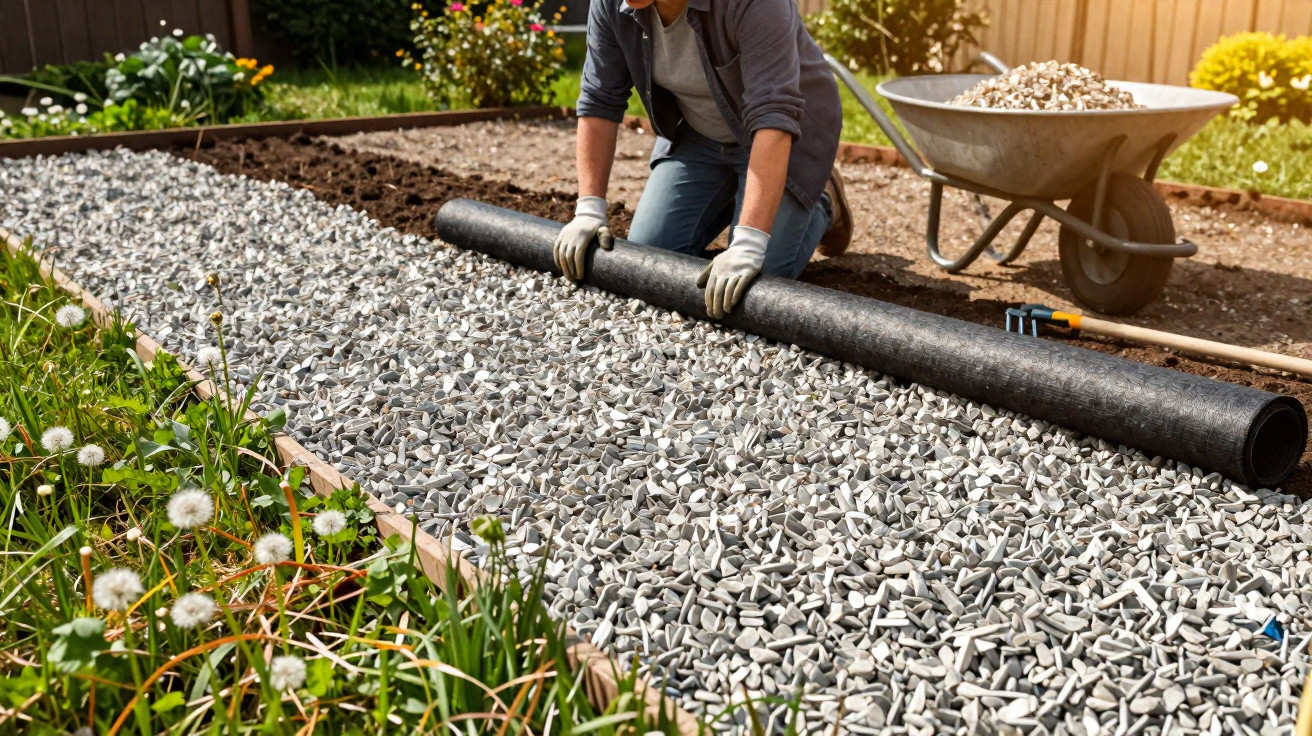
Garden professionals have long relied on a different approach.
Many amateur gardeners are driven to distraction by gravel areas: no sooner has the surface been neatly raked than fresh green patches appear between the stones. Hours spent pulling weeds offer only temporary relief. Landscape gardeners therefore use a system beneath the gravel layer, stopping weeds at the point where they begin.
Why so many weeds grow in gravel
At first glance, a deep gravel layer appears to be a natural barrier against unwanted growth. In reality, it is a different story. Seeds are carried onto the surface by wind, birds and footwear, where they encounter ideal conditions.
- Fine dust and organic debris build up in the gaps between stones.
- Rainwater drains through the gravel and keeps the layer below damp.
- Where the ground beneath is nutrient-rich, plants can root through it without difficulty.
Many people spread gravel straight onto topsoil or, even worse, over existing weeds. This creates an ideal growing medium that is merely hidden for a short time. The first shoots often emerge again within just a few weeks.
Gravel on its own does not stop weeds. What lies beneath the gravel layer is what matters.
Anyone who reaches each year for a weed burner, joint scraper or chemical product is therefore only treating the symptoms, rather than the cause.
The professional solution: geotextile beneath gravel
For years, landscape gardeners have used a straightforward combination: properly prepared ground, covered with a layer of geotextile before the gravel is added. This fabric works like a filter: water passes through it, while light and plant shoots remain below.
What geotextile actually is
Geotextile is a synthetic fabric, generally made from polypropylene or polyester. Sold in rolls, it is tear-resistant and lasts for many years. Its pores are fine enough to prevent roots from growing through, while allowing rainwater to drain away freely.
- It prevents weeds from growing upwards through the ground.
- It stabilises the base and helps to reduce ruts.
- It creates a clear separation between gravel and soil, so the surface stays cleaner for longer.
It is often sold as weed-control fabric, garden fabric or geotextile fabric. For driveways and heavily used paths, it is worth choosing a more robust grade.
Step-by-step guide to an almost weed-free gravel area
Clear the whole area
Remove every visible weed, including its roots. Old layers of gravel, root remnants and decaying leaves should be taken away too. The more thorough this stage is, the fewer problems there will be later.Level and compact the ground
The surface should be level, lightly compacted and free from large stones. For driveways, a load-bearing base of crushed stone or a mineral aggregate mix is advisable, compacted using a plate compactor.Lay the geotextile
Roll the fabric across the entire area. Each strip should overlap the next by at least 10 centimetres. Secure the joins with ground staples or metal hooks so that nothing shifts out of place.Add the gravel
Spread a gravel layer at least 5 centimetres deep over the fabric; for areas receiving heavier use, 8–10 centimetres is more suitable. Distribute it evenly and rake it smooth.
Properly installed geotextile can save years of continual weeding between pebbles.
With this method, amateur gardeners invest a little more time and material at the outset, then save countless working hours season after season.
Gentle alternatives for existing gravel areas
Many people have already laid gravel paths without fabric underneath. Those who do not want to dig everything up can tackle unwanted growth with natural remedies. Their effect is limited, but they are often sufficient for smaller areas.
Simple household remedies for weeds in gravel
Hot water
Pour boiling water directly over the plants. The heat destroys cell structures and roots. This is well suited to paths, driveways and small edge areas. Take care around paving: sudden, intense temperature changes can worsen fine cracks.Vinegar solution
Spray a mixture of household vinegar and water onto the leaves on a dry, sunny day. The plants dry out. Use this method only very selectively, as it can also harm wanted plants and affect soil life.Use salt sparingly
A small amount of salt can suppress the growth of individual persistent plants. Too much salt, however, causes lasting harm to the soil and can easily reach neighbouring beds or the drainage system. In many local authorities, using it on sealed surfaces is problematic or prohibited.
These household remedies work only in specific spots and need to be repeated. Anyone seeking a genuinely larger gravel area that remains easy to maintain will ultimately find it difficult to avoid a properly constructed base.
Prevention instead of constantly catching up
Once a gravel area has been laid correctly and kept clean, its maintenance needs can be reduced substantially by making a few routines habitual.
Regular care reduces weed pressure
Rake through the gravel regularly
Running a rake through the surface at short intervals disrupts young plants early. They never become firmly rooted and quickly dry out.Remove leaves and plant debris
Fallen leaves, petals and dust gradually create a thin layer of humus. Clear it away promptly, using a leaf rake or blower, for example. This deprives seeds of their growing medium.Inspect the edges
Weeds often slowly spread into gravel from lawn borders or flower beds. Neat lawn edging stones or metal edging strips can slow this effect considerably.
In marginal areas, such as beneath shrubs alongside gravel, tough ground-cover plants can be useful. They shade the soil, take up nutrients and leave less space for weeds without spreading over the gravel surface itself.
How long does this type of installation really last?
Many people wonder whether geotextile becomes brittle or clogged after only a few years. With good-quality material and a sufficiently deep gravel layer, gravel paths with fabric beneath them often remain largely weed-free for ten to twenty years.
| Option | Initial effort | Annual maintenance effort |
|---|---|---|
| Gravel without geotextile | low | high (repeated weeding required) |
| Gravel with geotextile | medium to high | low (mainly cleaning and raking) |
| Small area with household remedies | low | medium (regular treatment) |
Over time, fine soil dust can settle within the gravel. Weeds will then not grow up from below, but may establish themselves in the upper layer. In this situation, thoroughly loosening the surface and removing the top few centimetres is usually enough, potentially followed by adding fresh gravel.
Other points garden owners should consider
Anyone using fabric should also consider how water behaves in their garden. On particularly heavy soils, it may be sensible to include a thin drainage layer of coarse crushed stone beneath the geotextile, so rainwater can drain away reliably and puddles do not form.
There is another consideration: some regions have rules governing chemical weedkillers on paths and driveways. Household remedies may seem less harmful, but they can still affect soil organisms and drainage routes. For sensitive areas, removing individual weeds with a narrow weeding hoe or a weed puller remains the cleanest option, particularly where children and pets also spend time.
For future garden projects, it is worth considering alternative surfaces, such as self-binding gravel, grass paving grids or mixed areas of gravel and tough ground-cover plants. They create a more varied appearance, allow rainwater to drain more effectively and reduce weed pressure still further when combined with an appropriate base.
Comments
No comments yet. Be the first to comment!
Leave a Comment