
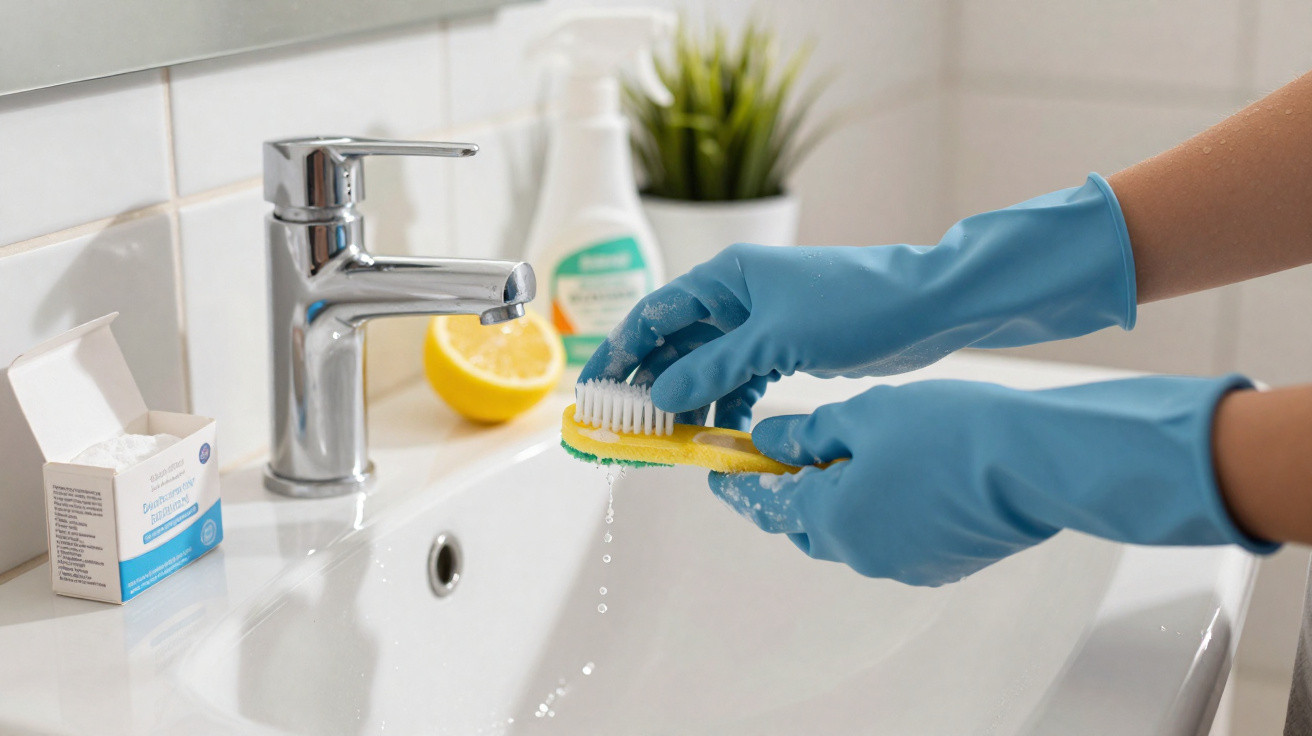
Yellowish marks on a bathroom basin often develop slowly, until one day they become impossible to ignore and make the room look neglected. This type of staining is linked to minerals in the mains water, which build up on the basin over time and create a hard, stubborn film that ordinary cleaning products do not always remove.
Why does a bathroom basin turn yellow over time?
A basin is where water, soap and everyday residue collect, so it is particularly prone to staining. Over several months, tap water repeatedly evaporates from the same surface, leaving behind tiny deposits of calcium, magnesium and other minerals.
These deposits gradually form a crust that is difficult to lift through scrubbing alone, particularly around the plughole and tap. Multipurpose cleaners and glass cleaners remove grease and germs, but they are less effective against hardened mineral build-up, which can leave the basin looking permanently grimy.
How to clean a yellowed bathroom basin effectively
To tackle the yellowing commonly found in bathrooms, a practical option is to use mildly acidic products, which react with the mineral crust. A common household solution is powdered citric acid intended for cleaning, dissolved in warm water to create an affordable and effective cleaning mixture.
Once the solution has been prepared, follow this straightforward application process to improve the result without excessive effort:
- Dissolve one teaspoon or tablespoon of citric acid in warm water until the mixture is even.
- Spread the solution over the entire basin surface, concentrating on the yellowest areas.
- Leave it for a few minutes to work before scrubbing.
- Scrub with a soft cloth or non-abrasive sponge, then rinse thoroughly with clean water.
How to clean a bathroom basin in hard-to-reach areas
Areas such as the joint between the tap and the ceramic, or the edges of the plughole, often develop darker grime. Routine cleaning tends to skim over these places without reaching the embedded dirt, allowing the mineral crust to harden over time.
A simple way to increase the cleaning solution's contact with these areas is to use materials that fit into narrow gaps, such as absorbent paper or a thin cloth. This creates a type of cleaning “compress”, keeping the product in prolonged contact with the most troublesome spot without having to remove any fittings.
How to stop the bathroom basin becoming stained again
After removing the yellowing, the next step is to adopt a few everyday habits that prevent stains from returning quickly. Drying the surface immediately after use significantly reduces the time that standing water remains on it and therefore lowers the amount of minerals that can settle on the basin.
Useful measures include wiping the basin with a dry cloth or towel after brushing your teeth, using soap dishes that drain properly, and carrying out a light weekly clean with mild washing-up liquid and a soft cloth. When yellowing starts to reappear, applying the citric acid solution again in small amounts helps keep the bathroom basin bright for longer, without relying on intensive deep cleans.


Comments
No comments yet. Be the first to comment!
Leave a Comment