
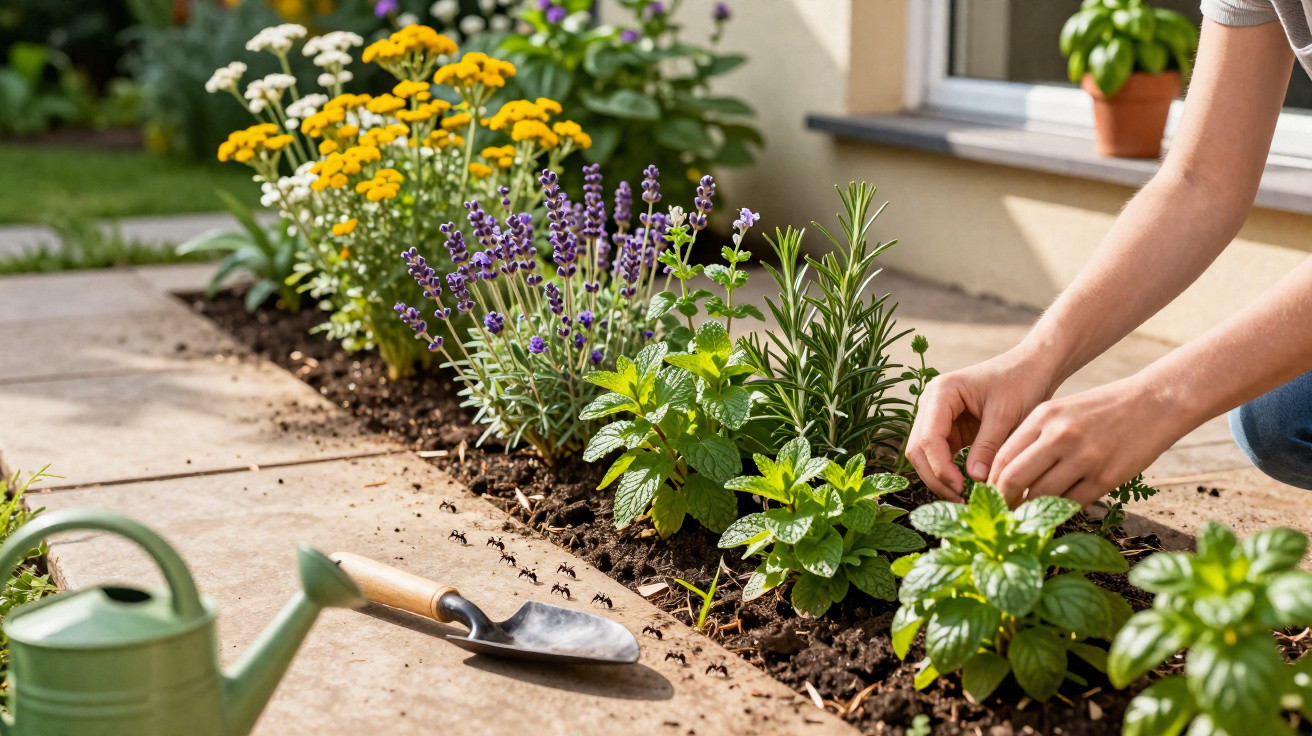
Rather than spreading poison, however, a trick from nature can help.
Ants play a genuinely useful role in the ecosystem, but they can become a major nuisance in flower beds and homes. Anyone who does not want to reach for harsh chemicals straight away can achieve a surprising amount with carefully chosen plants. The scents of certain herbs and perennials disrupt the insects’ sense of direction or make particular areas so unappealing that ants simply reroute their trails.
Why ants can suddenly become a garden nuisance
Ants aerate the soil, clear away carrion and disperse seeds. Even so, conflicts can quickly arise in practice: nests beneath patios can lift paving joints, ant trails lead directly to cake with coffee, and sandy mounds appear in lawns.
Ants are rarely completely “eliminated”, but targeted planting redirects them away from patios, house walls and beds in sensitive areas.
This is precisely where the idea of creating an invisible scent barrier with particular plants comes in. The insects rely heavily on scent trails for navigation. Potent essential oils from herbs and flowers interfere with those trails, so the ants simply choose another route.
Menthol power: peppermint as a living scent wall
Peppermint smells fresh to us, but its intense menthol scent is more of a disruptive factor for ants. It masks their scent trails, making it harder for them to find their way to the nest or a food source.
- It is best planted in pots so that it does not spread uncontrollably.
- It works particularly well beside front doors, cellar steps or patio doors.
- Harvest and cut it back regularly, as fresh shoots have the strongest scent.
Anyone who enjoys peppermint tea benefits twice: some can go into the teapot, while the rest protects outdoor areas from ant trails.
Lavender: a holiday scent for people, a stress factor for ants
Lavender adds colour to a bed and its fragrance is calming for many people. Ants, along with some other insects, will often avoid passing through areas with a strong lavender scent.
Rows of lavender along garden paths or around a patio are particularly suitable. In these positions, the plants act like a belt that guides insect traffic elsewhere. Bees and bumblebees also benefit from the plentiful nectar.
Lavender combines visual appeal with practical benefits: fewer ants, more pollinators.
Thyme: a low ground cover with an extra use in the kitchen
Thyme may look unobtrusive, but it packs a punch. Its essential oils can keep ants at bay while also reducing fungal diseases on neighbouring plants.
Typical places to use it include:
- as a low border around beds and gravel areas
- between paving slabs in sunny spots
- in pots on a balcony or windowsill, close to potential ant routes
In everyday cooking, thyme can then go straight from the bed into the pan, making it ideal for anyone who enjoys Mediterranean food.
Rosemary: hardy, drought-tolerant and strongly scented
Rosemary copes well with dry spells while producing a powerful aroma that ants avoid. Those with a warm, relatively sparse site can use rosemary to create targeted barriers.
Useful positions include:
- on either side of steps
- as edging around seating areas
- along house walls where ants commonly travel up and down
The needles can be dried and later used indoors too, for example in small scent bowls placed in problem areas.
Versatile helpers: tansy and yarrow
Tansy with bright yellow flowers
Tansy looks decorative with its yellow button-like flower heads and contains substances that irritate many insects. It is often planted where aphids and ants occur together, such as near roses or fruit trees.
As the plant grows quite vigorously, it is best positioned somewhere it can be kept under control easily, such as at the edge of a bed. Pet owners should note that tansy is poisonous in larger quantities and should not be planted in favourite spots used by dogs or cats.
Yarrow: delicate in appearance, clear in its effect
With its fine leaves, yarrow attracts beneficial insects such as ladybirds, while its aromatic compounds also deter ants. It is a good fit for natural-style gardens, perennial borders and meadow strips.
It tolerates heat and brief dry periods, making it appealing to those who want to water less. Especially in front gardens alongside the pavement, it creates a loose yet effective “filter” against invading armies of insects.
Basil and garlic: kitchen classics against ant columns
Basil around the windowsill
Fresh basil has an intense fragrance even when touched. Homeowners can use this effect when ants enter through window gaps or balcony door openings.
- Place pots directly on windowsills and beside balcony doors.
- Harvest regularly to encourage bushy growth.
- For a stronger effect, group several pots together rather than relying on a single plant.
For the kitchen, this means fresh leaves for salads, pasta and pizza at all times, as well as fewer ants visiting sugar and bread crumbs.
Garlic as a scented wall in the bed
Garlic cloves can easily be inserted between other crops, for instance among roses, strawberries or vegetables. The roots release substances into the surrounding soil that disrupt fungi as well as some insects.
Anyone who plants garlic in a circle around a bed or along a house wall creates an invisible, clearly scented boundary line for ants.
Crushed cloves can also be placed temporarily in especially affected spots, for example to gently redirect an ant nest.
How to use plant barriers correctly
Strategic placement rather than random planting
The best results come from matching each location to its purpose. It is worth observing the ant trails first: where do they travel, and where do they disappear? Those are exactly the places to position scented plants.
| Problem area | Suitable plants |
|---|---|
| Patio and seating areas | Lavender, rosemary, thyme |
| Windowsills and balcony doors | Basil, peppermint in pots |
| Bed edges and paths | Thyme, yarrow, tansy |
| House walls, cracks in masonry | Rosemary, garlic, peppermint |
Combining and caring for plants
A single mint plant by a patio door is often less effective than a small combination of several scented plants. Planting lavender, rosemary and thyme together in a long container, for example, creates a dense carpet of fragrance.
Regular cutting back encourages fresh, especially aromatic shoots. Dried-out or woody sections should be removed so the plants remain vigorous and continue to do their job.
Natural boosters: using essential oils sensibly
Anyone needing to act quickly, such as during a sudden influx of ants in the kitchen, can use essential oils as an additional measure. Add a few drops of lavender, peppermint or thyme oil to water, shake the mixture vigorously, and spray it onto ant trails, door thresholds and joints.
The effect does not last indefinitely, but it can be repeated regularly until the outdoor plants have developed their full effect. This combination of an immediate measure and long-term planting is especially helpful in spring, when ants are actively searching for food.
What else you should know
Scented plants are not a magic switch that makes every ant disappear without a trace. They shift the activity and reduce the number of insects in sensitive areas. Anyone who ignores crumbs, sugary leftovers and uncovered food sources indoors will soon see new ant trails despite plant barriers.
A complete approach therefore makes sense: clean kitchen surfaces, tightly sealing containers, sealed cracks and carefully positioned herbs and perennials outdoors. This helps keep ants in the garden where they are useful, while largely keeping them away from patios and living spaces.
For many amateur gardeners, this also has a pleasant side effect: the garden becomes more fragrant, more colourful and more exciting from a culinary perspective, while the ongoing conflict with ant columns becomes noticeably less stressful.



Comments
No comments yet. Be the first to comment!
Leave a Comment