
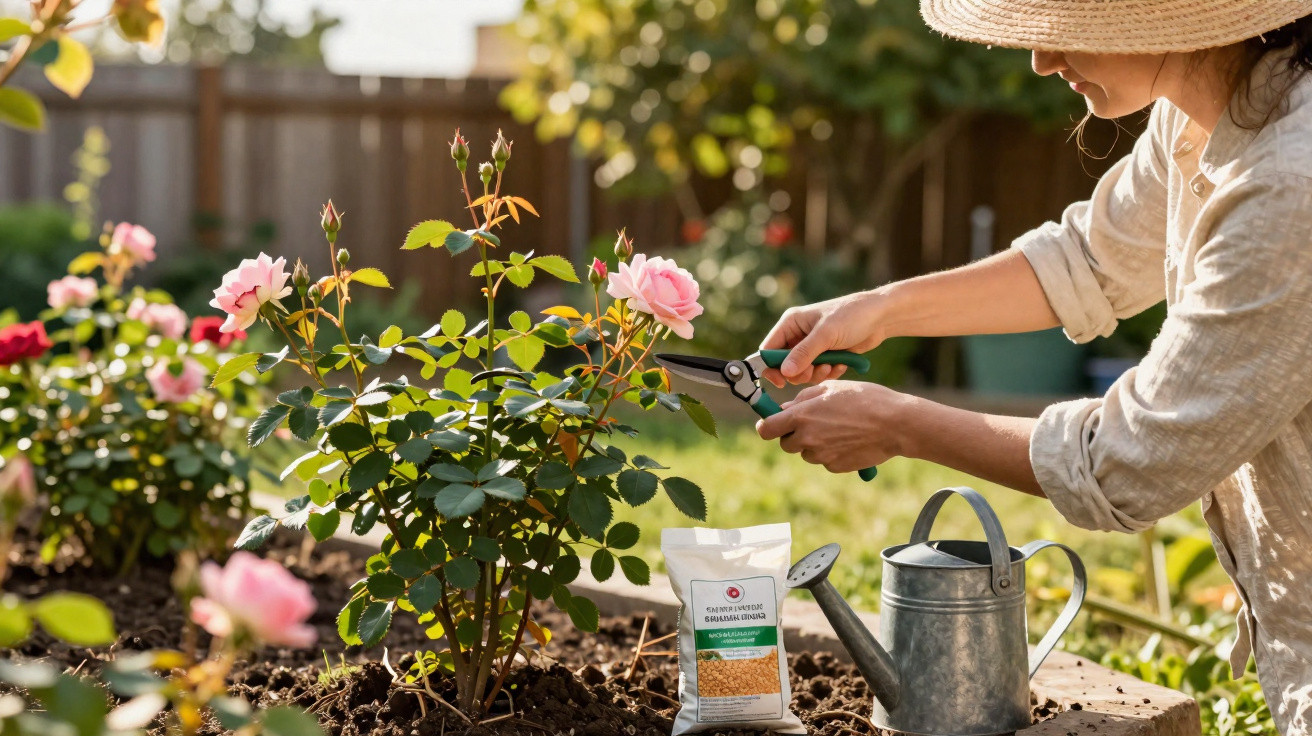
When a rose bush stops flowering, many gardeners wonder what has changed in its care. Usually, the cause lies in everyday maintenance details - such as watering, pruning or feeding - which build up over the months and hinder bud development. Knowing what the plant requires at each stage is the first step towards filling the garden with colour again, healthy blooms and vigorous new growth.
Why is the rose bush not flowering?
Rose bushes are demanding when it comes to light, nutrients and air circulation, and any imbalance commonly shows in the foliage as well as in the absence of flowers. Too little direct sunlight, pruning at the wrong time or too severely, and compacted or waterlogged soil are among the most frequent reasons flowering is prevented.
Growing roses in pots is another factor to consider. With limited room, roots can become cramped, leaving less energy available for producing flowers. Weak stems, yellowing leaves or plentiful shoots without buds can help pinpoint the issue and allow care to be corrected without drastic measures.
Watch a video on the Fazendo em Casa YouTube channel about powerful organic fertiliser recipes to strengthen rose bush roots and encourage abundant flowering:
https://www.youtube.com/watch?v=W-L57kQ8I-M
How can you identify why a rose bush is not flowering?
To work out what is wrong, inspect the plant step by step, starting with light levels: roses need four to six hours of direct sunshine each day. Then check the soil. Heavy clay, very hard and saturated ground - or, conversely, dry soil lacking organic matter - restricts root growth and flowering.
Leaves and stems also reveal important clues, acting as a quick "thermometer" for garden problems. The list below outlines some common signs and what they generally mean in day-to-day rose care:
- Too little light: lots of long stems, widely spaced leaves and hardly any blooms.
- Waterlogged soil: falling leaves, darkened roots and a musty smell in the pot or flower bed.
- Nutrient deficiency: a weak plant, small dull leaves and flowers that abort.
- Overly drastic pruning: few side branches and no buds on young shoots.
How should pruning, watering and feeding be adjusted to encourage new flowers?
Correcting basic care is often enough to help a rose bush flower regularly again. Pruning should focus on removing dead, diseased and crossing stems, opening up the centre of the plant while retaining several well-shaped main stems, especially in late winter or early spring.
Watering should keep the soil slightly moist, but never saturated, with effective drainage in both pots and flower beds. Feeding, meanwhile, needs to be balanced, with an emphasis on phosphorus and potassium during the new-growth and pre-flowering stages. Avoid excessive nitrogen, as it promotes foliage alone and reduces bud production.
Which fertilisers and care practices help a rose bush flower all year round?
To support flowering, combine organic fertilisers, such as well-rotted compost and bone meal, with mineral formulations made specifically for roses, always following the stated dosage. In pots, nutrient reserves are depleted quickly, so feeding should be more frequent but applied in small quantities to prevent root scorch.
Alongside nutrition, regularly checking leaves and buds makes it easier to spot aphids, scale insects, caterpillars and fungal diseases early, preventing the plant from using its energy to recover. With suitable light, moderate pruning, controlled watering and attention to pests, the rose bush is likely to respond with more frequent flowering cycles, keeping the garden colourful throughout the year.



Comments
No comments yet. Be the first to comment!
Leave a Comment