
Dark marks appearing on a home’s structure can cause serious financial concern. To deal with this issue, it is necessary to establish whether it stems from internal or external factors, so that effective, low-cost corrective action can be taken against unwelcome household moisture before hiring a specialist professional.
How does aluminium foil help diagnose moisture?
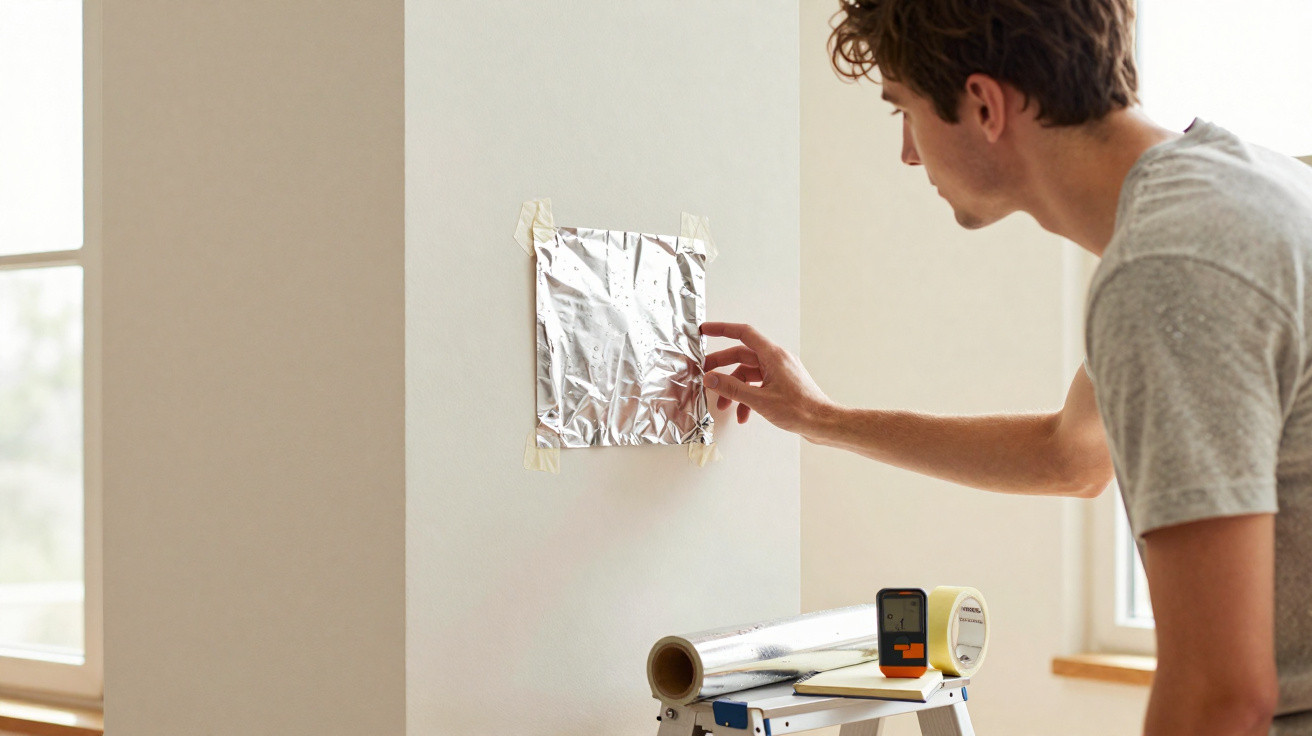
The method involves placing a reflective metal sheet directly over the affected surface once it has been thoroughly cleaned. This home technique tracks the source of water build-up, indicating whether the issue is caused by the indoor environment or by outstanding structural maintenance on the damaged wall.
Sealing the material completely prevents air currents from affecting the final household monitoring result. Although straightforward, the process requires careful installation so the diagnosis can accurately establish whether the issue is a serious hidden leak or simply everyday condensation.
The materials needed to carry out this home test are:
- Aluminium foil: The key item used to cover the damp area.
- Adhesive tape: Used to seal every edge of the foil completely.
- Damp wall: The surface to be assessed in the practical test.
- Collected water: The element that will appear on one of the surfaces.
- Dehumidifier: A useful appliance for controlling moisture in the air.
What are the steps for starting the test?
First, the householder should dry the affected section completely with clean cloths or heaters. This initial precaution removes all traces of surface water from the structure, allowing the household maintenance experiment to assess the real cause of the issue on that particular wall.
Next, secure the metal sheet over the affected spot by applying strong adhesive tape around its edges. The seal must be completely airtight against outside air, creating the necessary barrier for assessing a leak build-up or any later condensation.
How long should you wait for the result?
Once the metal material has been attached correctly, the householder must wait for the specified inspection period. The recommended interval is between 24 and 48 hours, which gives the adhesive tape enough time to hold the test in place on the wall being examined.
Waiting time
Recommended period
Waiting between 24 and 48 hours helps ensure accuracy.
Avoid disturbing the structure before the final deadline.
During this waiting period, it is important to check that indoor weather conditions in the property remain stable. Sudden temperature changes can affect how ambient water vapour behaves, altering the practical signs of a leak or condensation that may appear on the metal sheet.
The main stages involved in the chronological progress of this practical monitoring process are:
- Dry the stained area fully beforehand.
- Seal the foil tightly with adhesive tape.
- Wait for an interval of up to 48 hours.
How do you interpret which side the water appears on?
Careful visual assessment solves the household moisture mystery once the recommended attachment period has ended. The householder should inspect both sides of the metal sheet closely, noting precisely which surface has collected the droplets of water on the tested wall.
Establishing the exact side on which liquid appears determines the appropriate corrective action for the affected home structure. Whether the water build-up comes from the room’s atmosphere or from deep internal seepage, the test will clearly reveal a hidden leak or surface condensation.
The potential outcomes seen after carefully removing the metal sheet are:
- Droplets on the outside of the sheet indicate condensation.
- Moisture beneath the sheet points to seepage or a leak.
- No water shows that the sealing has been temporarily effective.
What should happen after the diagnosis?
Once the technical result is available, it becomes possible to plan effective work on the damaged residential structure. Specialists recommend attaching aluminium foil to walls to speed up diagnosis, making it possible to address structural issues in a targeted way before a hidden leak affects the property’s maintenance.
If the test identifies airborne water build-up, using a dehumidifier can quickly resolve the environmental issue. Deep structural faults, however, require immediate specialist intervention to protect the physical integrity of the home and remove severe sources of condensation or persistent moisture.
Official source: Information obtained directly from The Weather Network.





Comments
No comments yet. Be the first to comment!
Leave a Comment