
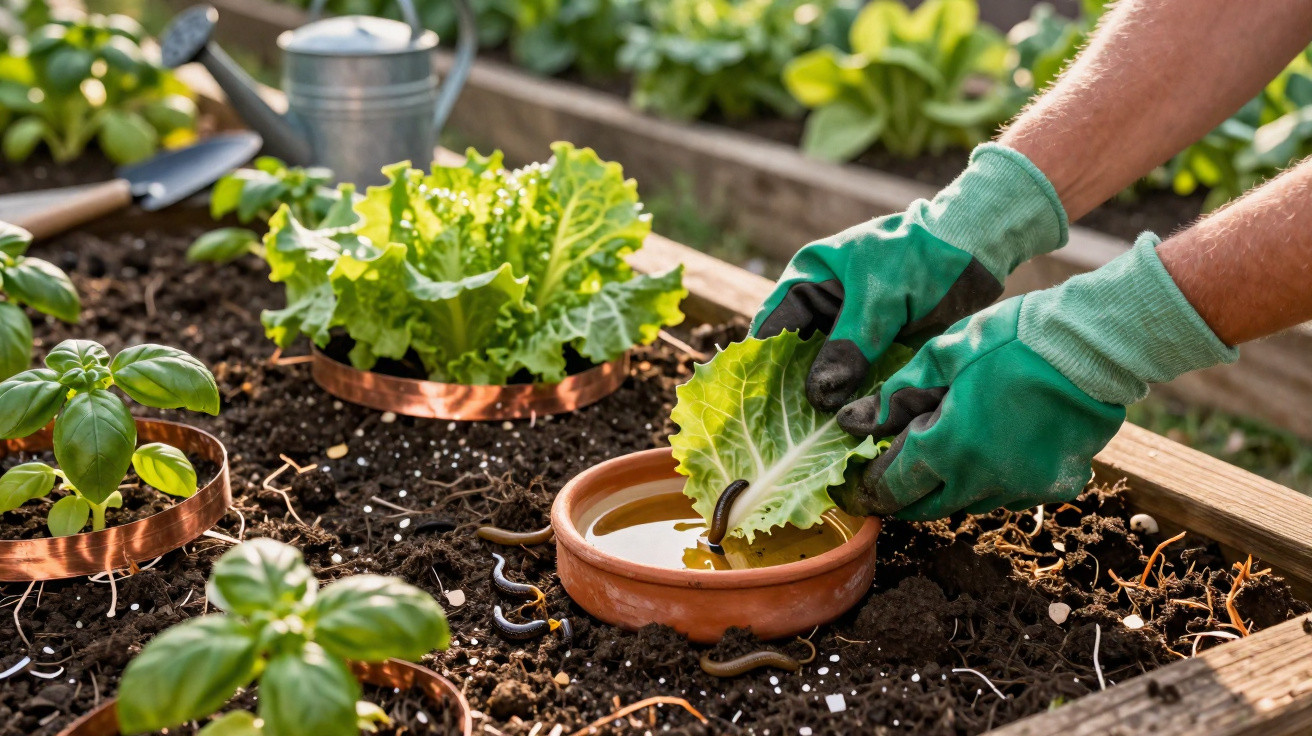
Controlling slugs in the garden is most effective when several straightforward measures are used together. Rather than relying on one trick alone, the best approach combines drier soil, fewer hiding places, physical barriers and collecting slugs when they are active.
Why do slugs appear so often in vegetable plots and flower beds?
Slugs are drawn to damp conditions, shade and soft leaves. Following rain, late-day watering or a build-up of plant debris, they can shelter near lettuces, young seedlings, strawberries, cabbages and ornamental plants.
Damage is generally worst overnight and in the early morning. Chewed leaves, shiny trails across the soil and seedlings severed at ground level are clear signs that the bed has become a feeding route.
What is the most effective method against slugs?
The most effective method combines prevention with physical barriers. A tidy bed exposed to morning sun, with watering directed at the roots, is less appealing to slugs than an area that remains damp and is full of places to hide.
- Water in the morning so that the surface can dry before nightfall.
- Remove boards, accumulated leaves and pots placed against the beds.
- Keep grass short around the vegetable plot.
- Shield vulnerable seedlings with barriers around the bed.
- Inspect the area after rain or particularly damp days.
How can barriers be used to protect plants from slugs?
Barriers work by making it harder for slugs to reach the most vulnerable foliage. Purpose-made slug fencing, smooth pot rims and copper tape can limit access to the areas at greatest risk.
- Fit barriers around lettuces, strawberries and newly planted seedlings.
- Use edging without gaps, as slugs can get through small openings.
- Strengthen the protection after heavy rain.
- Do not allow leaves to touch the ground beyond the barrier.
- Pair barriers with tidying the area around the bed.
Does a leaf trap help with slug control?
A trap made with lettuce leaves or damp plant waste can draw slugs into one location. Place the leaves out in late afternoon, cover them with a damp bag or board, and check the spot the following morning.
This method does not prevent further visits, but it makes hand collection easier. It is useful once an infestation has begun and slugs are dispersed around the vegetable plot, as it cuts down the time needed to search for them individually among the plants.
What should be avoided to prevent making the problem worse?
Certain habits make the garden more suitable for slugs. Watering at night, keeping an overly thick layer of organic matter close to seedlings, and leaving pots on damp ground all create cool shelter at precisely the time when slugs emerge to feed.
The safest control comes from a regular routine: well-ventilated beds, morning watering, barriers in the right places and frequent collection after rainy spells. When these practices are maintained, slugs encounter less shelter, less moisture and more obstacles before they can reach vegetable-plot plants.

Comments
No comments yet. Be the first to comment!
Leave a Comment