
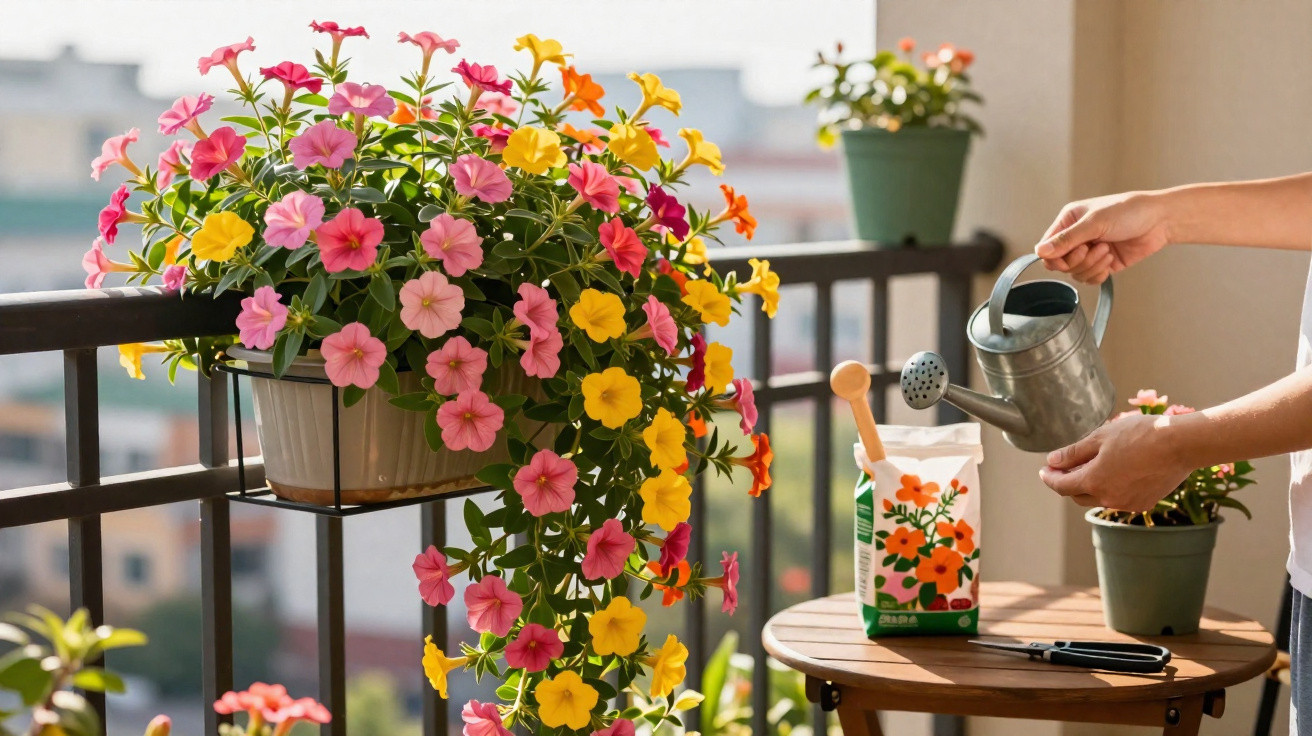
Many people admire a neighbour’s overflowing balcony boxes, where tiny colourful flowers spill over the edges like a curtain. This effect usually has nothing to do with gardening magic, but with one particular plant that is placed in the container at the right time in spring – then fills it without gaps throughout the summer.
The unassuming star plant for overflowing balcony boxes
The secret star is Calibrachoa. In garden centres, it is often sold under names such as “Million Bells” or “mini petunia”. Botanically, it is closely related to the petunia, yet it stays more compact and produces dense, trailing cushions.
A mature plant grows to roughly 15 to 30 centimetres tall, while spreading 30 to 60 centimetres wide. Its shoots initially grow slightly upright before tumbling over the edge of the planter, gradually creating an unbroken cascade of countless tiny bell-shaped flowers.
“From spring until the first frosts, Calibrachoa can produce hundreds, sometimes thousands, of small flowers – without requiring great gardening skills.”
Its colour range runs from classic violet through pink, red and yellow to multicoloured “camouflage” varieties. Modern cultivars, including ‘Superbells Magic Double Grapefruit’, even change colour during the season: their double blooms begin yellowish and shift towards pink, making balcony boxes look different almost every day.
Another advantage is that the plant is self-cleaning. Spent flowers drop off on their own, so there is no need to spend hours deadheading to keep the boxes tidy – an important benefit for working people, or anyone who would rather enjoy their balcony than maintain it.
Why spring planting time determines the summer display
Calibrachoa originates in warmer areas and is sensitive to frost. In Central European climates, it is therefore grown as an annual balcony plant. Choosing the right planting date determines whether it merely looks “quite nice” or takes over the whole box.
The rule of thumb is to plant only once frost is no longer expected and night-time temperatures are consistently above around 8 to 10°C. Depending on the area, this is generally from mid-April to late May.
- Planted too early: the plant stalls, establishes poorly and loses valuable weeks of growing time.
- Planted at the right time: roots quickly fill the whole container, shoots lengthen and the first curtain of flowers forms in early summer.
Planting after the last frosts gives the roots several weeks to grow through the compost completely before intense summer heat arrives. By July, the shoots will be hanging well over the edge and the characteristic cascading effect begins.
“For a dense, lush hanging basket, practical trials recommend three to four young plants per medium-sized container – fewer can quickly leave it looking patchy.”
Planting Calibrachoa in pots or balcony boxes
Calibrachoa likes air around its roots but cannot cope with waterlogging. Setting up the container correctly is therefore crucial.
Choosing the right container
- Use a pot, balcony box or hanging basket with large drainage holes in its base.
- Put a layer of expanded clay pellets or coarse terracotta pieces in first.
- Add a loose, high-quality compost for balcony plants or hanging baskets above this.
The compost needs to drain extremely well, allowing water to run away quickly without drying out completely. Compost sold specifically for balcony boxes has an advantage here, as it is designed for precisely these conditions.
Planting correctly – step by step
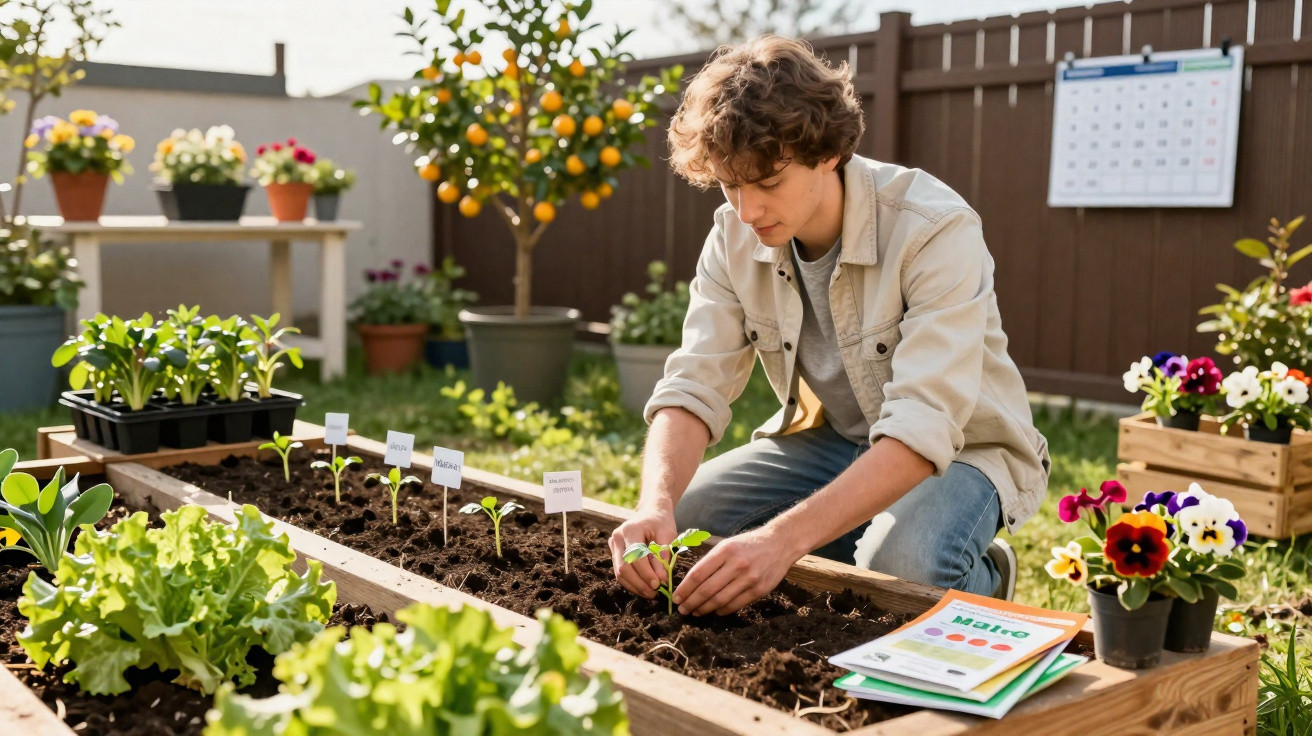
- Fill the container to around one third with the drainage layer and some compost.
- Remove the plants from their pots and gently loosen the root balls.
- Position three to four plants evenly in a circle or a row.
- Fill with compost until the root balls are just covered, then lightly firm it down.
- Water thoroughly until water runs from the holes, then allow it to drain well.
When planting, it is worthwhile mixing a slow-release fertiliser or organic base fertiliser into the compost. This feeds the young plants during their first weeks as they establish their roots.
Summer care: lots of flowers, little fuss
For the flowers to keep coming, Calibrachoa needs a balance of water, nutrients and sun – in the right amounts.
Watering without “wet feet”
The plant likes consistently fresh compost, but not soaking conditions. Let the top layer of compost dry slightly between waterings. Compost in hanging baskets dries more quickly, so watering is often needed daily on hot days; in large boxes, every other day can sometimes be enough.
“If you are unsure, put a finger into the compost: if it feels dry just below the surface, it is time to water.”
Constantly sitting in water in a saucer can easily cause root rot. Always pour away excess water, or avoid using saucers altogether.
Feeding for an uninterrupted wave of flowers
Calibrachoa is one of the heavy feeders among balcony plants. A single application of fertiliser at the start rarely lasts until autumn. Reliable options include:
- Base fertiliser at planting time, either slow-release or organic fertiliser
- A liquid flowering-plant fertiliser in the watering water every two weeks from May/June onwards
Without enough feed, the plant responds with paler foliage and fewer flowers. Topping up in good time keeps the stream of blooms going with scarcely a break.
A small trim with a big effect
In high summer, usually around mid to late July, many gardeners notice that the shoots become longer, flowers sit mainly at the tips and the plants start to look slightly tired. A light trim helps at this point.
Shorten several shoots by one to two centimetres – spread the cuts around rather than cutting everything back at once. The plant branches again at the cut points and starts growing afresh after a short pause. This can often extend flowering into October, provided early frost does not intervene.
Location, risks and smart combinations
Calibrachoa loves sun, though it also copes with bright partial shade. The sunnier the balcony, the more compact and floriferous the plants remain. In full shade, they decline and flower far less strongly.
A common risk is compost that stays wet for too long: roots begin to rot and the plant becomes weak. Yellowish, limp shoots despite damp compost are a warning sign. The only remedy is to water less, allow the compost to dry and improve drainage.
Calibrachoa is also highly practical for combining with other summer-flowering plants. Popular choices include:
- Geraniums as upright partners at the back
- Verbenas and lobelias for even finer flower textures
- Silver leaf or sweet potato vine for striking leaf-colour contrasts
In mixed boxes, select plants with similar water requirements. This makes it possible to water everything together, without one species suffering from dryness while another sits in wet compost.
Anyone who enjoys trying something new can choose the “chameleon varieties”, whose flowers change colour as the season progresses. They add movement to the box without any extra effort. Especially in urban balcony gardens, where every square metre matters, such a flower cascade creates a surprisingly intense summer feeling – even along just a few metres of railing.

Comments
No comments yet. Be the first to comment!
Leave a Comment