
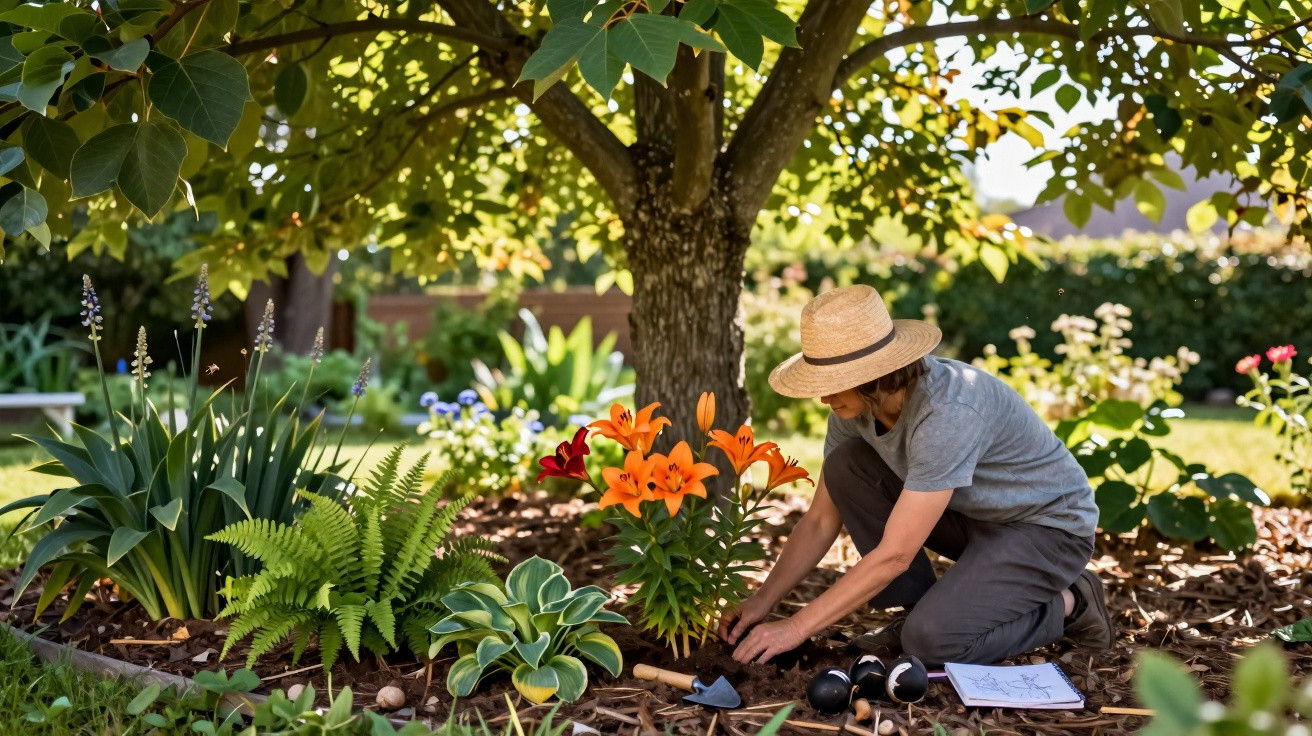
Many keen gardeners despair of black walnut trees: shade is one challenge, while the root toxin juglone is another. Perennials collapse, vegetables languish, and even tough ornamental plants surrender. Yet reports suggest that Asiatic lilies can flower magnificently right within the root zone of these “problem trees”. It sounds like a gardening myth, but there is genuine truth behind it.
What juglone does in the garden
Black walnut trees use a chemical method to suppress competition: they release juglone into their surroundings through their roots, leaves and nut husks. The toxin builds up in the soil, particularly where rainwater drips from the edge of the canopy and where the roots are most concentrated.
Plants that cannot tolerate juglone often show a reaction within days or weeks:
- Leaves wilt for no apparent reason.
- Foliage turns yellow quickly and drops prematurely.
- New growth fails to appear and the entire plant declines.
- In many cases, the plant eventually dies completely.
The intensity of juglone’s effects depends on several conditions, including the season, soil moisture, pH level and soil life. Levels are usually at their highest in summer, when the black walnut is growing vigorously. Fallen leaves and husks continue to release juglone for months after they have dropped. The toxic compounds also persist longer in compacted soil with poor aeration.
| Tolerance level | Typical symptoms | Chance of survival |
|---|---|---|
| Highly tolerant | No visible damage | 95–100% |
| Moderately tolerant | Slight yellowing, weaker growth | 60–80% |
| Sensitive | Severe wilting, leaf dieback | 10–30% |
| Highly sensitive | Rapid total failure | 0–5% |
“Anyone planning a garden within the influence of a black walnut needs plants that do more than survive juglone; ideally, they should remain completely unaffected by it.”
How Asiatic lilies cope with juglone
In the view of many experts, Asiatic lilies clearly belong in the “highly tolerant” group. Numerous practical observations from private gardens and trial sites indicate that these ornamental lilies grow remarkably normally even among black walnut roots. They produce strong shoots, develop firm stems and bear large numbers of their characteristic vivid flowers.
How do they manage this? The exact processes at cellular level have not yet been fully explained. Specialists assume there are two main strategies:
- The plant produces enzymes that break juglone down into less harmful compounds.
- Certain cell structures stop juglone from entering sensitive areas in the first place.
Asiatic lilies are likely to use a combination of both mechanisms. Their root systems remain active even in affected soils, and they form new flower buds every year. Gardeners’ reports show that the plants can remain in the same position for several years without displaying any signs of weakness.
“Anyone wanting at least a strip of colour beneath a black walnut will sooner or later turn to Asiatic lilies.”
Choosing a position: how close to the black walnut tree?
Although Asiatic lilies tolerate juglone well, some thought about positioning is worthwhile. As a rule, the toxin concentration in the soil decreases with distance from the trunk. It is greatest at the base of the trunk, while levels are already noticeably lower in the outer root zone.
For a successful start, consider the following points:
- Light: A site with good morning sun and light afternoon shade is ideal. This allows the lilies to flower freely without overheating.
- Planting depth: Plant the bulbs around 15–20 centimetres deep, depending on the variety, so that they can establish stable roots.
- Drainage: The soil must drain freely. Waterlogging is a far greater problem for lilies than juglone.
- Mulch: Use bark mulch or compost, but avoid fresh black walnut leaves or nut husks.
- Water: Water regularly in dry spells, especially during the first year after planting.
Anyone unsure can begin with a small number of bulbs at a modest distance from the tree, then gradually plant closer to the trunk over the years. This makes it possible to observe the individual tolerance threshold in their own garden.
Plants that complement Asiatic lilies
To prevent the area beneath the black walnut from offering only a brief burst of summer colour, staggered planting is worthwhile. Several bulb and perennial species are considered juglone-tolerant and work well visually alongside Asiatic lilies.
Bulbs for an extended flowering season
- Daffodils: Early performers that flower from March to April, depending on the variety, and generally tolerate black walnuts well.
- Ornamental alliums: Their spherical blooms appear in late spring and create an attractive transition towards the summer lilies.
- Snowdrops: Very early flowering and often resilient, making them ideal for the start of the season.
With careful combinations, it is possible to create a run of flowers from late winter into high summer, despite juglone in the soil.
Perennials and herbs as companion plants
In addition to bulbs, several robust perennials can suit both Asiatic lilies and the conditions beneath black walnuts. In many gardens, these include:
- some daylily varieties
- certain cranesbill species
- oregano and other aromatic herbs with vigorous root systems
These combinations are not only decorative; they also offer a practical advantage. Different rooting depths and flowering periods make efficient use of the limited space beneath the tree.
Asiatic lilies and pollinators: floral display with a side effect
Gardeners keen to support insects should look more closely at their flower choices. Asiatic lilies are not regarded as a leading food plant for solitary bees, but they do attract some pollinating insects, especially larger bee species and hoverflies. Their bold colours can act as signal points in the generally shadier area beneath a black walnut.
The result becomes particularly interesting when they are combined with other, more insect-friendly plants, such as:
- herbs including oregano or thyme
- floriferous perennials that also tolerate juglone
- early-flowering bulbs with easily accessible nectar
This creates a small stepping stone for pollinators despite the difficult soil chemistry, making the space far livelier than a plain lawn beneath the tree.
Preparing the soil: juglone is not the only problem
Many failures beneath black walnuts are caused less by juglone than by general shortcomings at the site. Compacted ground, drought stress from intense root competition and nutrient deficiency can all place considerable strain on plants.
Anyone planting Asiatic lilies should therefore loosen the ground thoroughly and incorporate plenty of well-rotted compost. This improves soil structure, increases water-holding capacity and supplies nutrients, without adding further juglone. It is important not to put any material from the black walnut tree into the compost, including leaves and nut husks.
“The more vigorous the lily root, the more calmly it responds to chemical stress in the soil.”
Seasonal care: small tasks, major benefits
Once the right position has been found, Asiatic lilies need very little maintenance. However, several measures can significantly improve their lifespan and flowering performance:
- Cut back faded stems so that more energy is directed into the bulb.
- Lift and divide overcrowded clumps every three to four years.
- Apply a thin layer of compost in spring.
- Do not remove the foliage until it has died back completely, as it feeds the bulb from within.
These routines apply whether the lilies grow beneath a black walnut or in an open border. Their inherent toughness is exactly what makes them appealing for difficult corners of the garden.
Risks and limits of juglone tolerance
Despite all the encouraging experience, juglone remains a toxin. Young plants, newly planted bulbs and weakened specimens react more sensitively than established clumps. Under an extremely high load - for example, directly in dense root matting combined with a large amount of black walnut leaf litter - even a naturally tolerant species may struggle.
Gardeners who want to be especially cautious can use a simple method: when planting, place a thicker layer of neutral, good-quality garden soil or compost in the planting hole. This gives the lilies an initial “protective zone” in which their roots can develop before reaching more heavily affected areas.
Those who understand the particular characteristics of black walnut and juglone can deliberately make use of even difficult areas of the garden. Asiatic lilies play a key role in this: they add colour to a space that many people have already written off, while showing how much potential remains in the soil despite the tree toxin.





Comments
No comments yet. Be the first to comment!
Leave a Comment