
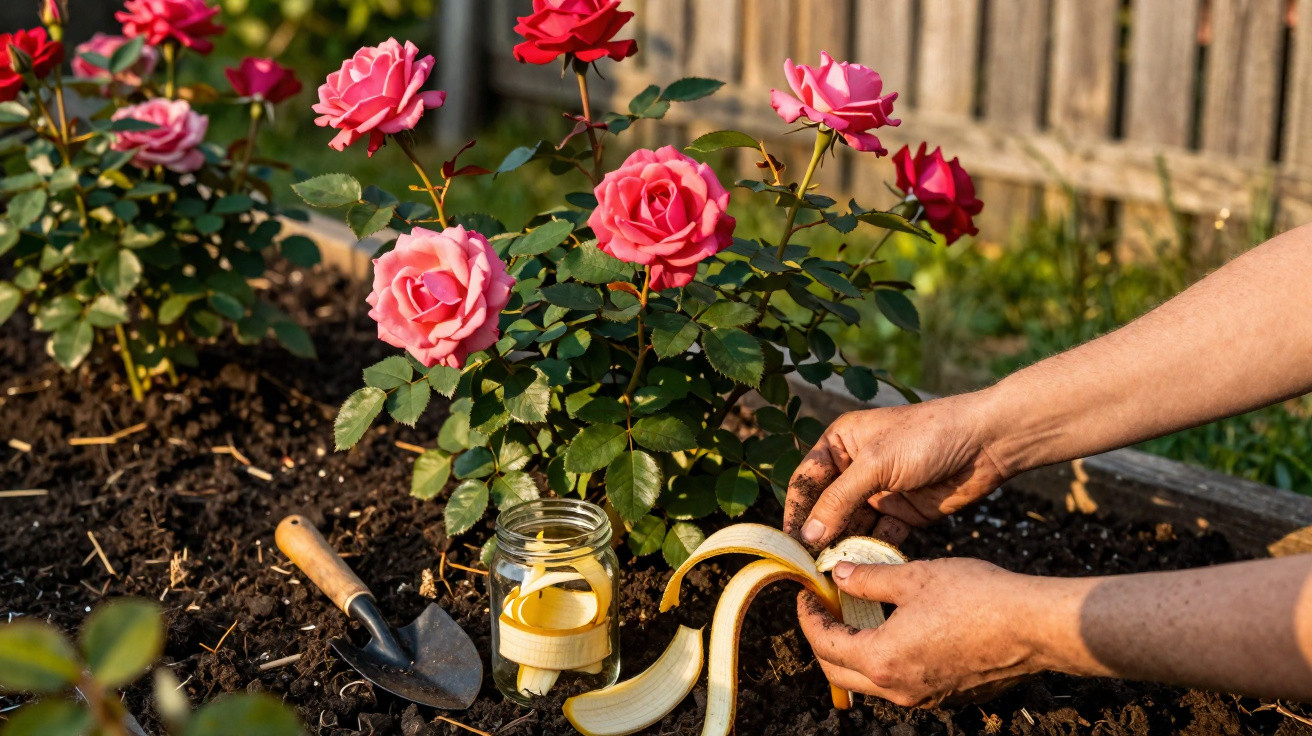
Many amateur gardeners do not realise that an unassuming kitchen leftover can make their rose bushes flourish dramatically – without any chemicals.
Anyone who loves roses knows the issue: they flower for a few weeks, then the display is over. Yet the flowering period can be extended considerably by giving plants the right boost at the right time. Alongside traditional pruning and care, there is a natural fertiliser that would otherwise end up in the bin and can become the quiet star of the rose bed.
Wake roses now: the right start to spring
As soon as the days become milder, roses gradually emerge from their winter dormancy. What happens now determines how abundantly they will bloom in summer. Anyone who does nothing at this point is missing an opportunity.
The first job is pruning. Experts advise cutting roses back firmly in early spring:
- remove all dead, brown or decaying wood completely
- cut out thin shoots that grow inwards
- shorten strong shoots to a few buds, ideally to an outward-facing bud
This allows more light to reach the centre of the bush, improves air circulation and makes fungal diseases less likely. It also directs the plant's energy into fewer but stronger shoots, which later produce more attractive flowers.
Improve the soil rather than simply admiring the flowers
Once pruning is complete, attention should turn to the soil. Roses are hungry plants that take a great deal of nutrients from the ground. Pruning without feeding can result in weak shoots and disappointing flowering.
Gardeners often use well-rotted compost or an organic rose fertiliser. Either option should be worked gently into the top layer of soil without damaging the roots. This makes the soil looser and more biologically active, while helping it retain water more effectively.
Roses that receive regular organic feeding develop deeper roots, stronger shoots and a noticeably longer flowering period.
This is exactly where a kitchen leftover that many people throw away without a thought comes into play – although it is pure gold for roses.
Why banana peels are so useful for roses
Bananas regularly go into the shopping basket, while their peels almost always go into the bin. For rose enthusiasts, that means wasted potential. The peel contains plenty of minerals that plants urgently need.
Its high potassium content is particularly important. Potassium reinforces cell walls, encourages bud formation and supports steady, healthy growth. With a good supply of potassium, roses often respond with more buds and sturdier flower stems.
The peels also provide smaller quantities of calcium and magnesium. Both substances support a balanced soil environment and may help roses become more resilient against fungal diseases such as powdery mildew.
Potassium-rich banana peels can help roses continue flowering for longer and cope better with stress – such as periods of heat.
Using kitchen leftovers wisely can therefore save money on fertiliser while also improving the soil around rose bushes.
Using banana peels correctly: the rose treatment
Simply throwing a whole peel beside the bush is not enough. Roses need a little preparation to benefit properly.
A step-by-step natural fertiliser for roses
- Prepare the peels: Cut the banana peels into narrow strips or small pieces. The smaller they are, the more quickly they break down.
- Work them in lightly: Make small hollows around the bush and place the pieces around five centimetres deep in the soil.
- Close the soil: Cover the holes with soil again to prevent smells and avoid attracting animals.
- Repeat regularly: Apply this treatment roughly every three weeks from March to September.
- Water afterwards: Water the area around the plant well, but not excessively.
Keeping them at this shallow depth places the nutrients precisely where the roses' fine roots are found. Their gradual decomposition creates a kind of continuous feed rather than a brief nutrient boost that quickly disappears.
How much is appropriate?
As a rough guide, the peel from one to two bananas per application is enough for an ordinary bedding rose bush. Larger climbing roses can take a little more, while roses in pots need less.
Working in substantially more peels can create an imbalance in the soil. The pH level may then shift, leaving the roots less comfortable.
The best fertilising for roses is moderate and regular – not excessive, but measured.
Moisture, pH levels and common mistakes
The soil needs moisture for the peels to do their job. Organic material decomposes only very slowly in bone-dry soil. Loose, moist but not waterlogged soil is ideal.
Common mistakes gardeners should avoid include:
- laying whole peels on the surface, which attracts insects and rodents
- adding too many peels at once to a small bed
- treating banana peels as a replacement for every other form of fertiliser
- further overloading roses growing in very heavy, wet soils
Anyone who is unsure should observe their plants. Yellowing leaves, weak shoots or few buds indicate that something is not right, so it is worth reviewing fertiliser quantities, pruning and watering.
How banana peels can be combined with other rose fertiliser
Banana peels do not replace a complete, balanced fertiliser; they supplement it. A proven combination for vigorous roses is:
- in spring: pruning, one application of compost and an initial portion of banana peels
- during the main growing period: organic rose fertiliser according to the manufacturer's instructions, plus peels every few weeks
- in late summer: only modest applications, so shoots have time to ripen properly
Anyone already using horn shavings, compost or a specialist rose fertiliser can add banana peels as an extra source of potassium. The plants reward this with sturdier stems and abundant flower clusters that are well suited to cutting for a vase.
Risks, limits and useful additions
One aspect many people overlook is that peels from conventionally grown bananas may carry pesticide residues. Anyone using banana peels regularly as fertiliser is generally safer choosing organic bananas. Alternatively, conventional peels can be washed thoroughly with warm water before being chopped up.
For very young roses or newly planted container-grown plants, the banana peel treatment is suitable only in small quantities. Their roots must establish themselves before they can benefit from extra organic matter. It is better to begin with well-rotted compost and careful watering, then use the peels fully only from the second year after planting.
The method is also interesting when combined with mulch. Those covering the soil around roses with a thin layer of bark mulch or grass clippings can first work the chopped peels into the soil and then apply the mulch. This helps keep moisture in the ground, while soil organisms gradually distribute the nutrients into deeper layers.
Many gardeners report a noticeable difference with this straightforward method: more buds, stronger colours and rose bushes that keep going for longer without becoming limp. For a few peels that would otherwise end up in the food-waste bin, it is a remarkable effect – and a small, practical everyday contribution to reducing household waste.

Comments
No comments yet. Be the first to comment!
Leave a Comment