
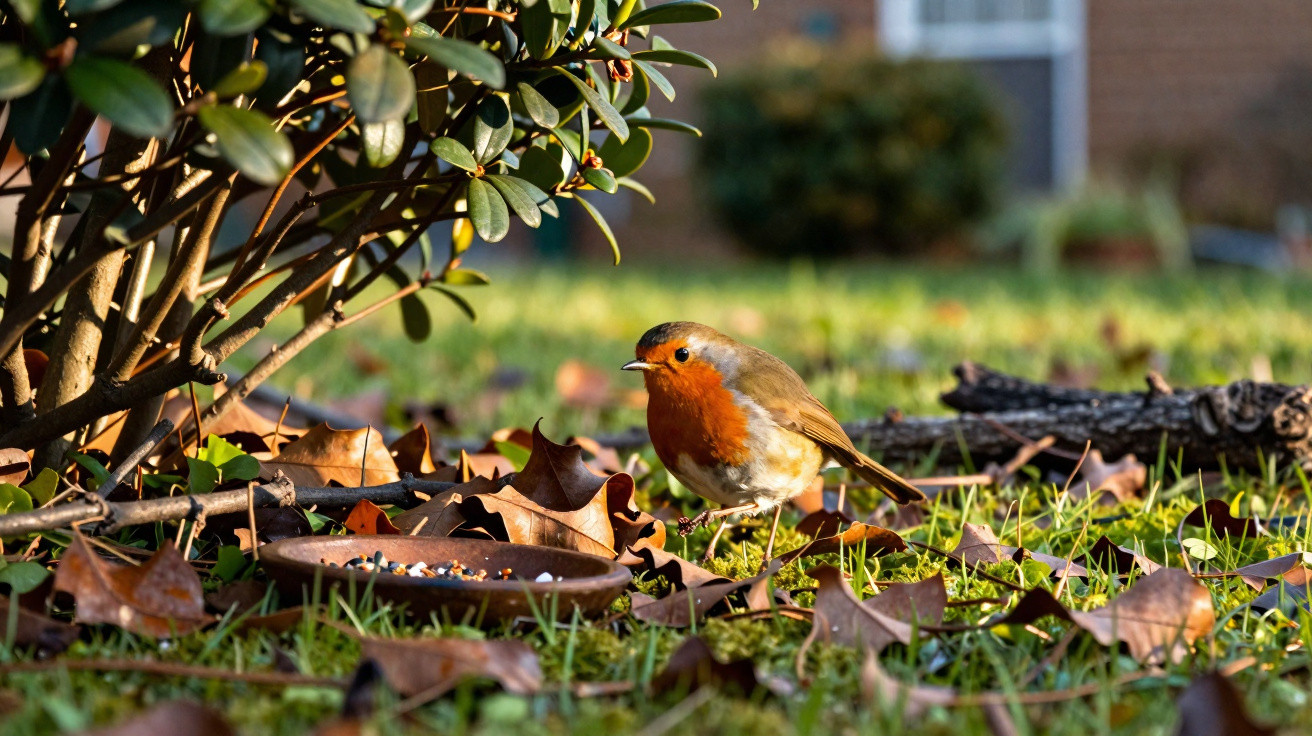
The bird feeder is stocked, an attractive nest box is hanging in place – yet there is still no sign of that red breast. The reason is rarely a lack of food; almost always, it is the ground beneath the shrubs. Make one tiny change there and your garden can suddenly become irresistible to robins.
Why robins avoid your feeding area
Robins appear trusting and inquisitive. They follow people as they turn over soil, quickly seize a worm, then disappear again. Many people therefore assume that more feeding stations mean more robins. However, it is not that simple.
Robins hunt on the ground. This small songbird, measuring 12 to 14 centimetres in length, finds almost all of its food at ground level. It searches through leaf litter and loose soil for:
- woodlice and millipedes
- spiders and beetles
- caterpillars and larvae
- worms, snails and small slugs
Especially in spring, when young birds are in the nest, the parents need huge quantities of animal food. During their first weeks, chicks are fed almost entirely on protein-rich insects and other small creatures. Seeds alone do not help them.
“Anyone who wants robins to stay in their garden over the long term must recreate their natural hunting ground on the soil – rather than simply putting up a colourful bird feeder.”
There is another consideration: many young robins do not survive their first year. Estimates suggest that around two thirds die during their first winter. A garden rich in structure and shelter can significantly improve their chances of survival – and that starts right at the base of shrubs.
The secret hotspot: a ‘mini woodland’ beneath shrubs and hedges
The key area is the very place that many amateur gardeners ruthlessly ‘tidy’: directly below a hedge or at the base of ornamental shrubs. Rather than bare, swept soil, robins need a small untamed patch here that resembles a woodland floor.
A loose layer of leaves and dead wood, around 10 to 15 centimetres deep, is ideal. Leave it in place from late autumn until at least mid-May. This organic covering works like a natural store cupboard:
- leaves retain moisture in the soil and create hiding places
- fungus-colonised wood encourages decomposition
- earthworms, woodlice and larvae gather within the protective layer
- the ground remains alive even during dry spells
Choose a shaded, sheltered spot for it if possible.
This could be beneath a dense hedge, under a large shrub or in a garden corner that is rarely used anyway. Importantly, the area must not sit directly on a ‘cat route’. Robins like to hunt visibly on the ground, but need to be able to dart into protective cover in a split second.
Step by step: creating a robin buffet
The good news is that nobody needs expensive specialist products to make the ideal habitat. A rake, some patience and a little willingness to embrace ‘organised chaos’ are entirely sufficient.
1. Redistribute fallen leaves deliberately
Rather than removing all autumn leaves, move them from lawns and paths to the base of your shrubs:
- Rake leaves together from open areas.
- Create a loose, elongated pile of leaves along the hedge edge or beneath bushes.
- Do not tread the leaves down – air needs to circulate so they can rot down gradually.
This creates a natural ‘carpet’ that provides both shelter and food, without making the rest of the garden look neglected.
2. Add dead wood
Place a few slender branches, small twigs or partly decomposed pieces of wood among the leaves. They add further structure, hold moisture and gradually develop into a small ecosystem of their own.
Prunings from fruit trees or ornamental shrubs are perfectly suited to this. Lay the branches loosely on top of the leaves or tuck them slightly into the side of the leaf layer.
3. Give the process a boost
If you want to get the habitat ‘up and running’ more quickly, you can lend nature a little help. Some gardeners swear by small organic ‘starters’:
- apple cores or a few unsprayed peelings
- thin vegetable peelings, such as carrot or parsnip
- a few fading flower heads from the border
These scraps decompose quickly, attracting micro-organisms and small creatures, and soon make the soil appealing to robins. Important: do not add cooked food, meat or heavily seasoned leftovers.
“As soon as the soil is alive, the robin arrives of its own accord – it can practically ‘smell’ the teeming small creatures.”
What makes a garden unappealing to robins
Many well-intentioned gardening routines inadvertently drive robins away. Once you understand their behaviour, the most common mistakes are easy to avoid.
Too tidy, too bare, too noisy
Three measures make a garden unattractive to robins:
- leaves and dead wood are cleared away as early as March
- hedges are cut back hard, leaving hardly any cover
- leaf blowers and noisy equipment scatter everything and destroy these structures
Completely bare ground beneath freshly trimmed hedges provides neither food nor protection. The birds instead move to gardens where at least one corner is deliberately allowed to remain untidy.
The wrong food at the wrong time
In winter, a feeding station offering fatty food, sunflower hearts or specialist soft-food mixes can certainly be useful. In spring, however, robins should once again be able to do most of their own hunting. If garden soil is poor in insects, even the best bird feeder does little for their young.
A shallow dish of fresh water at ground level, ideally near a hedge or wall, offers extra support. It lets them drink or bathe quickly while remaining only one hop away from safety.
More than decoration: why robins benefit the garden
Robins are not merely attractive subjects for photographs. They perform an important garden role that is often underestimated. These small birds consume large numbers of caterpillars, beetles and other insect larvae – precisely the creatures that can strip leaves or bore into vegetables.
By providing them with a stable habitat, you also support the garden’s ecological balance. Over time, this can help you avoid chemical pest control, or at least reduce its use considerably.
A robin that remains present also brings life to everyday routines. Children can watch how a bird uses its territory, while adults notice its delicate territorial song at dawn. A ‘quiet co-resident’ that visits the same garden for many months of the year creates a special connection.
Practical tips for family gardens and small spaces
Even people with a terraced-house garden or narrow front garden can make a difference. Large areas are not essential; the right structures are what count:
- one dense hedge with a strip of leaves may be enough
- it is easy to establish a leaf zone beneath a specimen shrub, such as lilac or amelanchier
- on a balcony, planters containing wild perennials can at least attract insects that benefit birds
If you have children, you can deliberately name the area the ‘robin corner’ and explore together what is crawling through the leaves. This helps even the youngest understand that a garden is more than a neat lawn.
If you wish, add a simple nest box with a wide entrance hole, positioned in a quiet spot at a height of two to three metres. If the site is accepted, robins often return to the same territory for years – and that small red breast will eventually become a familiar part of your own garden view.
Comments
No comments yet. Be the first to comment!
Leave a Comment