
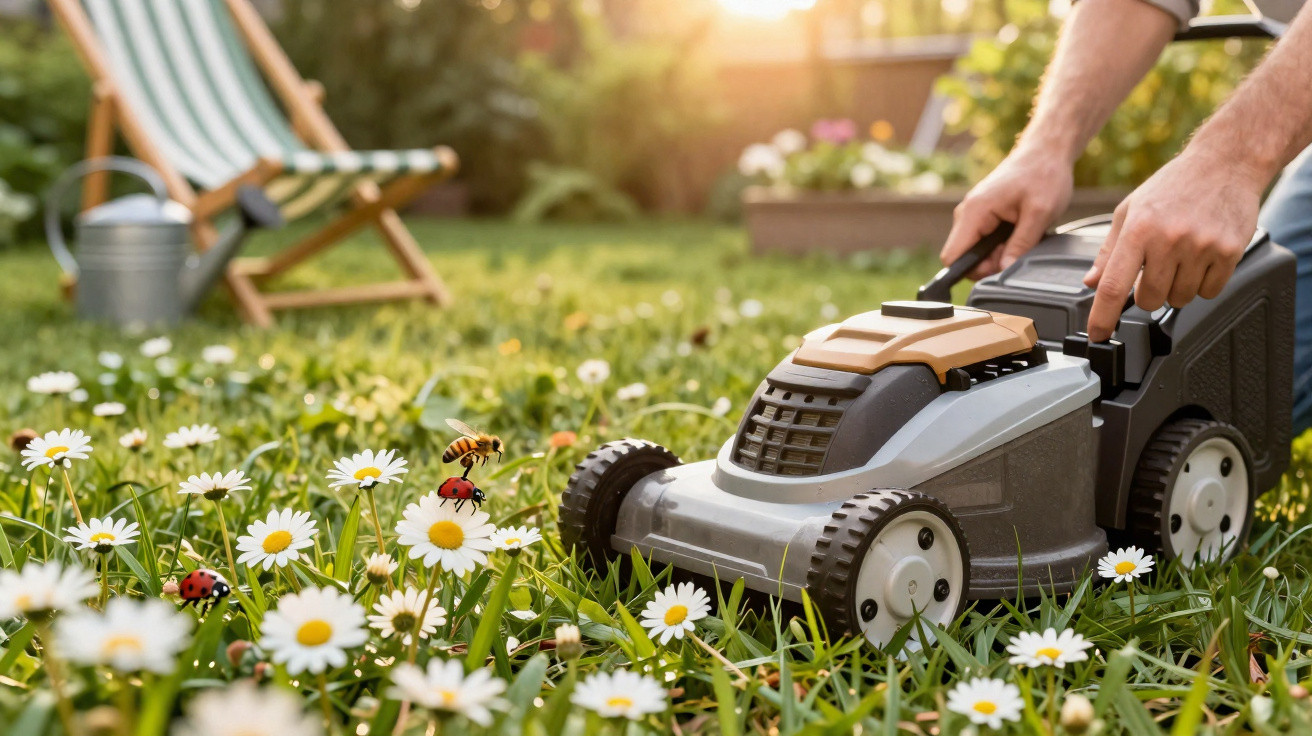
Many gardeners still pull them out – yet anyone who leaves daisies in the lawn gains free flowers, hard-wearing grass and more life in the garden.
Between the end of winter and the first mild days of spring, the same question arises in many gardens: should the lawn be made “perfect” again, or can the small white flowers stay? Long dismissed as a weed, the daisy is increasingly proving to be the garden’s quiet star. By making a few small adjustments to lawn care, you can create a tougher, more attractive lawn that becomes a lifeline for insects, with very little effort.
Why daisies in the lawn are a sign of quality
A lawn where daisies grow is not an untidy lawn. Quite the opposite: it indicates that the soil is alive. These plants thrive particularly where the ground has not been overloaded with fertiliser or treated with chemicals.
Daisies indicate healthy, living soil – they grow where the garden functions as a natural system.
Their presence often points to balanced conditions:
- The soil has not received excessive nitrogen fertiliser.
- Few, if any, chemical lawn treatments are used.
- The area is used, but not over-maintained.
They are close to ideal for family lawns. Daisies grow in a low leaf rosette immediately above the ground, so they cope with footsteps, ball games and picnics far better than many grasses. While a purely grassy lawn quickly develops bare, yellow patches under heavy use, a lawn containing daisies generally stays green and dense.
An early flower and a lifeline for insects
Perhaps the most important benefit has nothing to do with people, but with wildlife. Daisies begin flowering very early in the year. Depending on the area, the first blooms can open in late February or early March, often when almost nothing else in the garden is providing nectar.
This is exactly when wild bees, bumblebees and other pollinators urgently need energy. After their winter flight or emergence from hibernation, they depend on every open flower.
Anyone who lets daisies grow provides the first laid table for bees, bumblebees and butterflies.
These early flowers offer several benefits at once:
- They supply nectar and pollen while most ornamental plants are still in bud.
- They draw pollinators into the garden, where they later visit fruit trees, berry bushes and vegetable plants.
- They give children and adults alike a valuable opportunity to watch insects at close range.
People who seriously explore wildlife-friendly gardening often start at precisely this point: the first step is to stop mowing down everything that flowers.
The key trick: set the lawnmower higher
Many home gardeners unintentionally ruin their daisies before they have the chance to shine. The most common mistake in spring is cutting the lawn far too short. This removes buds and flowers before they can even open.
Experts therefore recommend one straightforward but effective measure: raise the cutting height of the lawnmower noticeably.
Leaving the lawn 6 to 8 centimetres high encourages daisies – while also saving work and energy.
How to set the mower correctly
- Adjust the cutting height: 6–8 centimetres is a useful guideline. The daisies’ leaf rosettes remain undamaged, while the flowers can grow up through the grass.
- Mow less often: Rather than mowing every week, leave breaks between cuts. This gives stems and flowers time to develop.
- Manage zones differently: Areas that are rarely walked on can be left longer. This is where especially large patches of flowers will form.
A higher cut does more than protect the flowers. The grass also develops deeper roots, the soil retains moisture for longer, and the lawn copes better with heat. Anyone who has seen brown lawns in summer will notice the difference.
Why pulling out daisies only makes them stronger
Even so, many gardeners still try: weeding with hand tools, specialist knives or selective weedkiller. In most cases, this is laborious and frustrating, and causes more harm to the lawn than to the plants.
Daisies have a remarkably persistent root system. If only part of the plant is removed, it will usually regrow. There is another problem, too: gaps left by digging them out are readily colonised by other, often more troublesome, species such as dandelions or plantains.
Anyone who pulls out daisies loses a reliable ground cover – and often invites even more persistent plants into the bed.
It makes far more sense to let nature do the work.
How daisies spread by themselves
For daisies to spread through the lawn, they chiefly need one thing: time to flower and set seed. Once flowering has finished, they produce their familiar small seed heads, which are dispersed by the wind.
- Take a mowing break in spring: Avoid mowing for two to three weeks in April or May; this is usually enough time for many plants to form seeds.
- Loosen the soil: On heavily compacted areas, light aeration with a garden fork or careful use of a scarifier can help. The seeds will then establish themselves more easily in the ground.
- Avoid nitrogen-rich lawn fertiliser: Heavy feeding favours grass and puts flowering plants at a disadvantage. If you want flowers, fertilise sparingly.
- Do not use “weedkillers”: Selective products may destroy broad-leaved plants, but that means they target precisely the flowers you want to encourage.
With this approach, a carpet of grass and daisies develops over just a few seasons and stabilises itself. Bare patches fill in naturally, with no need for reseeding.
The charm of a natural lawn rather than a golf-course look
The question “lawn with daisies – yes or no?” is also about attitude. For decades, the immaculate, single-colour lawn was seen as the ideal. Many home gardeners took their cue from English ornamental lawns or golf courses – areas that work only with high water use, plenty of fertiliser and intensive maintenance.
Accepting daisies means taking a different direction. The lawn looks less sterile and more like a small meadow. This creates a relaxed, almost rural atmosphere, especially in smaller gardens.
A lawn with daisies looks alive, reduces maintenance and is better suited to a climate-resilient garden.
Instead of an ongoing “battle against weeds”, the focus shifts away from perfection and towards practical value and atmosphere. Many people quickly find this liberating. Mowing intervals become longer, water use falls, and children can pick bunches right outside the front door.
Practical tips for everyday garden care
Anyone wishing to turn their lawn into a flowering area step by step can proceed as follows:
- Raise the mowing height in spring and deliberately leave some grass standing at the first cut.
- Define different areas: Keep the play area shorter, while leaving borders and corners longer. This keeps paths clear while flower patches can grow.
- Water only moderately during dry spells rather than forcing the lawn to stay green. Daisies cope with limited water better than a purely ornamental lawn.
- Leave daisies in place deliberately when they appear in the middle of bare patches. They close gaps and shield the soil.
If you wish, you can add to the effect: small patches of crocuses, dandelions in occasional spots and cinquefoil all coexist well with daisies, bringing some colour to the green throughout the year.
What many people do not know: daisies are interesting for people too
These plants are not only useful as living ground cover. Their flowers are edible, with a mildly nutty flavour, and work well in salads or as decoration on bread. Children have used them to make flower crowns for generations. Once you make friends with them, the small white stars in the lawn suddenly look very different.
To ensure they are safe to eat, avoid using chemical products on the lawn altogether. If fertiliser is needed, organic products are the better choice and should be applied sparingly.
Ultimately, looking differently at what was once regarded as a nuisance leads to a more relaxed garden life. A slightly higher mower setting, less obsession with perfection and a willingness to see daisies as allies are enough to turn a “problem lawn” into a resilient, living space.



Comments
No comments yet. Be the first to comment!
Leave a Comment