
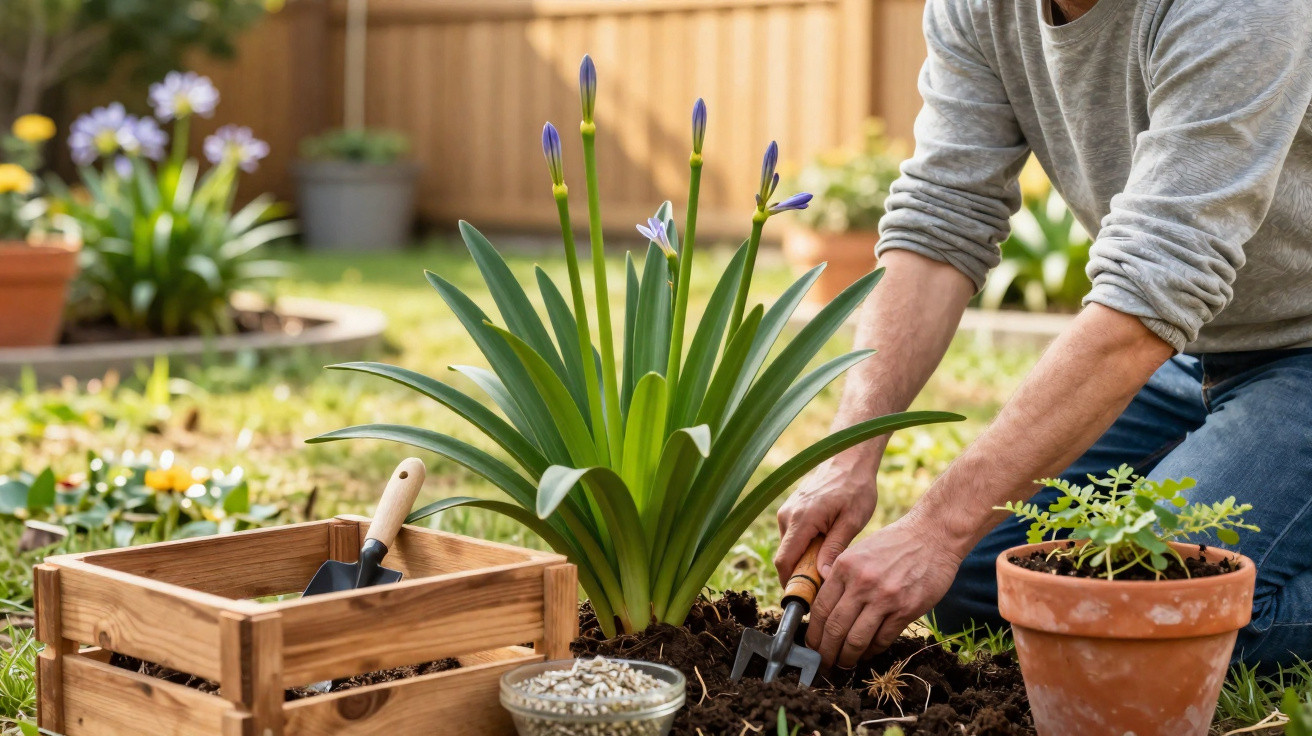
Many keen gardeners are puzzled by the same thing each year: their Agapanthus grows vigorously, yet the hoped-for tall flower heads remain small or fail to appear altogether. The cause is rarely the variety; in most cases, it comes down to the timing of care. Taking targeted action by the end of March can have a major effect on the height and strength of the flower stems.
Why March determines Agapanthus flower-stem height
Agapanthus, also sold as African lily, enters a brief but crucial stage after winter. During these days and weeks, the plant activates its buds and sends fresh roots into the upper layer of soil. At this point, it effectively decides whether its energy will go into long flower stems or simply into foliage.
The flowering period normally runs from June or July through to September. Depending on the variety, stems may reach just 30 to 40 centimetres, or an impressive 100 to 120 centimetres. That variation is neither accidental nor magic. It begins in the active root zone – precisely where you can make a difference in March.
“Feeding African lily properly in March and loosening the soil around its roots directs energy away from leaves and towards flowers.”
Professional ornamental-plant growers time their maintenance schedules precisely around this early period after winter dormancy. For home gardeners, a straightforward routine carried out at the right time is enough, and it is easy to fit into everyday gardening.
The March plan for XXL Agapanthus flower stems
Step 1: Clear away winter debris around the plant
Before reaching for fertiliser, give the Agapanthus space and air around its base:
- Remove all dried leaves completely.
- Cut back old, spent stems close to ground level.
- Clear away fallen leaves, moss and other debris from the root area.
This lets light reach the base of the plant and makes it easier to assess both the density of the clump and the condition of the soil.
Step 2: Loosen lightly instead of digging deeply
The next task is carefully targeted soil loosening. Use a small hand rake or claw gloves, working around the root crown:
- Scratch the surface to a depth of only 3 to 5 centimetres.
- Do not damage the roots; simply break up the upper soil layer.
- Crumble any compacted soil so that air and water can penetrate it.
This light scoring of the surface stimulates soil organisms, creates tiny channels for nutrients and water, and stops rainwater or watering from running off to the sides.
Step 3: Choose the right nutrient balance – focus on P and K
Now comes the key stage: feeding. Agapanthus needs two elements above all when forming flowers: phosphorus (P) and potassium (K). Nitrogen mainly encourages leaf growth, which is exactly what you should limit here.
Proceed as follows:
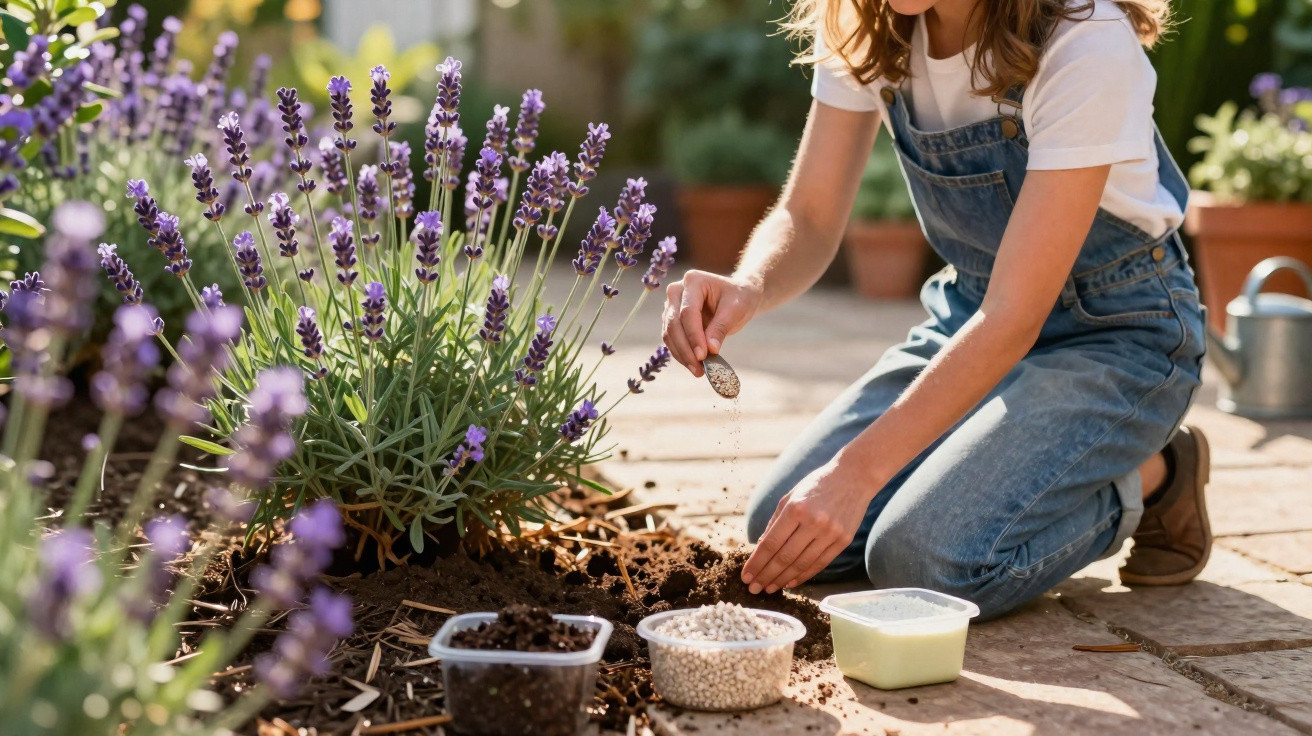
- Scatter 1–2 handfuls of mature compost or worm castings around each plant.
- If available, add a thin layer of sifted wood ash. This provides potassium for sturdy stems and vivid flower colours.
- Work the mixture in gently, without disturbing the roots roughly.
“Prioritising phosphorus and potassium in March while restraining nitrogen encourages flower buds rather than a mass of leaves.”
Finish by applying another light layer of compost, then cover everything with an organic mulch such as flax or hemp shives. Two centimetres is sufficient; a thicker layer would insulate the soil too much.
Finally, water slowly so the nutrients move into the active root zone without being washed away.
Container-grown African lily: when Agapanthus struggles in a pot
Agapanthus in pots often faces an unseen problem. After two or three years, the container is usually almost entirely filled with roots. This leads to several issues:
- Water simply runs through at the edges of the pot.
- Nutrients barely reach the root system.
- The plant is underfed even though it receives regular watering.
- Flower stems stay short and thin, and bend in the wind.
As long as the rootball has not become completely matted, the March routine described above – loosening, compost and a potassium boost – will usually be enough. However, if lifting the plant reveals that roots occupy the entire pot volume, it is time to repot it.
Select a container only slightly larger than the old one, with generous drainage holes. Add fresh, slightly sandy compost, position the rootball, fill the gaps and water thoroughly. Immediately afterwards, give it the same P-and-K treatment used for an established plant.
African lily in the border: divide crowded clumps
In garden soil, Agapanthus can develop large clumps over the years. If the shoots are packed tightly together or roots are already showing at the surface, divide the plant in March.
Carefully lift the plant and cut the root crown into sections with a sharp spade or knife. The best divisions have their own roots and one or two visible buds. Plant these sections in a sunny, well-drained position, water them deeply and then apply a thin layer of mulch.
Combining division with March feeding gives the newly planted sections a strong start, and they may already produce attractive flowers in their first summer.
What if March has already passed?
Many people only realise in April or May that their Agapanthus has been neglected. Care is still worthwhile then, although expectations should be adjusted slightly. Once the soil has noticeably warmed up and new leaves are visible, you can catch up by doing the following:
- Loosen the soil surface carefully.
- Apply compost and a potassium-rich feed.
- Mulch lightly and water deeply.
By then, the plant is already well into planning its flowers. Huge stems such as those produced after ideal March treatment are unlikely, but these measures will steady the African lily, strengthen its buds and help prevent weak, stunted growth.
In-season care: keeping the flowers going
During summer, watering largely determines the quality of the display. In borders, deep and thorough watering during dry spells is enough. In pots, however, African lily needs water far more often – potentially every day in hot conditions, provided no water is left sitting in the saucer.
Cut away faded stems once the flower heads visibly begin to collapse. This prevents energy-draining seed production and encourages further buds. For container-grown plants, a liquid flowering-plant feed, applied exactly at the manufacturer’s recommended rate, can support the March boost during summer.
Useful extras and common mistakes
Beginners in particular often choose general-purpose fertilisers high in nitrogen. The result is lush green foliage but very few flowers. A simple method used in many home gardens is to work small pieces of banana peel very shallowly into the soil. They break down slowly and supply potassium over several weeks.
Location and winter dormancy also matter. A site that is too shady may produce vigorous foliage, but the flower stems will be shorter. A sunny position with light soil that does not become waterlogged delivers much better results. During winter, container plants should be kept cool but frost-free so that the dormant period is clearly defined and the plant can grow strongly again in spring.
Anyone who makes this short care routine part of their March gardening each year will soon see how directly African lily responds. Short, unsteady stems usually indicate nutrient deficiency and compacted soil, while abundant, tall flower heads point to the right combination of loose soil, targeted feeding and timely action.



Comments
No comments yet. Be the first to comment!
Leave a Comment