
A shower head with blocked holes, uneven spray patterns or a build-up of white marks can turn a relaxing shower into an irritating experience. The good news is that, in most cases, you do not need to take the fixture apart to restore its performance. A few everyday ingredients and home-cleaning methods can remove mineral residue, dirt and some of the limescale build-up with little effort.
Why does a shower head become dirty and develop blocked holes?
Over time, minerals in the water, soap residue and tiny particles can collect inside the shower head's spray holes. This is especially common in areas with hard water, which contains higher levels of calcium and magnesium.
As the deposits build up, water flow is restricted, causing some jets to weaken or stop altogether. Whitish stains and a dull-looking finish may also become visible on the shower head's surface.
How to clean a shower head with vinegar without dismantling it
White vinegar is one of the best-known household solutions for helping to dissolve mineral deposits lodged in shower-head holes. The process is straightforward and uses items that many households already have.
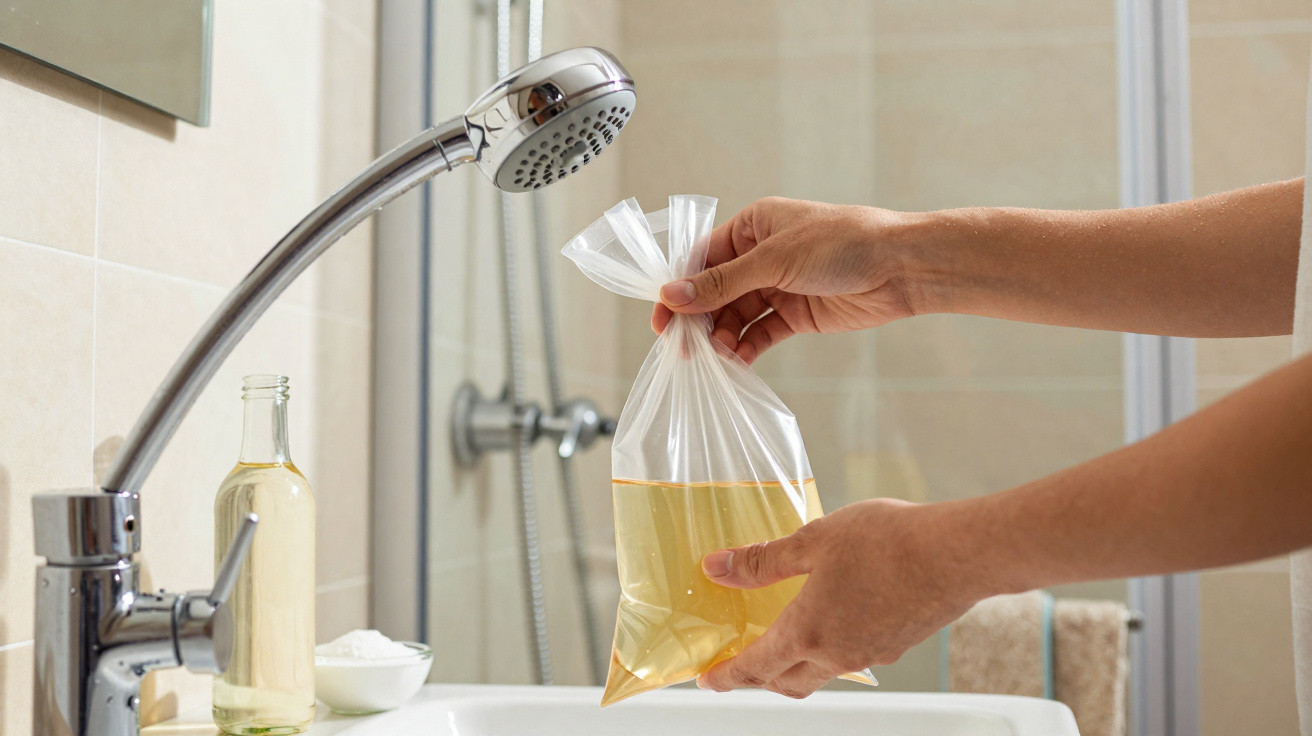
One practical approach is to fill a sturdy plastic bag with enough white vinegar to cover the section of the shower head where the water comes out. Secure the bag with a rubber band or string, then leave it in place for several hours.
- Fill a plastic bag with white vinegar
- Place the bag around the shower head
- Fasten it securely with a rubber band
- Leave it to work for 2 to 8 hours
- Remove the bag and run the water for a few minutes
- Gently scrub with a soft brush if needed
What other household tricks can unblock shower-head holes?
If a few holes remain clogged after cleaning with vinegar, simple additional methods can help finish the job. An old toothbrush, for instance, can lift surface residue without harming the finish.
Another commonly used option is to clear individual holes with a wooden toothpick or a soft-bristled brush. Take care during this step to prevent damage to the shower head's components.
- Scrub the surface using an old toothbrush
- Use wooden toothpicks to clear selected holes
- Wipe the fixture with a soft cloth after cleaning
- Run the shower for several minutes to flush away loosened residue
- Repeat the process when mineral build-up is heavy
How can you keep a shower head clean for longer?
Once it has been cleaned, a few simple routines can prevent excessive residue from returning. Light cleaning carried out regularly is generally more effective than waiting until the holes are fully blocked.
It is also worth watching for signs such as reduced water pressure, misdirected jets or visible stains. These indicators suggest that the shower head may need another preventative clean.






Comments
No comments yet. Be the first to comment!
Leave a Comment