
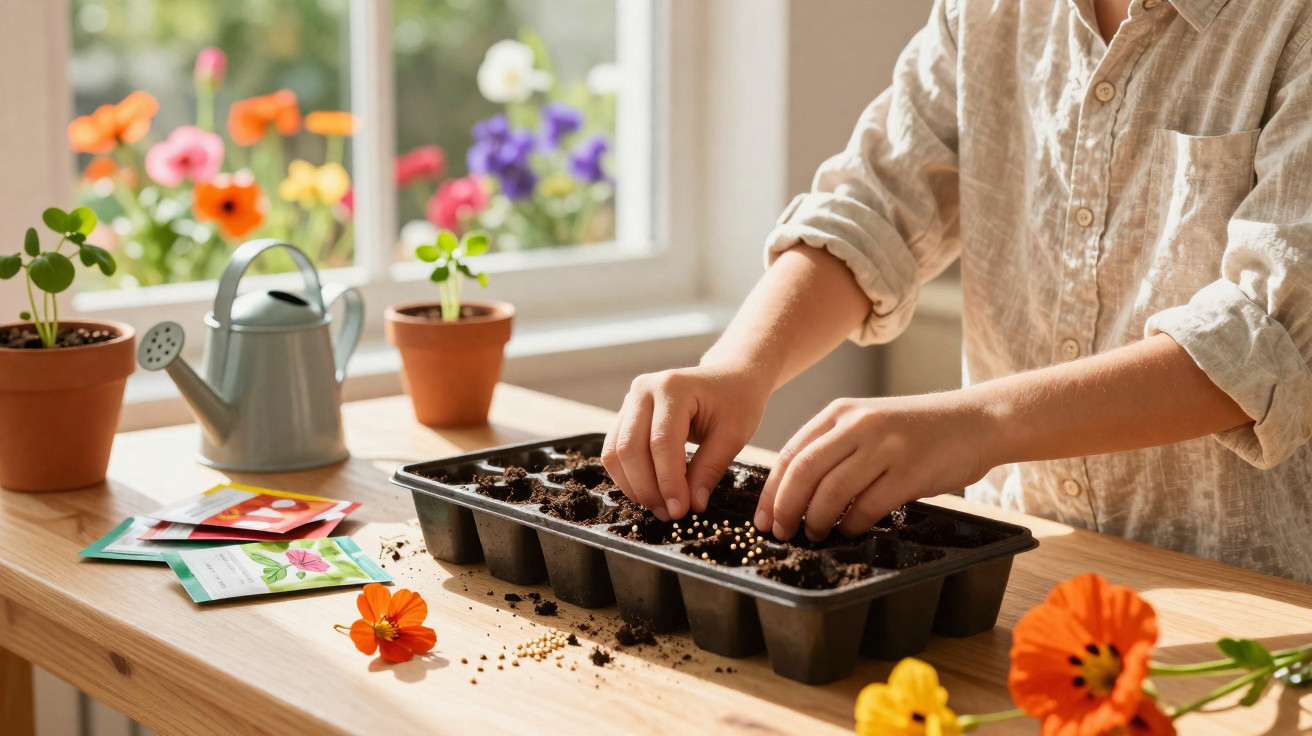
While plenty of people are still waiting for warmer weather, seasoned amateur gardeners are quietly laying the foundations for a spectacular display of flowers in March. Choose the right flowers to sow now and, come June, July and August, you can enjoy overflowing beds, fragrant corners and colourful home-grown bouquets – without expert knowledge or a huge budget.
Why March determines your summer flower bed
In March, the garden often still seems to be asleep for winter. Beds look bare, the soil is cold and ground frosts can occur overnight. At the same time, daylight is noticeably increasing, the sun is becoming stronger and that familiar urge to get gardening begins.
That very combination makes this month so important: starting now gives your flowers a genuine head start. Many summer flowers need several weeks to develop from tiny seeds into sturdy young plants. Sow them in March and they can get going properly in early summer – often flowering well into autumn.
March is the month when a few inconspicuous seeds become a whole summer of flowers.
In colder areas – such as mountainous regions and higher elevations – the danger of late frosts can continue into April. In these places, it is best to begin sowing under cover: indoors, in an unheated conservatory, in a polytunnel or simply on a bright windowsill.
The professionals’ approach: start indoors, then plant out
In March, many experienced gardeners rely almost entirely on raising plants first. Young plants that have already grown in pots or small trays cope with being moved outside far better than newly germinated seedlings in a flower bed.
- Suitable locations: a well-lit windowsill, conservatory, cool yet bright basement stairs, or a small greenhouse.
- Containers: seed trays, empty yoghurt pots with drainage holes, egg cartons or small pots.
- Compost: use fine, loose seed compost that is lightly moist rather than soaking wet.
Sow the seeds sparingly rather than too thickly. A common beginner’s mistake is overcrowding the tray. The seedlings then compete for light and nutrients, becoming spindly and weak. Fewer seeds will produce stronger plants.
How choosing seeds can prevent disappointment
Anyone who has sown a packet of seeds only to see three sad-looking plants emerge will know the frustration. Often, the problem is not you at all, but the variety or the way the seeds have been stored.
For this reason, more and more amateur gardeners choose open-pollinated varieties. You can harvest their seeds later and sow them again the following year. The resulting plants generally remain true to type.
Open-pollinated varieties are like a small treasure in the garden: you harvest not only flowers, but also seed for the years ahead.
There is another benefit: seed collected from your own garden gradually adapts to your soil and climate. Many gardeners report that these plants become hardier year after year, are less susceptible to disease and cope better with unpredictable weather.
Where to find good-quality seed
You do not need to buy fresh packets from a garden centre every year. There are several options:
- Specialist seed suppliers: they often stock a broad choice of heritage and open-pollinated varieties.
- Seed swaps and seed libraries: in some towns and cities, libraries, neighbourhood groups or community gardens arrange seed-swapping events.
- Private swaps: ask at your allotment association, among friends or in local groups – gardeners are often happy to share.
Experimenting is particularly worthwhile with flowers: a handful of unfamiliar seeds can turn into firm favourites.
The 7 best flowers to sow in March
For a richly coloured summer flower bed that takes little effort, certain flowers are especially suitable. They grow quickly, forgive mistakes and bloom for weeks.
| Flower | Special feature | Ideal for |
|---|---|---|
| Zinnias | extremely colourful, lots of flowers | beds and cut flowers |
| Sweet peas | strong fragrance, climbing habit | fences, balconies, plant supports |
| Nasturtiums | edible flowers, easy to grow | bed edges, pots, hanging containers |
| Wallflowers | intense fragrance, nostalgic appearance | house walls, front gardens |
| Coreopsis | long flowering period, yellow-orange shades | sunny beds |
| Nigella | delicate foliage, romantic effect | natural-style gardens |
| Poppies | delicate flowers, self-seeds | meadow-style, wild-looking corners |
Zinnias: bursts of colour for beds and vases
Zinnias are a classic choice for summer beds. They enjoy warmth but do not need any special care. You can raise them indoors from March, then plant them into the bed from mid-May, once the risk of frost has passed.
A sunny position, nutrient-rich soil and regular watering are enough. If you remove faded flower heads consistently, fresh buds will keep forming. Zinnias are ideal for children because results appear quickly and their colours are strikingly vivid.
Sweet peas: nostalgic climbing stars
Sweet peas – often seen as a symbol of cottage gardens – climb upwards over fences, trellis and obelisks. Their blooms have a powerful scent and are well suited to small indoor bouquets.
Before sowing, soak the seeds in lukewarm water for a few hours. This helps them germinate more quickly. They appreciate a cool start, making them particularly well suited to March.
Nasturtiums: flower, ground cover and salad garnish in one
Nasturtiums will grow almost anywhere, though they prefer relatively low-nutrient soil. In soil that is too rich, they produce lots of leaves but fewer flowers. One major advantage is that both leaves and flowers are edible, with a mildly peppery flavour similar to cress.
Many gardeners use nasturtiums as a “trap plant”: aphids tend to settle on them first, leaving other flowers undisturbed. This attractive summer flower can therefore also provide natural plant protection.
Wallflowers, coreopsis, nigella and poppies: flowers that set the mood
Wallflowers are excellent for spots beside walls and paths. Their scent is especially noticeable on warm evenings. For those who love romantic garden scenes, nigella is an ideal choice: its delicate foliage, subtle flowers and decorative seed pods lend beds a playful touch.
Coreopsis, often sold under the common name tickseed, adds energy to beds with its yellow and orange flowers. Both perennial and annual types are usually prolific bloomers. Finally, poppies create that unmistakable meadow-like feeling. Many types self-seed, so once established in the garden, they often reappear in different places every year.
Direct sowing or raising plants first: what works best where
In milder regions with an early spring, some of these flowers can be sown directly into beds from March. The soil should be lightly raked, weed-free and not excessively wet.
In cooler areas, however, it is almost always worth raising plants in small pots first. They can develop roots and some leaf growth before moving into the beds. This makes it easier for them to withstand windy days and fluctuating temperatures.
Basic rule: where late frost is possible, start indoors. Where spring arrives early and remains settled, sow straight into the bed.
How to avoid bare patches in summer beds
Many gardens face the same issue: everything flowers in June, there is a gap in July, then the display improves again in August. These gaps in flowering can be reduced significantly with thoughtful sowing.
Combine early-flowering perennials with annual summer flowers such as zinnias, poppies and coreopsis. Perennials often reach their peak in early summer, whereas many annuals start later but continue for longer. Sowing ahead in March automatically fills those gaps.
Practical tips for even greater success
- Label everything: place a small label with every sowing. After a few weeks, seedlings can quickly start to look alike.
- Prioritise light over heat: a bright, slightly cooler spot is better than somewhere too warm and dark. Otherwise, plants become leggy.
- Water from below: stand trays in a container filled with water. This keeps seedlings sturdy and prevents them from falling over.
- Harden off plants: before planting out, put pots outside during the day for a few days and bring them back in at night.
Anyone exploring the subject of “open-pollinated seed” more closely will eventually come across seed-saving organisations, small-scale breeders and regional initiatives. Their focus is not only on flowers in individual gardens, but also on preserving old varieties and adapting them to local climates.
This has particular benefits in the face of increasingly extreme weather: plants propagated in the same area for years often cope better with dry spells, heavy rain and late frosts. Every time you save your own seed, you build a small yet resilient collection of plant varieties.
Spending a few hours in March – sowing seeds, labelling pots and regularly checking on seedlings – can bring a whole summer of flowers to your home. Sometimes, though, the finest moment is not the finished floral display at all, but when the first green tips emerge from the soil and it becomes clear: this season will be a good one.



Comments
No comments yet. Be the first to comment!
Leave a Comment