
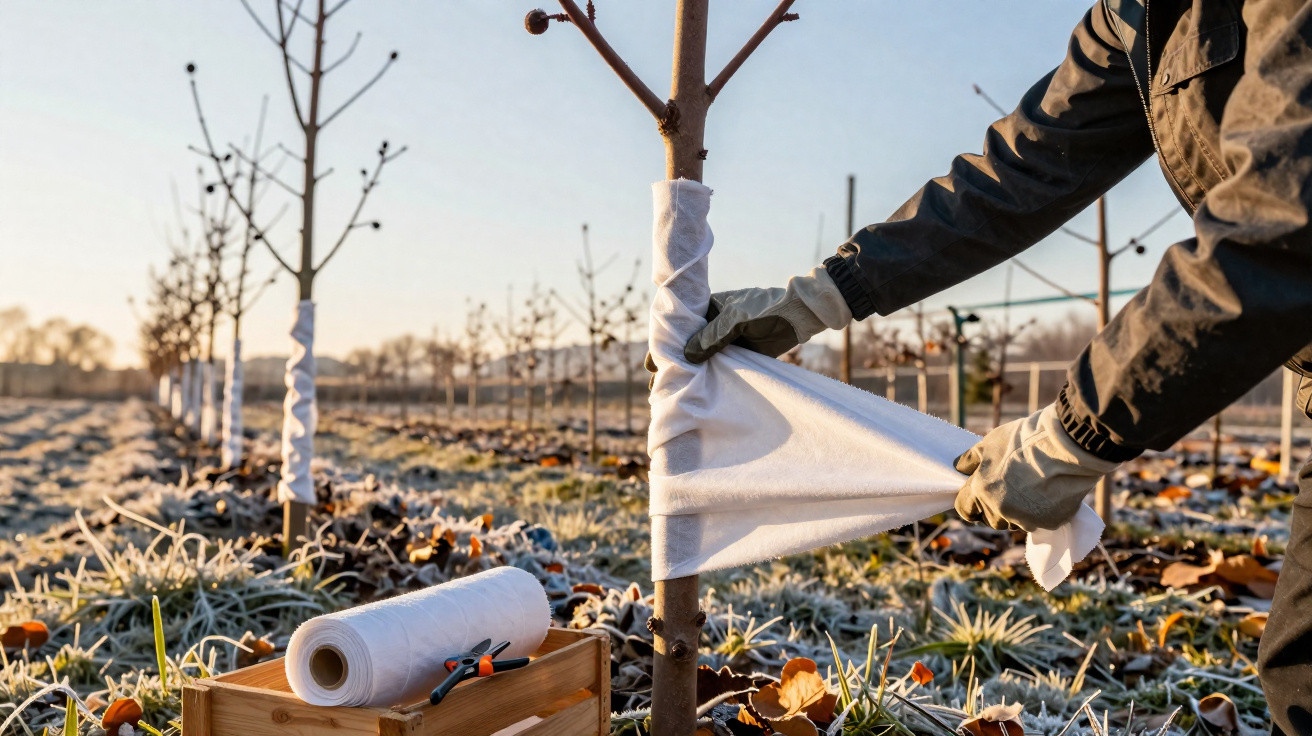
Winter can be harsh on young saplings and newly planted fruit trees, particularly when temperatures fall sharply overnight. Wrapping the trunk in TNT non-woven fabric can lessen thermal shock and offer frost protection without smothering the plant.
Why does wrapping the trunk with TNT help in winter?
On cold nights, trunks lose heat quickly, which can lead to cracking, scorch damage and stress in sensitive young plants. TNT provides a lightweight barrier that retains some heat close to the bark and moderates the temperature drop.
This material is effective because it does not seal the surface completely, allowing some air and moisture exchange. It therefore creates an insulating layer without turning the trunk into a greenhouse, helping the plant through particularly critical nights.
Use it correctly by following these precautions:
- Trunk: wrap the main lower section, without unnecessarily covering leaves.
- TNT: choose a clean, lightweight strip that is large enough to provide protection.
- Cold: fit it before nights forecast to bring a sudden temperature drop.
- Slack: do not pull the fabric tightly against the plant’s bark.
- Removal: remove or adjust it once the severe cold has passed.
How does frost affect young fruit trees?
Ice crystals form on plants and other surfaces when temperatures drop and atmospheric conditions are suitable. In home orchards, this can affect leaves, shoots and trunks, making preventive protection necessary during critical periods.
When the early hours combine cold air, little cloud cover and intense cooling, exposed areas of the plant are more vulnerable. TNT does not remove the cold, but it limits direct exposure and can help prevent damage to susceptible saplings.
How should TNT be applied without harming the trunk?
Cut a broad strip of TNT and wrap it around the trunk from the bottom upwards, keeping it loose. The fastening needs to hold securely, while leaving room for air circulation, growth and the natural movement of the stem throughout winter.
Lightweight protection for cold nights
The fabric should protect rather than constrict.
Leave enough slack for the trunk to breathe and grow without marks being left on the bark.
For small saplings, the covering may be used with supporting stakes to prevent direct pressure.
Remove or loosen the covering after severe cold has passed, especially when sunny days occur between frosty early mornings. Fabric that stays damp for too long can encourage fungi, trapped dirt and unnecessary pressure on the trunk.
The process is safer when carried out in this order:
- clear away dry leaves and debris around the base of the sapling;
- wrap the TNT without compressing the trunk bark;
- secure it with light twine, without tightening it around the stem;
- inspect it after rain, strong sunshine or a sudden change in temperature.
Why is TNT better than plastic for this protection?
Plastic is not recommended because it prevents ventilation and may become excessively hot when the sun appears after a cold night. This can effectively cook the bark, trap moisture and interfere with the plant’s natural respiration.
Young jabuticaba, Surinam cherry, acerola, guava, citrus and other tropical fruit tree species are more affected in areas where cold spells arrive suddenly. Even hardy plants can be troubled by winter while they are still small saplings in their first years of cultivation.
TNT is generally the more suitable option because it:
- creates light protection from overnight cold;
- allows better air exchange than ordinary plastic;
- lowers the risk of overheating once the sun comes out;
- is inexpensive, easy to cut and simple to adjust around the trunk.
When is it worth protecting fruit trees with TNT?
Anyone growing long-lived fruit trees in the garden should treat TNT as a temporary measure rather than a permanent solution. It is especially helpful for young fruit trees on harsher winter nights when planning a home orchard.
The best outcome comes from combining a light covering with well-managed soil and daily checks after cold fronts. If the fabric is wet, tight or dirty, adjust it immediately to maintain ventilation, protection and safety for healthy growth.





Comments
No comments yet. Be the first to comment!
Leave a Comment