
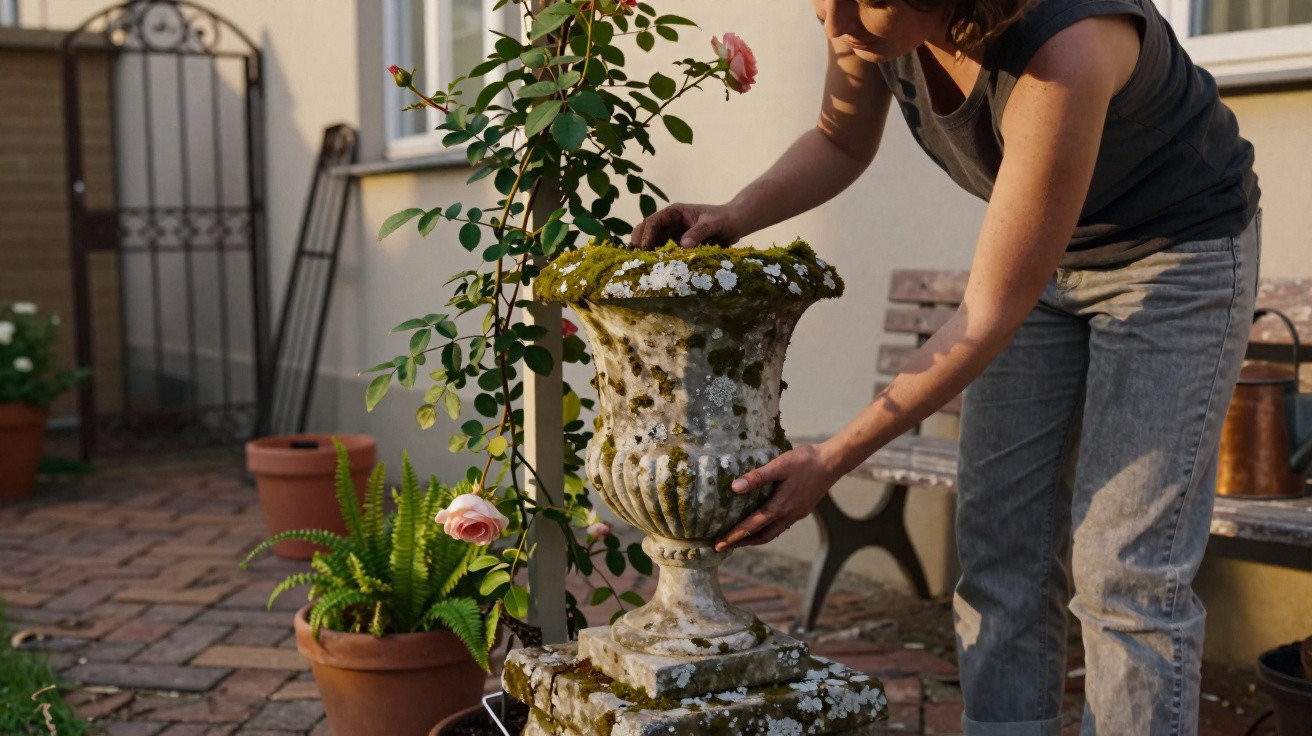
A modest flea-market find, a touch of patina – and suddenly your own garden can look as though it has stood there for a hundred years.
Many people long for a garden that feels more like a historic country estate than a new-build development. To achieve this, garden designers surprisingly often rely on one straightforward device: they introduce a single old object with character, then shape the rest of the scheme around it. What appears to be magic follows clear principles that can work even on a compact city balcony.
Why one vintage piece can transform an entire garden
Behind an early-19th-century farm in Connecticut, US, antiques dealer and garden designer Michael Trapp demonstrates just how much impact one found object can have – in the best possible way. Among the borders and lawns are columns, balusters, old stone steps and substantial urns. Each relic draws the eye and makes the garden seem to tell stories.
“A powerful old object can act like an anchor: it grounds the garden and makes everything else appear more intentional, almost cinematic.”
Trapp regards his collection of salvaged architectural elements as a kind of “atmosphere-building kit”. Rather than buying everything new, he takes fragments from demolished buildings and gives them a role outdoors. A weathered stone column at the end of a path, a former stair railing set between flowerbeds, a weighty iron gate used as a passageway: every piece recalls a previous place and another era.
The result is that even a plain terraced-house plot can suddenly appear to have a past. The gaze lingers, and the eye finds a focal point from which to view the whole garden differently.
How designers select garden treasures
Garden designers are not looking for flawless museum pieces. On the contrary, cracks, chips and rust are often exactly what they want. The crucial factors are the material and its presence, rather than immaculate condition.
Materials suited to outdoor use
Anyone intending to leave an old item outdoors permanently should choose durable materials. Professionals tend to favour:
- Stone – natural stone, sandstone, limestone and marble: excellent for steps, troughs, columns and urns.
- Metal – cast iron, wrought iron and zinc: ideal for fences, gates and small sculptures.
- Teak – weathers attractively and lasts for decades, whether used as a bench or a shutter.
- Cement/concrete – substantial planters, figures and plinths with a solid visual presence.
Avoid fragile materials such as stucco and ordinary plaster: they absorb water and soon crumble. If you are unsure, watch how the material feels and performs in rain or frost conditions at the flea market.
Three questions to ask before buying
Before an apparent treasure goes into the boot, it is worth making a quick assessment:
- Can the piece be seen from the house or terrace?
A decorative item hidden away at the back of a corner loses its impact. It should catch the eye from a central sitting area. - Can its position withstand its weight and children’s hands?
Heavy stone troughs need a stable base, while iron figures must not be able to topple. Anyone with children or pets should plan with extra safety in mind. - Is there sufficient space for plants around it?
The object needs room to breathe. Only when a small “courtyard” around it is left clear can borders, pots or climbing plants display it properly.
The ideal position: how professionals use vintage garden objects
A designer’s real skill lies less in the object itself than in where it is placed. An unremarkable stone basin can look magnificent in the right spot; an expensive item can seem insignificant if it has simply been put down somewhere.
Typical garden focal points
Professionals repeatedly use similar locations where the eye naturally gathers:
- At the end of a path: position an urn, statue or old door panel at the end of a garden path – the eye will automatically follow the line.
- In the centre of a bed: a raised object at the middle of a circular or square bed creates immediate visual interest.
- Opposite the patio door: anything directly on the sightline from the living room or kitchen has far greater presence.
- In a niche in a hedge or wall: an inset relief, an old window surround or a wall fountain is ideal in a small garden.
“The rule is: position the powerful object first, then plan the rest of the garden around it – not the other way round.”
Those reluctant to use large pieces can begin on a smaller scale: an old shutter on the garage wall, a rusty section of fencing as a “backdrop” behind a rose bush, or a former railing repurposed as a trellis.
Plants that enhance the nostalgic effect
An old object feels especially evocative when its planting supports the same character. Designers often choose varieties associated with cottage gardens, monastery gardens and traditional kitchen gardens.
| Plant | Effect in the garden | Works well with |
|---|---|---|
| Lavender | fragrant, Mediterranean, soft | heavy stone urns, zinc containers |
| Old rose varieties | romantic, gently overgrown | iron gates, pergolas, old doors |
| Thyme, oregano, sage | wild, light, aromatic | steps, paving joints, trough edges |
| Achillea (yarrow) | nostalgic, slightly wild | stone figures, low walls |
| Ivy, climbing hydrangea | conceals surfaces, makes things look older | walls, gates, old doors |
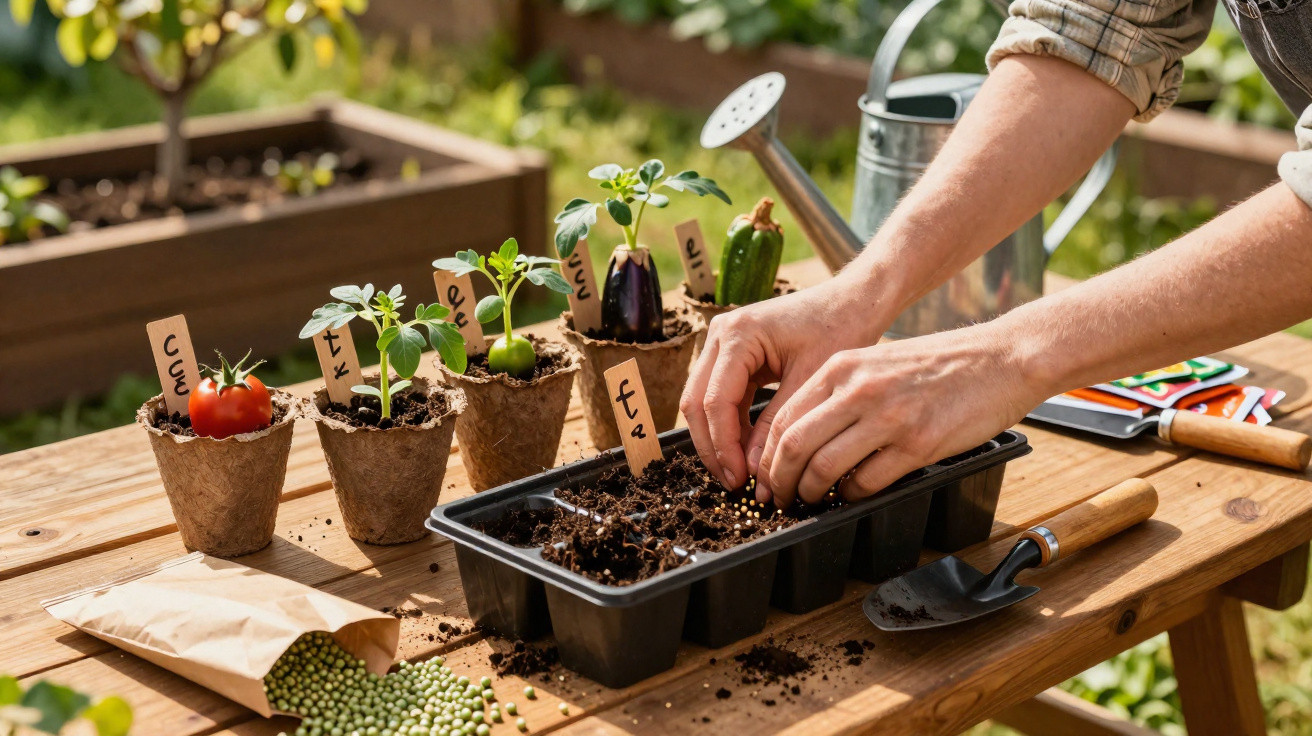
The effect works just as well on a modest scale: a zinc tub of mint beside a weathered wooden bench, an enamel jug used as a herb pot, or a discarded wooden table for seed trays. Together, these details immediately suggest a garden with a long history, even if there are only a few square metres behind them.
Where to find the best garden treasures
Trapp’s approach transfers easily to the UK and elsewhere in Europe. Rather than visiting expensive antique shops, look in places that many people overlook:
- Builders’ yards and demolition sites – ask permission first; old stones, gates and windows are often waiting to be discarded.
- Local flea markets – zinc tubs, enamelware, iron plant supports and old workbenches appear regularly.
- Yards belonging to agricultural machinery or metalworking businesses – old railings, gates and tanks may sometimes be lying unused there.
- Family lofts and barns – window frames, doors, bed frames and wooden ladders can all be repurposed beautifully.
What matters is the way you look at things: something that initially resembles scrap can become the garden’s centrepiece. A crooked, glassless window becomes a frame for a climbing rose, an old grindstone becomes a stepping stone, and a cast-iron radiator becomes the base for a bench topped with timber.
Common mistakes – and how to avoid them
Without a plan, it is easy to fall into the “bric-à-brac” trap. The garden then looks cluttered rather than historic.
- Too many items in a confined area
One or two striking objects per zone are enough. Any more, and each loses its effect. - Mixing styles without a common thread
A Baroque figure beside industrial metal, with colourful plastic decorations next to it, is more likely to resemble storage space. Choose a broad style instead, breaking away from it only occasionally. - Ignoring proportions
A tiny figure in front of a 3-metre-high hedge will disappear. Conversely, a massive trough overwhelms a narrow patio. - Lack of maintenance
Patina is attractive; deterioration is not. Moss and rust may remain, but loose elements and sharp edges should be secured.
Adapting the look for a balcony, terraced house or city garden
The charm of old pieces is not limited to large country estates. A carefully positioned find can also improve a city balcony. A small iron console with a pot, a very old stool used as a plant stand, or a miniature fountain made from a zinc bowl is enough to create a hint of an “old estate”.
In a terraced-house garden, an old garden table can form the centre around which herb pots, lanterns and one substantial object – such as a heavy stone bowl – are grouped. A clear sightline from indoors remains essential: if your eye is naturally drawn towards that piece while sitting on the sofa, you have got it right.
Why patina often matters more than price
A key part of this design style is its attitude to value and age. Trapp assesses objects primarily by their history, not their market price. Scratches, signs of use and a slight crookedness all make an item feel authentic. Newly bought decorative pieces with an artificial “vintage” finish rarely achieve the same result.
With a little patience, you can also allow patina to develop naturally. Untreated timber turns grey, zinc darkens and stone acquires lichens. After only a few years, an object bought today can settle in as if it has always been there. Combined with suitable plants and thoughtful placement, this creates precisely the garden character associated with historic estates, old monastery gardens or enchanted parks – without having to remake a single border completely.


Comments
No comments yet. Be the first to comment!
Leave a Comment