
Many people get it wrong at this point.
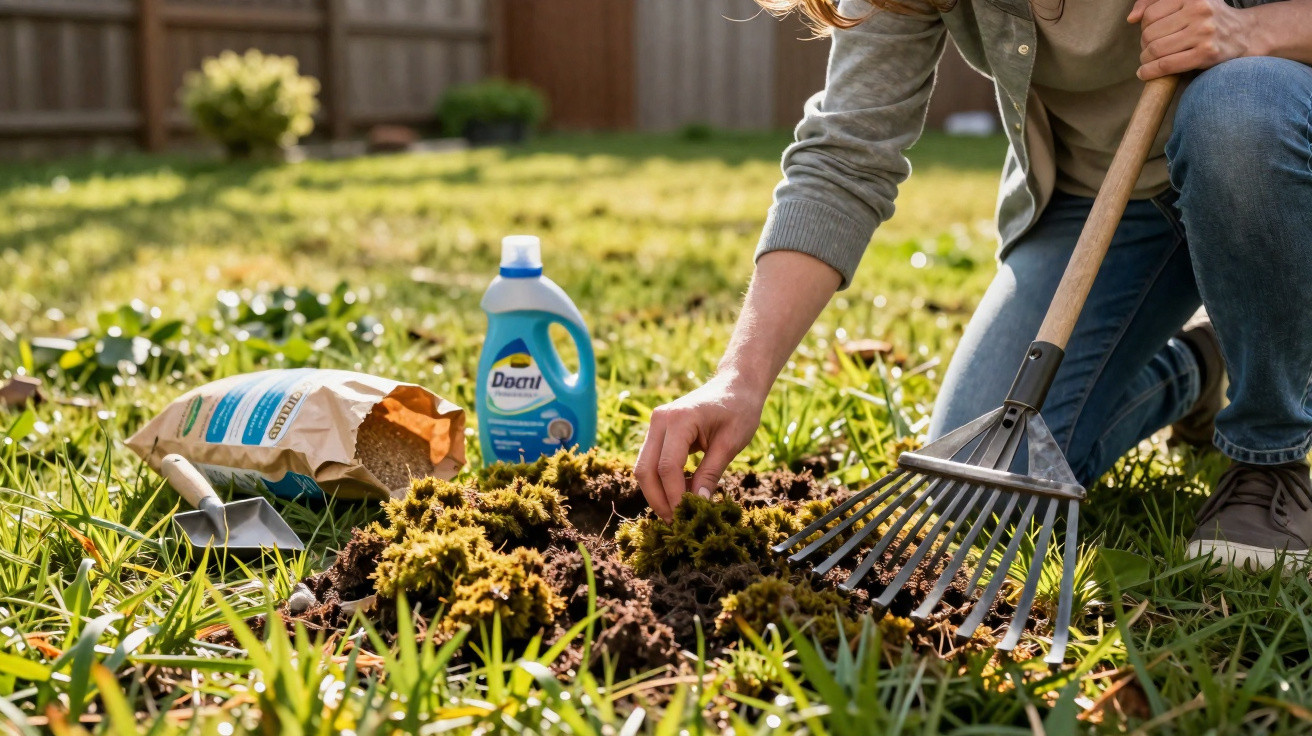
Anyone who heads into the garden full of energy in spring is often disappointed: instead of a lush green carpet, they find a patchy lawn threaded with moss. Just as the gardening season is meant to begin, the grass looks tired and matted. At precisely this stage, countless amateur gardeners make the same mistake, one that can weaken the lawn even further over time.
Why moss suddenly appears everywhere after winter
Moss in a lawn is not evidence that someone is “bad at gardening”. Above all, it signals stress in the soil. After winter, conditions are far from ideal for grasses: cold, damp and limited light leave the blades weakened. Shaded areas beneath trees, beside dense hedges or on the north side of a house are particularly affected.
Grass grows much more slowly in these spots. Gaps develop, and moss takes advantage of them. It does not need deep roots, manages with few nutrients and thrives in damp, compacted soil. Experts repeatedly point out that moss has an easy time where soil is hard and nutrient-poor, while lawn grasses struggle.
Typical warning signs in spring:
- The lawn feels soft and spongy underfoot.
- The grass looks patchy, with dark-green cushions of moss.
- Entire pieces of moss come away easily when pulled by hand.
- Water remains on the surface for a long time after rain.
Ignoring these signs, or responding in the wrong way, makes the issue worse the following year, because moss is exceptionally good at adapting to weak growing conditions.
The popular spring blunder: pouring washing-up liquid on the lawn
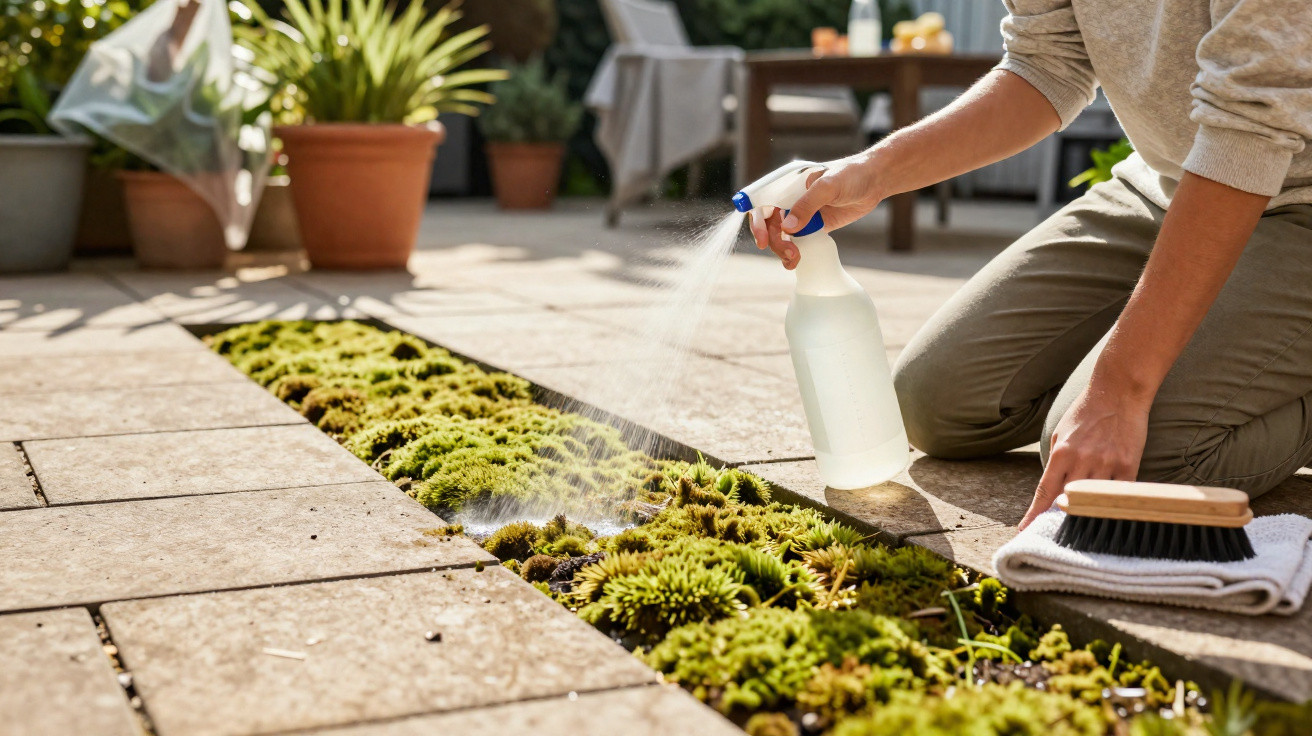
The same “brilliant idea” appears every year in forums, videos and gardening groups: tackle moss simply by using diluted washing-up liquid. Some people claim it will virtually “burn away” the moss. Although this approach sounds temptingly cheap, it is a classic rash fix.
Washing-up liquid was developed for grease and kitchen dirt, not living soil. Its powerful degreasing ingredients damage the soil’s delicate structure. The fine roots of lawn grasses are far more sensitive to this than resilient moss.
“Anyone who pours washing-up liquid over their lawn mainly weakens the grass – and in the long term makes it even easier for moss to take hold.”
There is another issue: soil organisms, including earthworms, bacteria and fungi, help release nutrients and keep the ground loose. Chemical household products can greatly reduce these microorganisms. Damaged soil is more prone to forming a crust, becoming compacted and retaining water poorly. That is exactly the environment moss enjoys, so the real underlying cause is made worse.
Environmental authorities also repeatedly highlight another concern: anything applied to a lawn can be washed into the soil and groundwater by the next rainfall. Washing-up liquid residues do not belong in the garden, especially not in larger quantities.
The right start to spring lawn care
The good news is that a dense lawn with little moss does not require harsh chemicals or a specialist laboratory. A few targeted jobs in spring are enough to put things back on track.
Mow low, then rake thoroughly
The first task is simple but crucial: mowing. In early spring, cut the lawn a little shorter than you would in high summer. This exposes moss cushions more clearly and makes them easier to remove.
Then comes manual “combing out”. Use a sturdy rake or leaf rake to pull out moss, dead grass blades and layers of thatch. Anyone who does this job properly will remove a large proportion of the moss before using any machinery at all.
Scarifying: shock it once, then allow it to recover
Scarifying can help when moss and lawn thatch are sitting deeper in the turf. A scarifier, whether manual or powered, cuts a few millimetres into the grass surface. Its blades pull out moss and old plant matter while opening up the soil.
“After scarifying, the lawn often looks worse than it did before – that is entirely normal and is even a good sign.”
The area may then look bare, with brown stripes and gaps. Many people panic at this stage and assume they have made a mistake. Yet fresh grass blades grow back after a few weeks, air and water can reach the roots more effectively, and the lawn can become considerably denser than before.
Overseed to prevent moss from getting another chance
Any remaining bare patches should be sown with lawn seed straight away. Experts refer to this as “overseeding” or an “overseeding mixture”. These specialist mixes germinate quickly and cover exposed areas before moss can return.
A straightforward order for the spring check:
- Mow the lawn short.
- Comb through it thoroughly with a rake.
- Scarify if there is a heavy build-up of moss and thatch.
- Overseed bare patches with suitable lawn seed.
- Water lightly and avoid heavy use of the area during the first few weeks.
What to do if the lawn is almost entirely moss
In some gardens, moss has been dominant for years. In this case, raking once will not be enough. Many people then turn to specialist treatments that blacken and kill moss within a few days. These often contain iron compounds designed to act specifically on moss.
They should always be used sparingly. Excessive doses can place an uneven burden on the soil. Crucially, the dead moss must be raked away completely after treatment and the area overseeded again. Otherwise, the soil remains bare and vulnerable once more.
Those who prefer not to use mineral products will often read about alternatives such as wood ash or bicarbonate of soda. Their effectiveness depends heavily on the individual soil. On lime-rich soils, for instance, ash may do more harm than good. It is difficult to give blanket advice without a soil test.
Stop lawn moss before it develops: tackle the common causes
Anyone who fights the same cushions of moss every year is only dealing with the surface problem. It is more sustainable to reduce the triggers. Three factors are especially important:
| Cause | Effect | Countermeasure |
|---|---|---|
| Compacted soil | Water sits on the surface, with little air in the soil | Aerate regularly, for example with a lawn aerator or garden fork |
| Nutrient deficiency | Grasses stay thin and gaps form | Apply fertiliser according to need in spring and late summer |
| Permanent shade | Grasses weaken and moss takes over | Use a shade-tolerant seed mix, and change the use of the area if necessary |
For example, repeatedly walking along the same routes through the garden compacts the ground with every step. Simple measures such as stepping stones or deliberately varying walking routes can help. In heavily shaded gardens, it may make more sense to replace lawn in some areas with ground-cover plants, shade-tolerant perennials or a seating area, rather than insisting on growing grass there.
Lawn care without rushing: small steps, major results
A healthy lawn is not created in a single weekend using gleaming machines. What matters are many small, regular tasks: mowing at the right time, avoiding walking on waterlogged ground, fertilising the lawn purposefully two to three times a year, and removing moss early with a rake.
The simplest tools are often the most effective. A sturdy rake, a sharp mower blade, some patient overseeding and attention to the causes within the soil will deliver more in the long term than any supposed quick fix found online. Anyone who avoids washing-up liquid and similar kitchen experiments, and instead strengthens the soil step by step, will look at their lawn far more relaxedly in summer.


Comments
No comments yet. Be the first to comment!
Leave a Comment