
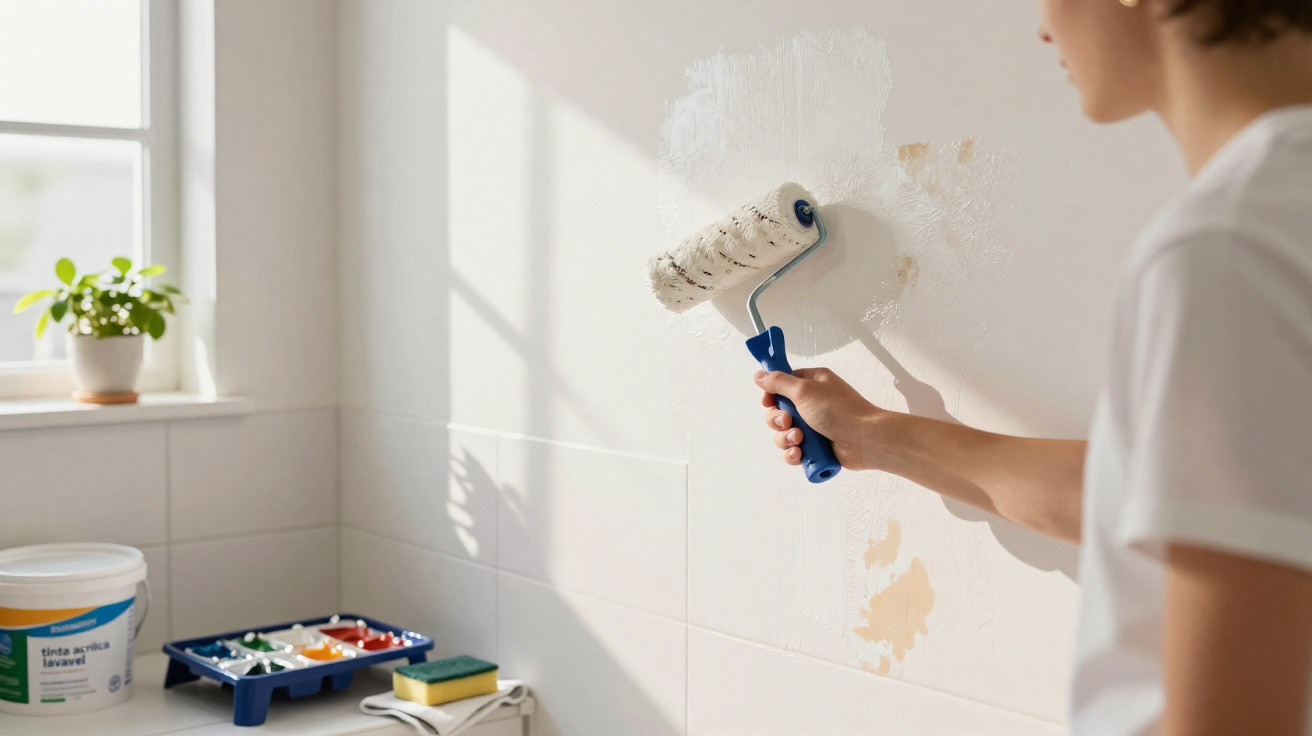
Refurbishing damp spaces such as bathrooms, kitchens and outdoor areas is changing significantly by 2026. Ordinary latex paint, long used on internal walls, is increasingly being replaced by a more advanced coating category: washable, moisture-resistant acrylic paint. Also sold as “paint for wet areas” or “waterproof wall paint”, it is designed to withstand steam, splashes and regular cleaning without easily peeling or staining.
What is the acrylic paint replacing ordinary latex paint?
The leading replacement for conventional PVA latex paint is premium washable acrylic paint, often labelled “super-washable”, “acrylic paint for damp areas” or “paint with mould and fungal protection”. Unlike standard latex, which is intended for dry bedroom and living-room walls, acrylic paint creates a more sealed film, absorbs less water and adheres more effectively to the surface.
Some products are classed as waterproofing paint for walls, making them suitable for façades, boundary walls and surfaces exposed to rain and strong sunlight. For bathrooms and kitchens, acrylic paint containing anti-mould additives and a satin or semi-gloss finish is particularly useful, as it makes grease splashes and steam residue easier to remove. It is often used alongside sealers and preparatory primers.
Why is washable acrylic paint more resistant to moisture and mould?
The performance of this paint for damp areas comes from its formulation: acrylic resins form a denser coating than ordinary latex, limiting the movement of water through it. When the wall is less saturated, the conditions that favour fungi - which cause dark marks and unpleasant odours in poorly ventilated rooms - are reduced.
In addition to the more sealed film, biocides and anti-mould additives help delay colony growth, even in spaces with limited ventilation. Exterior formulations commonly include UV-protection additives, reducing fading and premature wear while allowing the surface to be cleaned more easily with a damp cloth and mild detergent.
How should moisture-resistant acrylic paint be applied correctly?
Surface preparation is crucial if washable acrylic paint is to provide its stated performance, especially on walls with a history of mould or flaking. In many cases, professionals advise following a basic sequence of stages, adapting it to the plaster type and the room’s moisture level.
In general, the process includes:
- Cleaning the wall and removing blisters, flaking paint and any loose material from the existing finish.
- Washing with a solution of water and anti-mould product, or well-diluted bleach, then rinsing and allowing the surface to dry completely.
- Repairing cracks and holes with a suitable filler, then sanding to create an even surface.
- Applying a preparatory primer or acrylic sealer to new or porous plaster.
- Applying 2 to 3 coats of moisture-resistant acrylic paint, observing the required drying interval between coats.
How much does this paint cost per square metre, and when does it pay for itself?
The per-square-metre cost of premium acrylic paint for damp areas is generally higher than that of ordinary latex paint, with prices varying by brand, region and finish. In 2026, the market is typically divided into PVA latex paint, which is the more affordable option; economy acrylic paints, at an intermediate level; and premium washable or moisture-resistant acrylic paints, in the higher price bracket per litre.
Although the initial outlay is greater, its longer service life in bathrooms and kitchens will often offset the cost over a 3 to 5 year cycle. It can reduce repainting, repairs caused by peeling and spending on harsher cleaning products. A less frequently mentioned but practical advantage is the protection of skirting boards, adjacent furniture and fitted cupboards, all of which are less affected by moisture and mould, helping to keep the property in better overall condition.





Comments
No comments yet. Be the first to comment!
Leave a Comment