
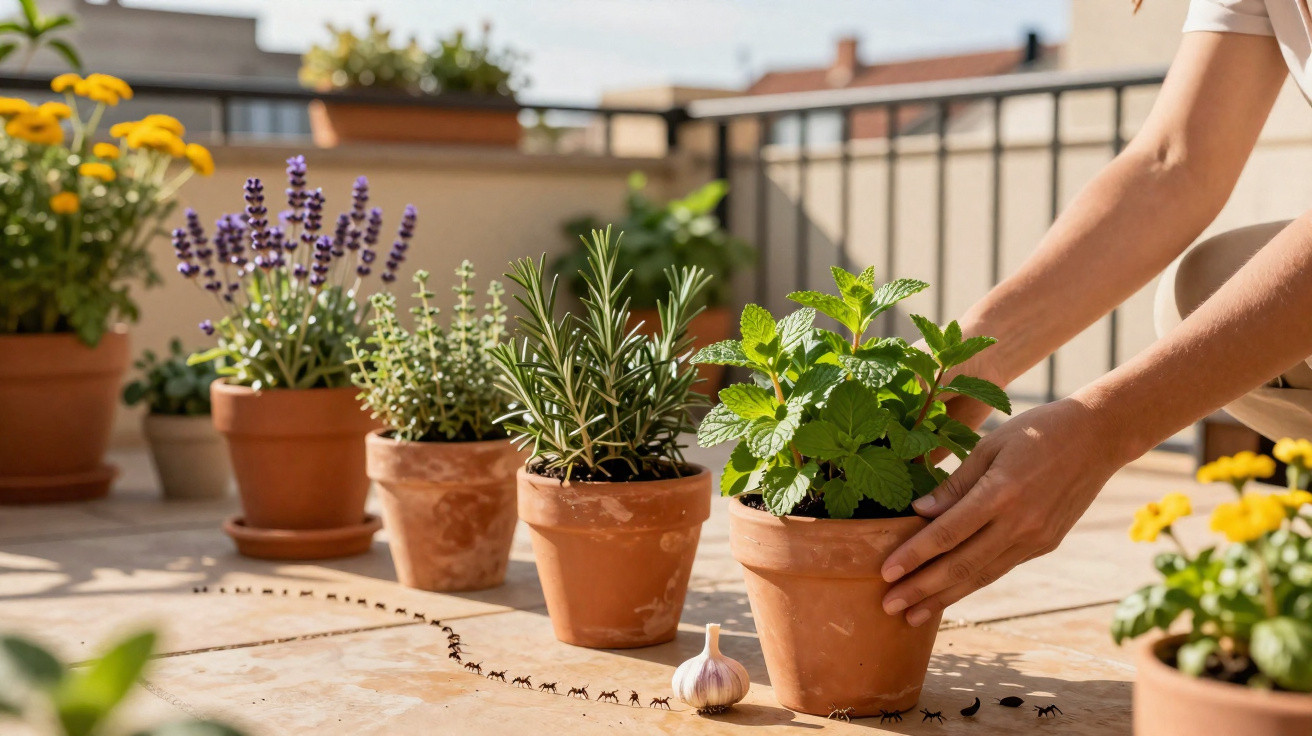
Certain garden plants naturally keep these tiny crawlers at a distance.
Ants are useful workers in the soil, but the mood soon changes when they burrow beneath flowerpots, tend aphids or appear in the kitchen. Rather than reaching for harsh chemicals, you can plant specific varieties whose scent deters ants. Many are familiar culinary herbs and genuine all-rounders in the garden.
Why ants suddenly seem to be everywhere
Ants follow scent trails laid by other members of their colony. Once they discover a food source, increasing numbers reinforce the trail. This is how the familiar ant routes develop towards patios, wheelie bins, pet bowls or indoors.
In gardens, they like to settle where the ground is loose, warm and dry: beneath paving slabs, in gaps in walls, in raised beds or directly inside plant containers. A spot becomes particularly appealing when aphids are nearby, as their sweet secretions strongly attract ants.
“Ants navigate their lives through scent. Disrupting their sensitive antennae with powerful plant aromas interferes with their orientation – entirely without poison.”
Peppermint: a fragrant barrier against ant trails
Peppermint releases an intense menthol scent that masks ants’ pheromone trails. While its aroma smells pleasantly fresh to us, it is more like a dense fog to ants, causing them to lose their sense of direction.
- Plant peppermint in pots and position them by doorways, on the patio or beside troublesome cracks.
- It grows vigorously in beds and can spread widely, so it is better grown in containers or with a root barrier.
- For an extra effect, place a few fresh leaves between paving slabs or gently crush them to release their essential oils.
As an added benefit, mint provides ingredients for tea, lemonade and desserts throughout the year.
Lavender: a lovely scent for people, stress for ants
Lavender is a classic ornamental-garden plant that also forms a natural protective barrier. Its distinctive fragrance repels ants, while its purple flowers attract bees, bumblebees and butterflies.
Lavender is especially useful in the following locations:
- along garden paths and patio edges
- around seating areas, where sweet foods or barbecue leftovers often attract ants
- against house walls beneath windows and balconies
Lavender prefers sunshine and fairly poor, free-draining soil. Too much moisture harms it, whereas it copes far better with dry conditions.
Thyme: a small shrub with a big effect
Thyme grows low, becomes woody over time and is ideal for sunny, dry positions. Its essential oils deter ants, and the plant also benefits many other plants because its compounds have antibacterial properties.
Thyme is particularly practical:
- between stepping stones on garden paths,
- along the edges of vegetable beds,
- in balcony planters placed directly outside windows affected by ants.
It is also regularly used in the kitchen with roasts, vegetables and potatoes. One small shrub therefore combines protection, flavour and food for bees.
Rosemary: an aromatic hedge against ants around the house
Rosemary thrives in heat and sunshine – exactly the conditions found where patio slabs shimmer and house walls warm up, which are often ants’ preferred places too. Rosemary’s spicy fragrance drives them away from this favourite territory.
Suitable options include:
- rosemary hedges running alongside the patio,
- large containers beside the front door or on a balcony,
- planting strips immediately in front of full-height windows.
Rosemary is reasonably drought tolerant but requires well-drained soil. In colder areas, it is happier in a pot and is better overwintered frost-free.
Tansy: yellow flowers with powerful repellent properties
Tansy, often seen as a wild plant beside paths, contains potent bitter compounds and essential oils. Its strong scent deters not only ants but also other pests, such as mosquitoes and certain beetle species.
Because tansy can spread through rhizomes, it is best planted deliberately in the garden:
- in a contained corner as a protective plant,
- at the edge of composting areas or wood stores,
- in a large container planting as a “guardian plant”.
Its striking yellow button-like flowers add colour to naturalistic borders and pair well with grasses and hardy perennials.
Basil: for the kitchen, balcony and protection from ants
Basil is almost indispensable in the kitchen, yet ants dislike its intense aroma. On windowsills and balconies, it can serve as a living barrier, especially where ants enter the home through the smallest gaps.
For strong growth, basil needs:
- a warm, sunny spot without cold draughts,
- regular watering without waterlogging,
- regular harvesting so that it stays bushy.
Arranging several pots around vulnerable areas creates a type of aromatic protective ring.
Garlic: a pungent scent as an odour barrier
Garlic works in several ways in a bed. Its powerful aroma interferes with the scent communication of ants, while its sulphur-containing compounds can support other plants by helping to limit fungal diseases in the soil.
Planted among roses, strawberries or vegetables, it forms a natural fragrant wall. Many gardeners plant individual cloves:
- around raised beds and cold frames,
- along walls and patio edges,
- directly beside cracks from which ants emerge.
Yarrow: delicate flowers, a powerful helper
Yarrow, with its fine feathery foliage, attracts beneficial insects such as parasitic wasps and lacewings, which in turn keep pests under control. Ants are also sensitive to the plant’s scent.
As it tolerates sun and dry soil well, it is perfect for rock gardens, slopes or the edges of gravel paths. In places where the ground is naturally sparse, it fills gaps and adds white, pink or yellow flower heads.
How to make the plants even more effective against ants
To ensure this natural deterrent works at full strength, it is worth creating a simple plan for your own garden or balcony.
| Plant | Ideal for | Particular benefit |
|---|---|---|
| Peppermint | Pots by doors and paths | powerful cloud of scent, easy to care for |
| Lavender | Bed edges, patio borders | attracts pollinators, drought tolerant |
| Thyme | Paving gaps, sunny beds | low-growing, tolerates foot traffic |
| Rosemary | Containers by the house and balcony | aromatic hedge effect |
| Tansy | Boundary areas, near compost | also works against other insects |
| Basil | Windowsills, balconies | ideal at ant entry points |
| Garlic | Vegetable and rose beds | additional protection against fungal diseases |
| Yarrow | Rock gardens, sunny open areas | encourages beneficial insects, robust in dry weather |
Positioning, combinations and care
- Targeted placement: Plant strongly scented varieties consistently where ant trails start or lead into buildings.
- Mixed planting: Combining several fragrant herbs intensifies the effect. A strip of herbs along the patio edge acts like a natural wall.
- Regular pruning: Cutting back many herbs encourages fresh growth and more essential oils, increasing their effectiveness.
Bonus tip: using essential oils correctly
If the problem is acute, essential oils can supplement the garden plants. Add a few drops of peppermint, lavender or thyme oil to a spray bottle of water, shake thoroughly and spray directly on ant trails, cracks and entry points. Never apply the mixture undiluted to pets or skin, and test it first on an inconspicuous area to ensure surfaces do not become discoloured.
What else helps with a severe ant infestation
Natural deterrence using plants is a long-term approach. Where an infestation is substantial, it is worth taking a close look at the causes:
- remove exposed food sources, and do not leave crumbs or sweet foods out,
- keep wheelie bins tightly closed and clean them regularly,
- reduce aphid infestations on roses, fruit plants and ornamental plants, so ants have less incentive to gather there.
The plant-based approach is particularly beneficial for households with children or pets: no poison bait and no low-level sprays that curious hands or noses can reach. Herb beds around the patio and balcony instead provide fresh ingredients, greater insect diversity and, incidentally, calm within the ant colony.



Comments
No comments yet. Be the first to comment!
Leave a Comment