
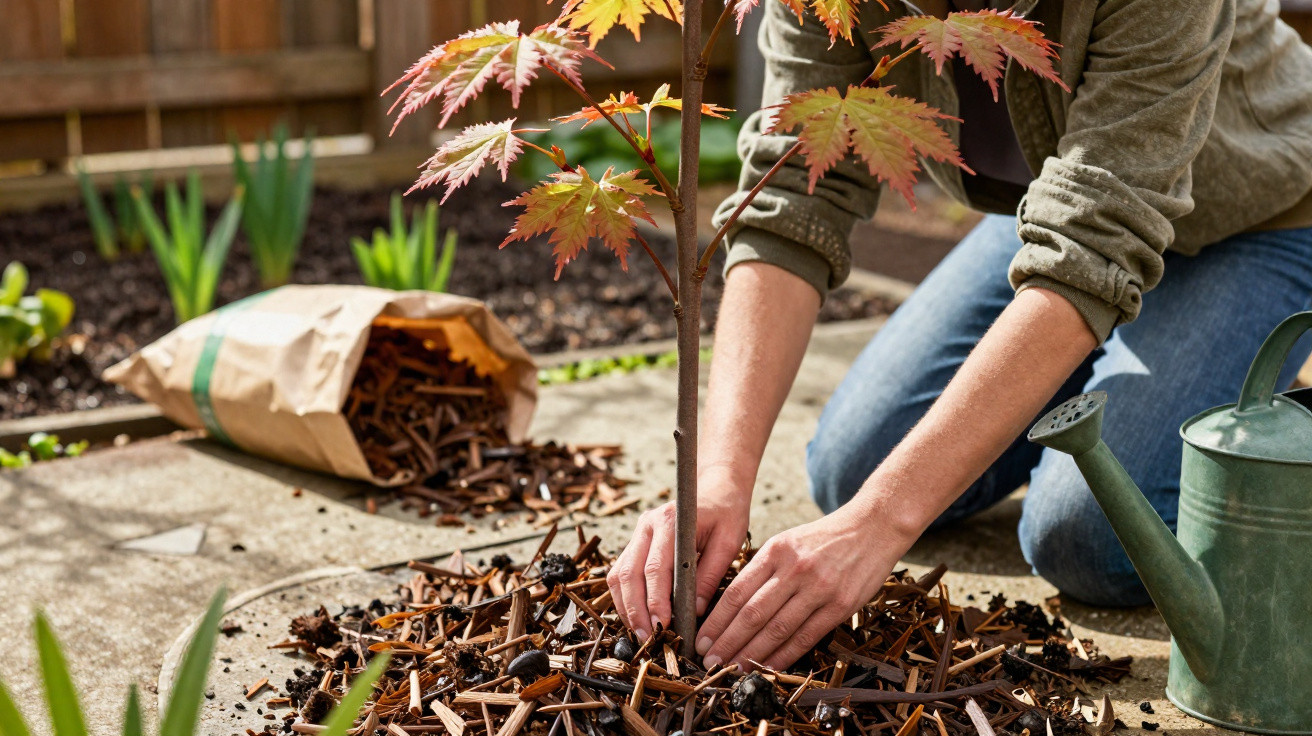
Anyone with a Japanese maple in a border or container will know the issue: this elegant plant is also highly sensitive. Leaf edges dry out, shoot tips die back and the tree produces barely any fresh growth – even when it is watered regularly. Yet in early spring, there is one straightforward measure that can give this ornamental tree a noticeable boost.
Why many Japanese maples struggle in spring
Japanese maples (Acer palmatum) have exceptionally shallow roots, often running only a few centimetres below the soil surface. This is precisely the zone where temperature and moisture levels fluctuate most. Late frosts, cold winds and then the first warm days of the year all affect this root network directly.
The results can be seen in many gardens:
- Leaves develop brown, scorched-looking edges.
- Small branches dry out or die back completely.
- The canopy appears sparse, with little or no new growth.
- The plant reacts badly to every watering mistake.
Japanese maples also prefer cool, humus-rich soil, much like the conditions in open woodland. In many gardens, however, they are planted in parched, heat-baked ground or in hard, compacted growing medium. The strain therefore often begins around the roots.
“If you recreate the right ‘forest floor’ for your Japanese maple in March, you will strengthen it for the whole season.”
The key March task: a protective mulch layer for Japanese maples
At the start of spring, gardening professionals recommend applying a layer of organic material around Japanese maples. It may seem like an unremarkable job, but it tackles several issues at once.
A mulch layer:
- cushions major temperature changes around the roots,
- keeps the soil consistently moist without encouraging waterlogging,
- suppresses competition from weeds,
- slowly releases nutrients suited to the growth of fine roots,
- creates conditions similar to the plant’s natural semi-shaded habitat.
For these benefits to take effect, however, the material, depth and timing all need to be right.
Step by step: mulching your Japanese maple in March
Prepare the soil without damaging roots
As soon as the ground is no longer frozen in March, you can begin preparing the area. First, carefully loosen the top layer around the tree, going no deeper than 2–3 centimetres. A small hand tool is entirely sufficient; heavy digging will damage the shallow root system.
Then remove all weeds from beneath the canopy. Avoid pushing deeply into the soil and pull weeds out by hand wherever possible. The aim is to create a clear area beneath the branches so that the mulch can be spread evenly.
Apply the ideal mulch layer
Next, distribute the chosen material across the entire area beneath the tree’s canopy. For Japanese maples planted in the ground, a layer measuring 5–8 centimetres deep is a useful guide. Younger trees can manage with slightly less.
Importantly, leave a clear ring around 10 centimetres wide directly around the trunk. The trunk flare – the slightly thickened base emerging from the soil – must remain visible and must not be buried beneath mulch. Otherwise, rot and fungal disease may develop.
“Mulch must never touch the trunk – the root flare needs air and must stay dry.”
Suitable materials – and what to avoid
Japanese maples thrive in slightly acidic, humus-rich ground. The best choices are materials that resemble an undisturbed woodland floor.
| Suitable materials | Better avoided |
|---|---|
| Compost-made pine bark or other bark pieces | Dark stones or gravel in full sun |
| Well-rotted fallen autumn leaves | Sheeting or plastic covers |
| Woodchips from untreated prunings, well aged | Thick layers of fresh grass clippings |
| Mature garden compost applied in a thin layer | Highly calcareous grit |
Bark compost and old leaf layers break down gradually, providing a steady nutrient supply. They also support soil life, including earthworms and micro-organisms – exactly what a sensitive, shallow-rooted tree needs.
Fresh grass cuttings, impermeable sheeting and dark stones, by contrast, can heat up sharply, trap excess moisture or reduce airflow. These conditions weaken the maple and often result in scorched leaves during summer.
Watering properly: how the mulch layer helps
Once the new layer is in place around the trunk, your watering routine changes too. The soil stays cool and evenly moist for longer. Water soaks in more slowly, but reaches the roots more reliably.
For trees growing in the ground, a simple routine works well:
- In typical spring weather, water generously twice a week.
- During extended dry spells, water 3–4 times a week.
- Water deeply rather than giving frequent small amounts.
The mulch supports this approach by retaining water in the upper soil layer. This prevents extreme swings between wet and dry conditions that would otherwise stress the maple.
Special care for Japanese maples in pots
Many gardeners grow their maple in a container on a balcony or patio. Here, sunlight is even more direct and the potting medium dries out faster. A protective layer is worthwhile in this setting too, but it should be thinner.
For potted plants, around 3–5 centimetres of organic material is enough. Press the mulch down lightly without compacting it. After every watering, empty any surplus water from the saucer to prevent waterlogging. Roots can rot particularly quickly in containers.
Towards late summer, the amount of water may be reduced slightly. The maple must not dry out, but giving it a little less helps it prepare for its intense autumn colour.
Effects you can see through the year
Those who mulch their tree carefully in March and water it appropriately will usually notice the results in the same season. Leaves emerge denser and fresher, with fewer scorched tips. New shoots appear more readily, while the canopy looks more balanced overall.
Over time, loose, crumbly soil develops around the trunk. The roots can spread more effectively and cope far more confidently with hot spells, wind and late frosts. Instead of constantly “fighting for survival”, the tree can direct its energy into growth and colour.
Common mistakes – and how to avoid them
Many issues can be resolved with simple adjustments. Common pitfalls when caring for Japanese maples include:
- Piling mulch directly against the trunk – this creates a risk of rot.
- Stone beds without shade – the soil overheats quickly.
- Soil that is too heavy and waterlogged – roots receive too little air.
- Alternating between allowing the soil to dry out and “flooding” it during watering.
By concentrating on the root area and treating it like a small woodland site, you will automatically avoid most of these problems.
Why Japanese maples react differently from tough garden shrubs
Many traditional garden shrubs cope surprisingly well with compacted ground, blazing sunshine and occasional gaps in watering. Japanese maples do not. Their fine, shallow roots are adapted to living in loose, cool leaf mould.
This also explains why a spot with light shade, shelter from hot midday sun and a well-maintained mulch layer makes such a difference. Respect these needs and you will be rewarded with a strikingly colourful ornamental tree that produces new growth more reliably each year.
The crucial point is therefore less about costly specialist fertilisers or elaborate pruning methods than one very simple step close to the ground: lay a suitable mulch cover in March and give the roots the conditions this plant species was originally designed for.

Comments
No comments yet. Be the first to comment!
Leave a Comment