
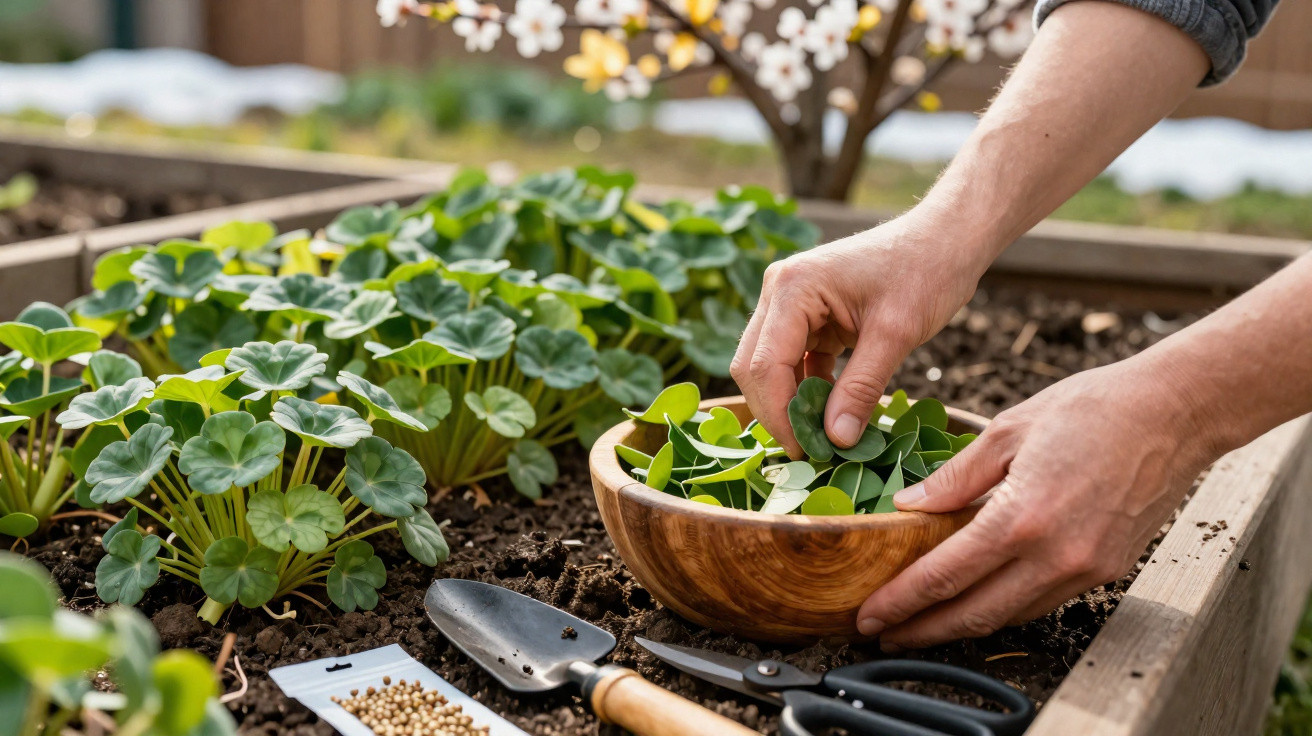
At the moment, anyone walking through the garden is more likely to expect the last traces of winter than fresh greenery. Yet this is exactly when a plant star that many people still overlook begins to grow: winter purslane, also known as plate herb or winter postelein. This delicate leafy vegetable thrives while lettuce and similar crops are still dormant, bringing vitamins to the plate long before the first traditional vegetables are ready to harvest.
The March marvel: what plate herb really is
At first glance, winter purslane (Claytonia perfoliata) looks rather unassuming. Its leaves are small and tender, its stems slender and its colour light green – nothing that immediately suggests a “super-vegetable”. That is precisely its advantage. While other crops are only slowly getting going in spring, plate herb is already at the peak of its season.
“Winter purslane provides fresh greenery in late winter and early spring, while the rest of the garden is still in hibernation.”
The plant is rich in vitamin C, while its leaves also provide magnesium, iron and further minerals. Anyone who rarely eats raw vegetables in winter, or whose diet contains plenty of stored foods such as potatoes, bread and convenience products, can use plate herb to fill a genuine gap. The familiar “spring fatigue” is often noticeable in March – and a crisp plate of freshly picked greenery from your own bed can make a tangible difference.
How to identify winter purslane in the garden
Many amateur gardeners have probably already encountered winter purslane without recognising it, or have mistaken it for a “weed”. That is a shame, because once you can identify it, you effectively have free organic vegetables growing in the bed.
- The leaves are juicy green and usually round to slightly heart-shaped.
- Its stems are thin, soft and branch out into bushy growth.
- A distinctive feature is the leaf-like “plate” through which the stem grows.
- The plant stays low to the ground but quickly forms dense mats.
This herb often appears between other crops or in partially shaded areas of the garden. Once it has established itself, it will often reappear the following winter, as the plant reliably self-seeds.
Why March is winter purslane’s big moment
Winter purslane is ideally suited to cool weather. In fact, its seeds need a cold period in order to germinate reliably. Damp soil, short days and fresh air are all conditions in which head lettuce and tomatoes are still struggling.
The first leaf rosettes can emerge as early as January, and by March the beds are often full of plants ready for picking. The herb easily tolerates frost down to just above 0°C. It only pauses during severe, prolonged frost, then continues growing as soon as temperatures become milder again.
“Anyone who acts quickly now can harvest plate herb several times in March and April – even before the first row of radishes has fully matured.”
Growing winter purslane in your own garden: it could hardly be easier
Plate herb is ideal for anyone who prefers uncomplicated cultivation. It needs no heavy feeding, no complex maintenance and no hours of pricking out seedlings.
Step by step to your own plate herb carpet
- Choose the sowing period: October to February is ideal. If you are late, you can still sow in March, although the harvesting period will be somewhat shorter.
- Sow shallowly: Simply scatter the fine seeds over the surface and cover them with no more than the thinnest layer of soil. Plate herb needs light to germinate.
- Position: Choose a spot in partial shade or sun. Garden beds, raised beds and larger containers work just as well as a pot on the windowsill.
- Watering: Keep the soil evenly moist, but avoid waterlogging. The plants do not like “wet feet”.
- Harvesting: The first leaves are ready to cut after around 4–6 weeks. Snip off the upper shoots and the remaining growth will sprout again.
Winter purslane is especially suitable for people with busy working lives who do not want to spend a long time in the garden every day. Once sown, it largely looks after itself and provides a steady supply for weeks.
What plate herb tastes like – and what it pairs with best
In flavour, winter purslane sits somewhere between young spinach and mild lamb’s lettuce. The leaves are soft, gently nutty and not at all bitter. This also makes them easy for children to enjoy.
Everyday kitchen ideas
- Winter salad: Combine plate herb with a few apple slices, toasted nuts and a simple lemon dressing for a quick evening meal.
- Fresh smoothie: Blend a handful of leaves with banana, orange and water or oat drink. It is an easy way to add vitamin C to the morning.
- Soup topping: Scatter it freshly over vegetable or potato soup right at the end; the leaves should receive only brief warmth.
- Pesto: Blend plate herb with toasted seeds, garlic, oil and a little salt. It works well with pasta, roasted vegetables or on bread.
“Anyone who eats a small bowl of plate herb every day has their own ‘vitamin booster’ in the garden throughout March and April.”
A health benefit: more than a substitute for salad
Winter purslane was once deliberately used to bridge the months when vitamins were scarce. Its high vitamin C content supports the immune system, which is a compelling benefit during cold season.
Its secondary plant compounds may have an anti-inflammatory effect, and some herbal practitioners traditionally use the herb at the first signs of a cold or for sore throats. A generous portion of fresh leaves in a salad or smoothie provides not only vitamins, but also fluids and minerals that help to ease the strain on the body.
Plate herb is also considered gently supportive of digestion. Anyone who has eaten richer, heavier food during winter will welcome this light greenery, which gives the metabolism a mild nudge. In folk medicine, crushed leaves are also used externally for minor skin irritations.
Windowsill rather than field: microgreens as an addition
Anyone without a garden, or wishing to supplement the plate herb growing in the bed, can grow microgreens on the windowsill at the same time. Cress, radish leaves, broccoli sprouts and other germinated seeds grow within just a few days in small trays or shallow containers with natural-fibre fleece or coconut coir pellets.
Together, they create a kind of “fresh produce shelf” in only a few square metres: plate herb from a container, sprouts from a tray and perhaps a pot of chives as well. That is enough to enhance any slice of bread or bowl of soup.
Tips for experienced growers: companion planting and self-sufficiency
Plate herb fits perfectly into a consistent self-sufficiency strategy. With clever planning, it is possible to have something fresh in the bed throughout the year. Winter purslane fills the gap between winter vegetables and the first classic spring crops.
| Month | Suitable pairing with plate herb |
|---|---|
| October–December | Sow between autumn vegetables that are being cleared gradually, such as cabbage or leeks |
| January–March | Main harvesting season; an addition to stored vegetables and sprouts |
| April | Transition period: harvest plate herb as lettuce and herb seedlings begin to take over |
If you want to maintain the patch, simply allow individual plants to flower and set seed. The small seeds fall onto the soil, ensuring that young plants emerge again the following winter – without needing fresh seed.
Risks, limitations and useful combinations
Although plate herb is so hardy, there are a few points worth noting. It quickly suffers during very dry, hot spells in late spring. At that stage, it makes sense to harvest it all in good time and free up the bed for heat-loving crops. In high summer, plate herb simply no longer feels at home.
As always when foraging in the wild, only pick plants that you can identify with certainty. Confusion with poisonous species is rare with plate herb, but beginners are still better off starting in their own garden. There, the plant can be observed over several weeks until its shape and habit become familiar.
It becomes particularly interesting when plate herb is combined with other early wild and garden plants: a few leaves of young ground elder, some windowsill cress and perhaps the first shoots of chives. What may seem like very little can quickly become a colourful bowl that easily rivals any supermarket shelf – only fresher.
Anyone who has experienced how early in the year plate herb can provide a harvest will plan their beds differently. Rather than waiting for the big start in May, the gardening season suddenly begins in the middle of winter – quietly, greenly and with a herb that barely stands out visually but surpasses almost every conventional vegetable in flavour and health benefits.


Comments
No comments yet. Be the first to comment!
Leave a Comment