
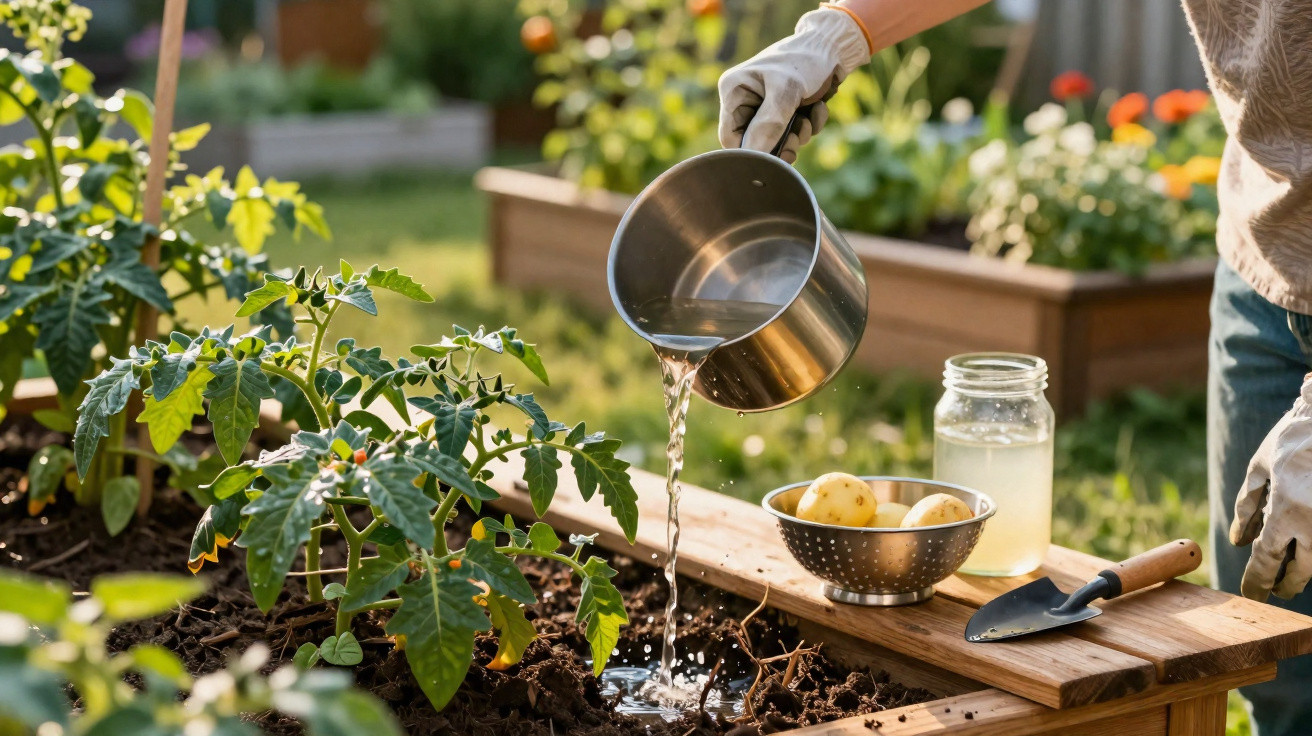
On a weekday evening, the saucepan is still steaming beside the sink and, almost automatically, you are ready to pour its water down the drain. Yet in the garden, borders can be thirsty after a hot day, particularly when the first flowers begin to droop and the soil cracks around established perennials. Some gardeners who dislike wasting anything save this potato cooking water in a bowl, wait for it to cool, then take it outside. It seems like a modest, almost ordinary habit. Even so, it comes with rules, limits and a sound dose of common sense. This slightly cloudy water is not a miracle treatment, but it can be a useful small resource around certain plants. The key is knowing which ones.
Cloudy potato cooking water can still be useful in the garden
We all know the moment of hesitation over a kitchen leftover: it is not quite waste, yet it is unclear what else to do with it. If potatoes have been cooked without salt, their cooking water retains a small amount of starch and minerals released during cooking. In a flower border, it can simply replace part of the usual watering, especially when moistening the soil around well-established plants. Experienced gardeners do not credit it with dramatic powers. Instead, they regard it as a thrifty, understated and almost traditional practice that prevents a few litres of still-clean water from being wasted.
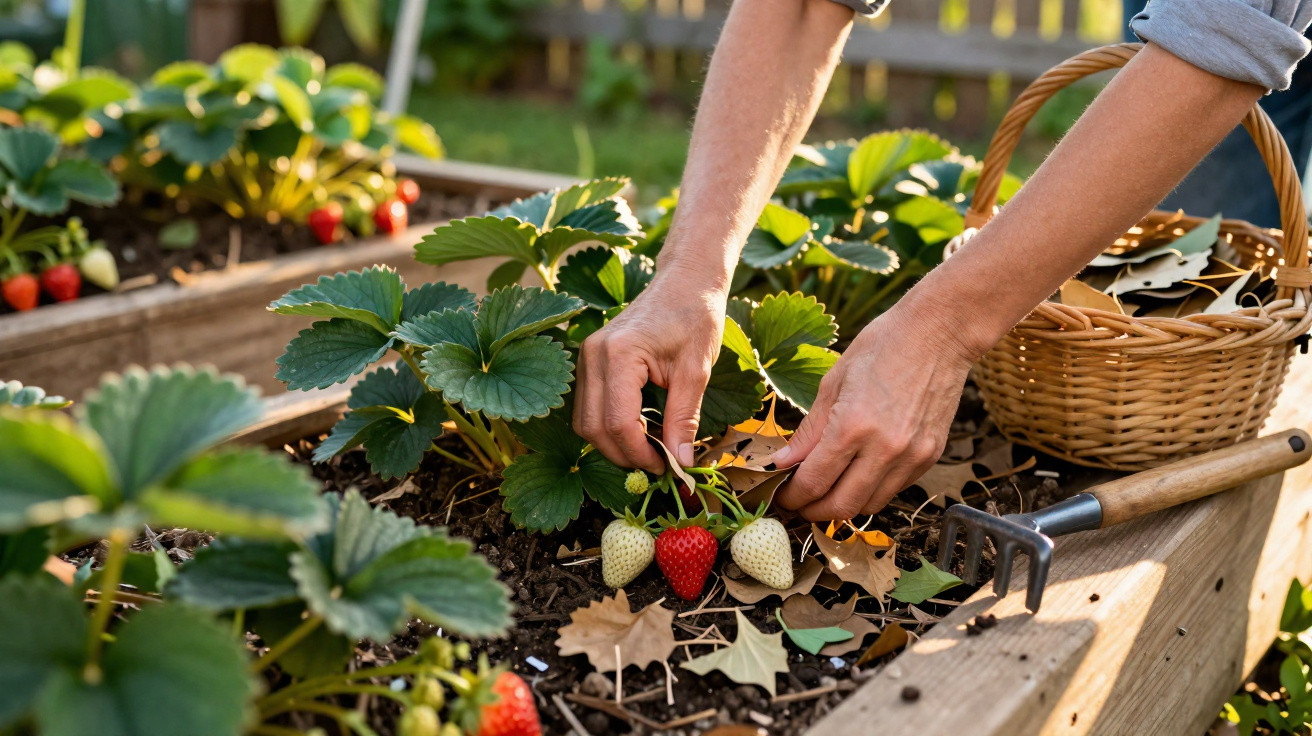
In a small urban courtyard, one gardener says she uses the cooled water from her saucepan once or twice a week, depending on what she has cooked, for her hostas and hardy geraniums. She pours around two litres onto the soil around the plants, never over the leaves, and tops it up with rainwater whenever she has some. Across a season, this can mean several dozen litres are reused rather than discarded. It will not turn a tired border into a grand country-house garden, of course. However, when dry spells keep returning, every litre matters, especially in gardens where watering has become a real concern.
The reason is straightforward: the starch left in the water may briefly feed some soil micro-organisms, while the moisture benefits the roots directly. Nutrient levels remain low, nowhere near those of a complete fertiliser sold at a garden centre. The most reliable benefit is therefore reusing the water, rather than any miraculous fertilising effect. Living soil responds well to moderate, regular additions, not overly rich recipes or repeated treatments made without observation. If the soil smells unpleasant, becomes sticky or attracts gnats, it is a sign to space out applications and return to plain water.
The right method: cool, plain and poured at the base of plants
The number-one rule can be put in three words: no salt, no sauce. Once the potatoes have been removed, allow the water to cool completely in the saucepan, or transfer it to a clean container kept away from children and animals. Water that is still hot can scorch fine roots and abruptly disrupt soil life. When it reaches room temperature, pour it slowly onto the soil around ornamental plants, either onto already slightly damp ground or just before light watering. One litre is enough for a small clump; two to three litres may suit a denser border.
The most common mistake starts with the saucepan itself. Potato water is often salted before the potatoes even go in, and butter, cream or stock may sometimes be added afterwards: in that case, pour it down the drain without feeling guilty. Salt builds up in the soil and can hinder roots, while fats may clog the soil and attract unwanted visitors. Let us be honest: nobody really does this every day. Keeping this water occasionally, when it is completely plain, is already a sensible and easy habit to maintain.
Some borders are better suited to it than others, especially those planted with tough, well-rooted plants; very young seedlings, on the other hand, are better off with ordinary fresh water.
“In the garden, the best tips are those that stay simple and never force nature.”
Before heading outdoors with your saucepan, keep these points in mind:
- use only unsalted cooking water;
- wait until it has cooled completely;
- pour it straight onto the soil, never onto foliage;
- avoid already fragile potted plants and young seedlings.
A small habit that also changes how you view waste
Reusing potato cooking water will not replace good mulching, mature compost or careful observation of the garden. This habit expresses something else: a wish to make use of what is already at hand, without buying another product or being tempted by promises that sound too good to be true. In flower borders, the most noticeable results often come from repeated details: covering the soil, watering at the right time, choosing suitable plants and saving a little water whenever possible. Plain cooking water has its place in this calm, practical approach. It also encourages a different view of the kitchen and the garden, two spaces that are connected far more often than we might think.
| Key point | Detail | Added value for the reader |
|---|---|---|
| Unsalted water | Reuse only plain cooking water, with no stock or fat. | Avoids risks to roots and soil quality. |
| Complete cooling | Wait until the water reaches room temperature before watering. | Protects plants from an unnecessary temperature shock. |
| Moderate use | Pour it around robust plants occasionally. | Reuses water without turning a simple tip into a burden. |


Comments
No comments yet. Be the first to comment!
Leave a Comment