
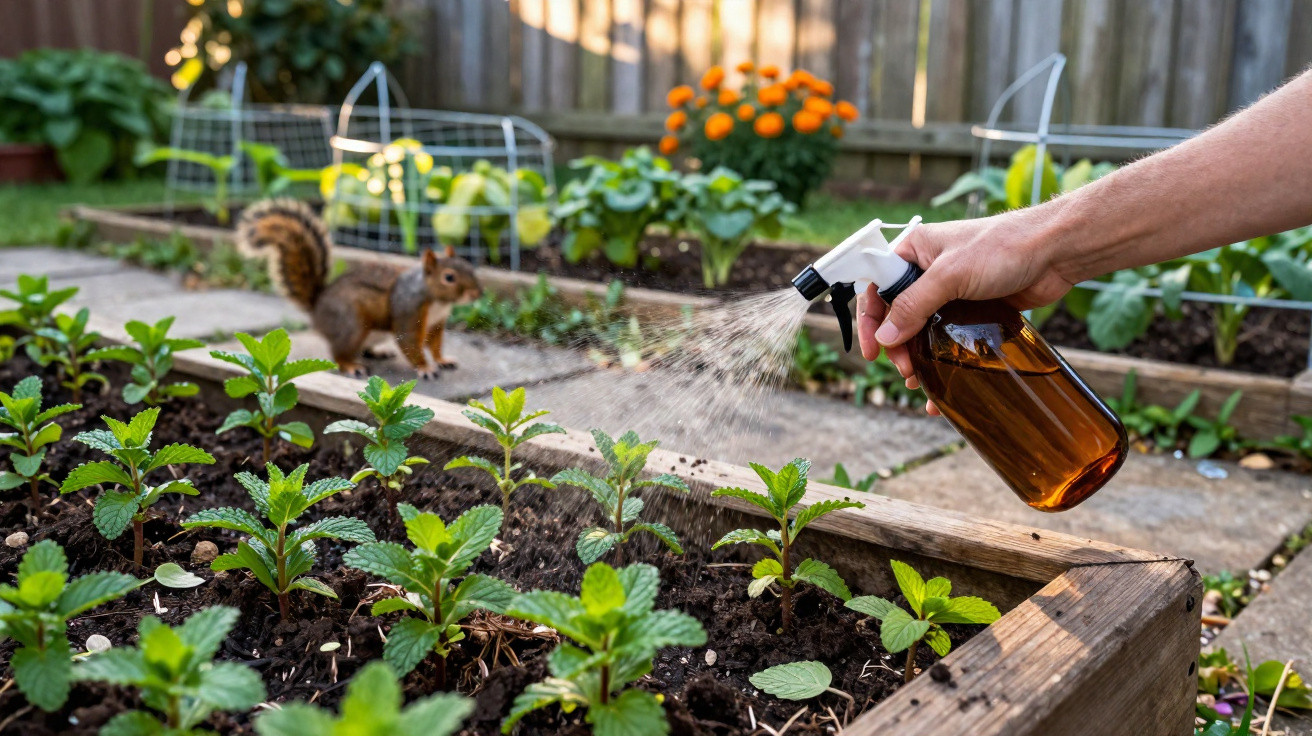
More and more amateur gardeners are reaching not for traps or poison, but for small bottles from the chemist: peppermint oil. Its powerful mint scent is said to keep furry pests away. But how well does it work in everyday garden use, and what are the limits of this natural approach?
Why peppermint oil bothers squirrels in the first place
Peppermint oil is one of the essential oils. Its main components include menthol and menthone, which produce the familiar cooling sensation on the skin as well as its particularly intense smell. Most people find that fragrance pleasantly fresh.
Squirrels rely heavily on their sense of smell to interpret their surroundings. They use their noses to locate food, detect predators and mark out their territory. When the exceptionally strong mint aroma reaches their sensitive scent receptors, they may regard the area as unpleasant.
Peppermint oil does not create an impenetrable fence; it creates a scented barrier that some squirrels simply find too bothersome.
Reports from many gardens suggest that squirrels often initially avoid places with a clear mint smell. They may stop digging in freshly turned soil or take another route to a bird feeder. However, this effect is generally not permanent.
How long does the deterrent effect last?
Outdoors, the oil’s scent fades quickly. Rain, sunshine and wind rapidly break down the aromatic compounds. The dosage used and the degree of shelter around the treated area are decisive factors.
| Influencing factor | Effect on the scent | Typical duration of effect |
|---|---|---|
| Rain | Washes oil from soil and surfaces | around 1–2 days |
| Direct sunlight | Causes volatile compounds to evaporate | around 2–4 days |
| High temperatures | Speed up evaporation | around 3–5 days |
| Sheltered areas | Allow the scent to remain noticeable for much longer | around 7–10 days |
There is also the fact that individual animals do not respond in the same way. Some squirrels appear highly sensitive to powerful smells, while others quickly become accustomed to them once they realise there is no genuine danger. It is especially difficult to deter squirrels in places where they already know of dependable food sources.
How garden owners can use peppermint oil correctly
Anyone planning to use peppermint oil in the garden should take a considered approach. Pouring a few drops into the soil at random rarely provides lasting results. A coordinated arrangement of several scent sources is more effective.
Spray solution for beds and paths
The most common option is a homemade spray. Pure peppermint oil from a pharmacy or chemist is suitable for this purpose.
- around 10–15 drops of peppermint oil per 250 ml of water
- a small squirt of washing-up liquid as an emulsifier, so that the oil and water combine
- shake thoroughly and pour into a spray bottle
Apply the spray primarily in places where the animals regularly cause damage:
- on the soil around newly planted flower bulbs
- along fences and commonly used routes
- around bird feeding areas
- at the bases of garden sheds, patios and timber cladding
In dry conditions, applying it twice a week is usually enough. After rain or strong winds, it needs to be reapplied considerably more often.
Targeted scent sources with a higher concentration
More concentrated solutions may be useful for particularly vulnerable spots, such as treasured raised beds. Suitable options include:
- cotton pads or cotton wool balls with undiluted oil, placed in small containers with air holes beside at-risk plants
- fabric sachets filled with dried mint and additionally treated with a few drops of oil
- mulch layers mixed with oil around sensitive plants
These concentrated scent points work particularly well when they receive some protection from rain, for example beneath eaves, in overhanging window boxes or inside protective tubes.
Why peppermint oil alone is rarely enough
Where a garden already has a substantial squirrel population, scent-based methods soon reach their limits. The animals will usually know several food sources, have established nesting sites and follow familiar routes.
Peppermint oil can influence behaviour, but it is unlikely to stop a determined rodent that is hungry and accustomed to the location.
Pressure is particularly high during two periods of the year:
- Spring: nest building and raising young, with a high demand for nesting material and energy-rich food
- Autumn: intensive gathering and hiding of winter food supplies
At these times, the scent often does no more than shift activity slightly. Powerful attractions, such as open bird feeders, unsecured bins or densely planted beds with loose soil, will usually win out.
Combining peppermint oil with physical protection
Peppermint oil becomes far more effective when used as part of a wider set of measures. Proven options include:
- wire baskets or fine-mesh fencing around bulbs in the ground
- metal collars on tree trunks to prevent squirrels reaching certain areas
- squirrel-proof designs of bird feeder
- motion-activated water sprinklers that briefly startle the animals
The mint scent can act as an additional barrier, reducing the animals’ attempts to test different routes. This can save frustration and often prevent plant losses.
Costs, risks and alternatives
Pure peppermint oil is not inexpensive, particularly when it is a high-quality essential oil. Anyone treating larger areas can easily use up a small bottle within a few weeks. This becomes costly, especially as lasting results are rare.
It is also important not to overdo the scent. High concentrations may trigger headaches in people, disturb pets and irritate the skin on direct contact. Children should not be able to reach undiluted drops of oil. Dogs and cats can sometimes react sensitively when exposed heavily to these scents.
Other smells can also be used as supplementary or alternative methods, including garlic, vinegar and specialist ready-made products based on essential oils. In practice, however, a combination of scents, barriers and appealing alternative areas tends to work best.
What garden owners should consider in practice
Before using peppermint oil, garden owners should ask themselves two questions: how large is the affected area, and how consistently can the treatment be maintained? Treating a few spots at the edge of a large, heavily planted property is unlikely to make much difference.
Useful strategies can include:
- protecting only the most important areas rather than trying to treat everything
- creating alternative feeding spots further away, so the animals have somewhere else to go
- changing scent products regularly so that squirrels do not become accustomed to them
- reducing unwanted attractions in the garden, such as exposed food or easily accessible rubbish
Those who adjust their expectations usually get the best outcome: peppermint oil will rarely turn a heavily visited garden into an entirely squirrel-free area. It can, however, noticeably reduce damage in especially sensitive places and gently redirect the animals’ behaviour.
Why expectations are often too high
One important point is often overlooked online: squirrels are among the most adaptable urban animals. They learn quickly, experiment extensively and do not simply give up because somewhere smells of mint. Many reports of success come from gardens where squirrels had previously appeared only occasionally.
People living in neighbourhoods with extensive tree cover or directly beside parks will face a much harder task. If one group is driven out of a garden, the next likely candidates are already waiting in the neighbouring tree. The only solution is patience, together with the realistic understanding that the aim is to redirect squirrels rather than remove them completely.


Comments
No comments yet. Be the first to comment!
Leave a Comment