
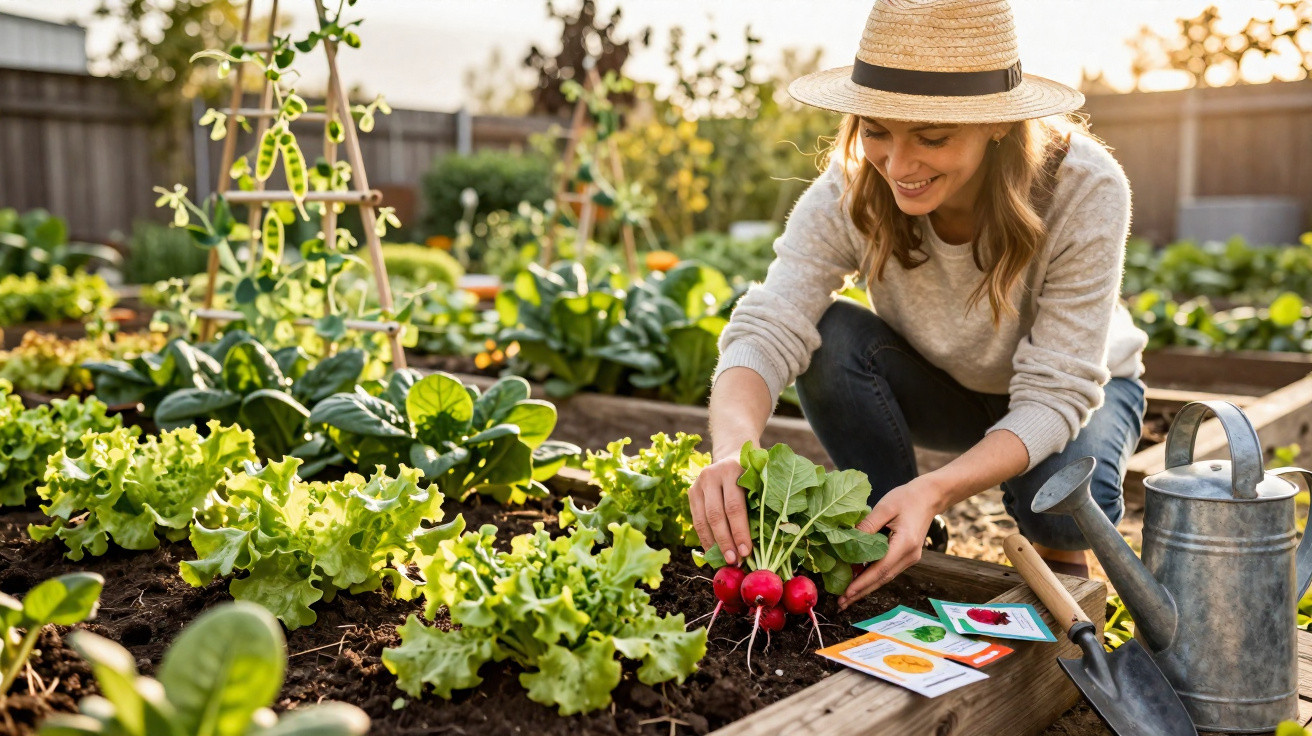
If you sow wisely now, you could be harvesting from your own garden within just a few weeks.
The shift from a grey winter to the first mild days of spring is the ideal time to bring the vegetable bed back to life. March in particular is perfect for sowing several fast-growing vegetables that produce their first crisp leaves or roots in fewer than 30 days. It is ideal for impatient gardeners – and anyone wanting fresh greens on the plate before summer has even started.
Why March matters so much for the vegetable bed
The garden noticeably comes back to life in March. Days grow longer, the sun becomes stronger and the soil gradually thaws. In many areas, this is the first point in the year when the ground can properly be worked again.
Before sowing these quick vegetables, the bed needs a fresh start. Dead plant material, fallen leaves and broken twigs will have gathered over winter. Leaving them in place provides an ideal hiding place for slugs, fungal diseases and other pests.
“A tidy, well-prepared bed often determines whether the first sowings take off – or merely struggle along miserably.”
Once the bed has been cleared, the most important task comes next: preparing the soil. Loosen it thoroughly, remove the roots of weeds, then work in mature compost or well-rotted manure. Experts have stressed for years that soil rich in organic matter retains water more effectively, warms up more evenly and releases nutrients more slowly but more reliably. That is exactly what young vegetable plants need.
Four vegetables that deliver a rapid harvest in March
Anyone who does not want to wait until June for their first bowl of salad should choose varieties that tolerate cold weather and grow at speed in March. Four stand out in particular: radishes, lettuce, peas and spinach.
Radishes: a classic for impatient gardeners
Radishes are the sprint champions of the vegetable bed. The first seed leaves begin peeking through the soil only a few days after sowing. In favourable conditions, the small roots are often ready for the kitchen after 25 to 30 days.
- Sowing: directly into the bed, with around 15 cm between rows
- Spacing within the row: 2–5 cm
- Harvest window: roughly 4–6 weeks after sowing
Sow small batches at intervals of around one week and you can keep picking fresh radishes well into early summer – without ending up with a surplus that turns woody.
Lettuce: tender leaves in record time
Cut-and-come-again and loose-leaf lettuces in particular grow quickly in March. They appreciate the still-cool conditions and are far less likely to bolt than they are in high summer. Many varieties provide their first delicate leaves after just three to four weeks.
Lettuce needs a little more room to develop well:
- Spacing between plants: up to 40 cm for headed lettuce
- For loose-leaf lettuce: sow more closely and harvest individual leaves regularly
One popular technique is to plant lettuce among rows of slower-growing vegetables, such as cabbage. By the time the cabbage needs the space, the lettuce will already have been eaten.
Peas: early pods with little effort
Peas thrive in the cooler part of the year. They can go into the bed as soon as the soil is workable. Mangetout and garden peas are especially suitable for an early start. Although they grow a little more slowly than radishes, they reward you with generous harvests and add structure to the bed.
Key points when sowing:
- Sowing depth: 2–3 cm
- Distance between rows: around 30–40 cm
- Support: a simple wire fence or canes are sufficient
The first pods usually appear after around six to eight weeks. In mild areas, the very first ones may be picked a little earlier when the plants are doing particularly well.
Spinach: fast leaves with high nutrient content
Spinach is among the hardiest and fastest leafy vegetables. It copes with cool temperatures far better than summer heat. Sow in March and you can pick the first “baby leaves” only a few weeks later – ideal in salads, smoothies or as a side dish.
Sowing depth matters for strong growth:
- Sowing depth: 1–2 cm
- Spacing between plants: around 10 cm
“Spinach is considered a nutrient-rich early vegetable: many experts praise it for its content of vitamins, minerals and secondary plant compounds.”
How to make March sowing and care a success
For a quick harvest, plants need the best possible conditions during their first few weeks. A few straightforward rules can make the difference between lacklustre seedlings and thriving beds.
Soil for radishes, lettuce, peas and spinach: loose, warm and nutrient-rich
All four fast-growing vegetables prefer loose, well-aerated soil. Heavy, wet ground often stays cold for a long time, delaying germination. Coarse sand or fine grit can help here by improving the soil structure. A layer of compost provides nutrients for young plants while supporting soil organisms.
Sow correctly: pay attention to depth and spacing
Many failures in the early vegetable bed result from sowing at the wrong depth or planting too densely. This quick reference guide helps:
| Vegetable | Sowing depth | Spacing within the row |
|---|---|---|
| Radishes | 1–2 cm | 2–5 cm |
| Lettuce | 0.5–1 cm (firm lightly) | 20–40 cm, depending on variety |
| Peas | 2–3 cm | approx. 5 cm |
| Spinach | 1–2 cm | approx. 10 cm |
If you have sown rows very densely, thin them out later by carefully removing weaker plants so those left behind can grow strongly.
Water, weather and pests: monitor the first few weeks
During germination, the soil must never dry out completely, but it should not become waterlogged either. A consistently moist, crumbly texture is ideal. A gentle stream of water or a rose attachment prevents seeds from being washed away.
Late frosts are still common in many places during March. Horticultural fleece or an old window frame covered with plastic sheeting is often enough to protect young plants and raise the soil temperature slightly. Covering the bed also offers some deterrence to birds and hungry slugs.
Get more from the vegetable bed: clever combinations and follow-on sowings
With sensible planning, you can make double use of the bed in spring. Radishes, for example, can be sown between slower-growing crops such as cabbage or leeks. The radishes will have been harvested long before those plants become larger.
Follow-on sowings are worthwhile too: as soon as a row of radishes has been harvested, spinach or a second sowing of lettuce can go straight into its place. This keeps the soil covered, helping it retain moisture and preventing erosion.
“With skilful planning, even a small bed can provide a surprising amount of fresh vegetables in March and April – and really build excitement for the season.”
Anyone new to growing vegetables should begin with small areas and one or two of these fast varieties. This allows you to gain experience without the workload becoming overwhelming. The learning curve is steep: after only one year, you will notice which varieties perform well in your own garden, how the soil responds and what the local spring weather feels like.
The exciting part comes when the first harvests reach the kitchen. A simple slice of bread with radishes and a little salt, a mix of young spinach and lettuce leaves, or the very first sweet pea pods eaten straight from the plant – these small moments are what make a spring vegetable garden so appealing. They also show that, with the right choices in March, you can get from a packet of seeds to the plate in fewer than 30 days.

Comments
No comments yet. Be the first to comment!
Leave a Comment