
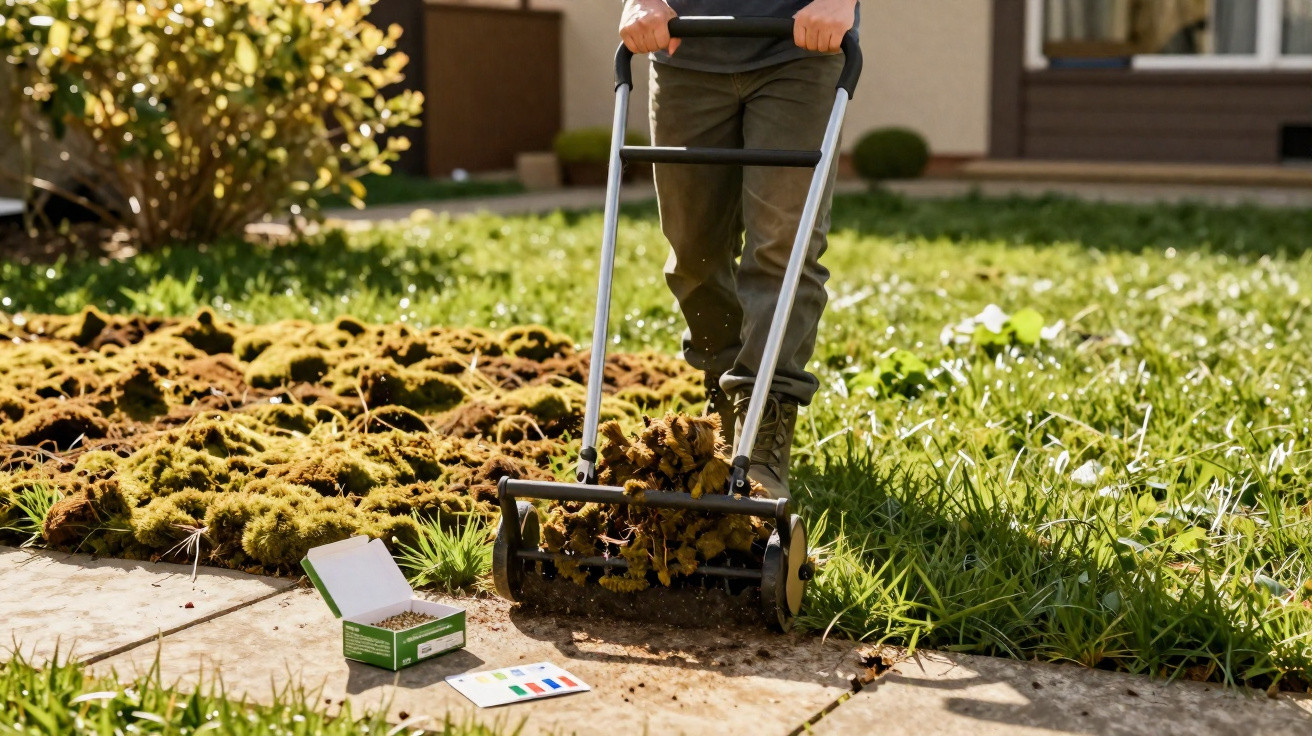
The lawn feels springy rather than firm, and every step resembles walking on a wet sponge – a clear warning sign coming from the soil.
Anyone walking through their garden in spring will soon notice when something is wrong with the lawn. If the turf gives way softly, water collects and vivid green cushions of moss take over, this is not simply a whim of nature but a serious issue beneath the surface. In precisely this situation, gardeners and landscaping professionals use a straightforward yet highly effective method to let the lawn breathe again.
Why the lawn suddenly feels like a sponge after winter
Waterlogging and shade: the perfect habitat for moss
The months following the cold season are particularly hard on many lawns. Rain, meltwater and limited sunshine mean that moisture remains in the soil for a long time. Beneath shade-giving hedges, along house walls or under mature trees, the ground barely dries out. These are exactly the conditions moss prefers.
Moss does not need deep roots, intense sunlight or many nutrients. Permanently damp, cool and lightly shaded ground is enough. In such areas, the grass loses its ability to form a dense cover of blades. Gaps then appear, allowing moss to spread across the surface.
“A spongy, springy lawn is a cry for help: too wet, too dark, too compacted – and therefore an ideal habitat for moss.”
Compacted soil deprives the roots of air
Another major cause lies directly beneath your feet: the soil is often too heavily compacted. Children, pets, wheelbarrows and cars parked at the edge of the garden all compress the soil structure. This happens especially quickly in heavy clay soils.
As the ground becomes denser, little oxygen can reach the deeper layers. Grass roots can no longer breathe properly, so they recede and plant growth slows. Moss, by contrast, is barely troubled by this lack of oxygen; it sits directly on the surface and gradually takes over the weakened lawn.
What moss in the lawn reveals about the soil
Acidic soil gives moss the advantage
Dense cushions of moss are regarded by specialists as a natural indication that the pH level is too low. Grass thrives in neutral to slightly alkaline soil. If soil becomes more acidic over the years – for example because of acid rain, fallen leaves, unsuitable fertiliser or conifers – the grass loses vigour.
The plants then struggle to take up nutrients, particularly phosphorus and calcium. Moss is exceptionally well adapted to these conditions and ruthlessly exploits the lawn’s weakness. Anyone seeing moss across a large area should think less about a “plant disease” and more about the condition of the soil.
Poor drainage drowns grass roots
If water remains on the lawn after every shower, this is a clear indication of a drainage problem. Either the ground beneath is too compacted, or fine particles have blocked the pores in the soil. Grass roots then sit in water for extended periods, partly rot and eventually die.
This produces the typical “sponge lawn”: wet and soft at the surface, with a hard, almost water-repellent layer underneath. Grass suffers in these circumstances, while moss copes extremely well – and wins the battle for the space.
The key professional step: vigorously scarify the lawn
Scarifying: removing moss and thatch from the lawn
The main technique used by landscape gardeners in these cases is surprisingly simple: they scarify the lawn. This involves specialist equipment with blades or wire tines that score the turf and comb out the surface layer of moss and lawn thatch.
This can be done with an electric scarifier, a petrol-powered machine or, for smaller areas, a sturdy hand tool. At first, the process appears severe: brown debris is scattered everywhere and the lawn looks badly damaged. That is exactly the intended result.
“Only once moss, dead material and thatch have been removed can the soil breathe again and water drain away evenly.”
It is important to work closely: run the machine across the area in one direction, then again at right angles, avoid setting the working depth too deeply, and carefully collect all material that has been pulled out. What remains is the “bare” lawn – battered, but finally permeable again.
Aerating: ventilating the soil deeply
Scarifying is followed by the second professional measure: loosening the soil. Numerous holes are made across the lawn using a garden fork, an aerator or specialist spiked shoes.
These openings allow air, water and nutrients to reach the roots again. On severely compacted areas, the holes can even be filled with sand. Over time, this improves the structure and noticeably reduces waterlogging.
- Scarifying: remove moss, thatch and dead plant material
- Aerating: make holes in the soil and break up compaction
- Working in sand: improve drainage and loosen the structure
- Overseeding: fill gaps and deny moss the room to spread
- Light fertilising: strengthen the grass and encourage growth
Gently correcting the soil: pH, nutrients and overseeding
Apply lime lightly to reduce acidity
To give moss fewer opportunities in the long term, the soil needs a pH value of roughly 6 to 7. Anyone wanting certainty can use a simple soil-testing kit from a DIY shop. If the test shows a clearly acidic reading, a moderate application of lime can help.
Garden lime or dolomitic lime slowly and gently neutralises excess acidity. The dosage is crucial: small, regular amounts are better than applying too much at once. Overdoing it makes the soil strongly alkaline, which in turn creates other problems.
Fill bare patches with specialist overseeding lawn seed
Clearly visible bare areas remain after the moss has been removed. If they are not quickly covered with new growth, moss or weeds will establish themselves again within a short time. This is why gardeners rely on targeted overseeding.
For shaded areas, special seed mixes are suitable because they can cope with lower light levels. Areas that receive heavy foot traffic should be given a hard-wearing sports and play lawn mix. The seeds are spread directly onto the soil after scarifying and aerating, lightly raked in and carefully watered.
“Where dense grass grows, moss has hardly any exposed surface to attack – the best protection is a vigorous, closed lawn cover.”
The right timing and care mistakes that encourage moss
Why early spring is ideal
The best time for this rescue operation is early spring, when the ground is no longer frozen but is still suitably moist. At this stage, grass is beginning to grow again, can withstand damage and responds quickly to overseeding.
Very dry summer spells are less suitable because the sensitive germination phase would then require regular watering. Many professionals schedule scarifying, aerating, light liming and overseeding together as one block of work – often over a single weekend.
Common mistakes that make moss worse
Anyone genuinely aiming to suppress moss should avoid several classic care mistakes:
- Mowing too low: an extremely short cut weakens the grass and lets more light reach the moss.
- Blunt blades: torn grass blades dry out, placing unnecessary stress on the entire plant.
- Permanently damp areas: sections that never dry should be drained or planted with an alternative.
- The wrong fertiliser: an unbalanced feed high in nitrogen but low in potassium leaves the lawn more susceptible.
How to keep a firm, hard-wearing lawn in the long term
Regular loosening rather than harsh chemicals
Many amateur gardeners instinctively turn to chemical moss killers when moss appears. In the short term, these products turn the cushions brown, but the actual cause in the soil remains unchanged. A few months later, the problem returns.
Mechanical maintenance is far more sustainable: scarify every one to two years, aerate compacted areas in spring and raise the pH level slightly where necessary. This adapts the site more closely to the needs of the lawn – rather than the other way round.
When a traditional lawn is simply unsuitable
In extremely shady, constantly damp corners of the garden, it can make sense to change expectations. Where almost no sunlight reaches the ground, a lawn will always struggle – while moss and shade-loving perennials are much more at home.
In these “problem areas”, a deliberate choice of moss, ground-cover plants or naturalistic shade planting can replace the frustrating, continuous restoration of the lawn. The remaining lawn benefits all the more when the professional techniques described are applied consistently and the soil is kept airy and able to dry well.



Comments
No comments yet. Be the first to comment!
Leave a Comment