
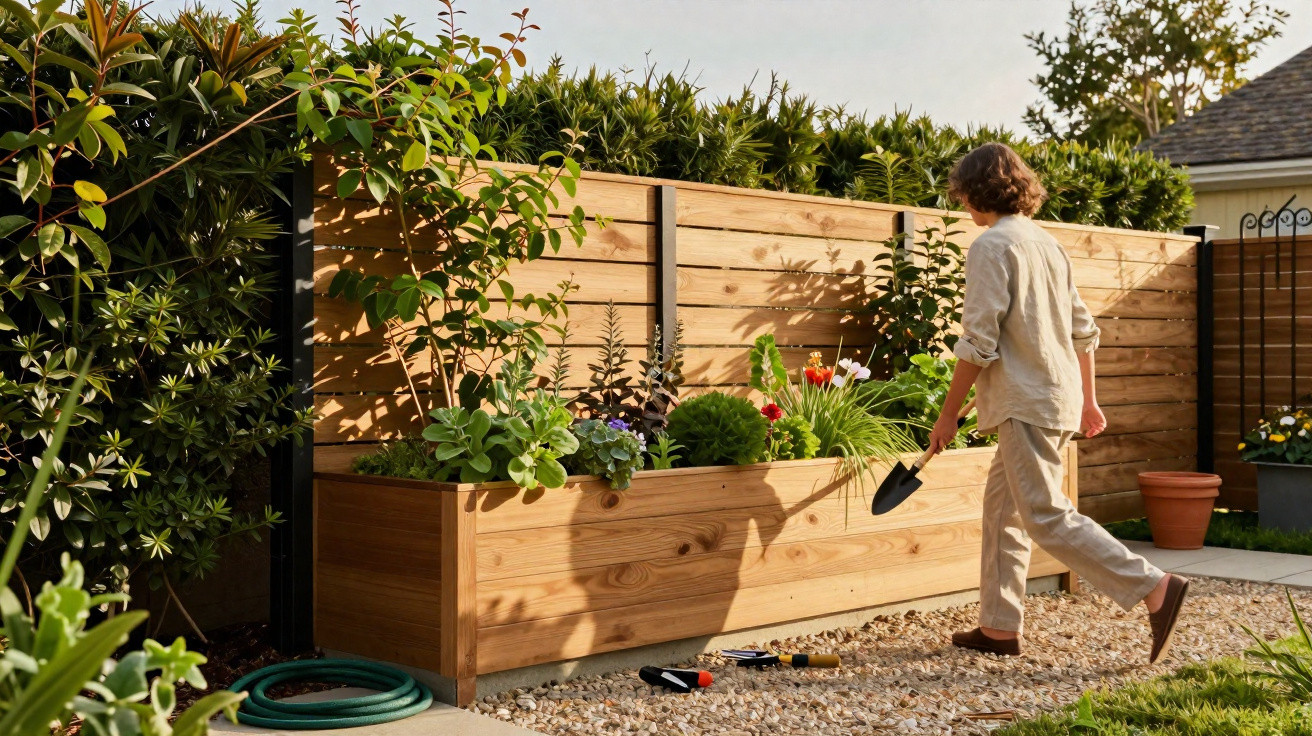
Sometimes, a simple fence is all it takes to make a tired garden feel instantly more interesting, private and genuinely high-end.
When thinking about a garden fence, many homeowners picture only chain-link fencing and standard DIY-store options. Yet a thoughtfully designed boundary can do much more: it defines the space, shields it from prying eyes, keeps animals out and displays planting as though it were on a stage. The ideas below can turn an uninspiring edge into a design feature that elevates the entire garden.
Why a garden fence can define the whole garden
In many streets, the fence is the first thing neighbours, passers-by and visitors notice. Anyone living beside a busy road or hoping to protect a vegetable garden needs more than a boundary; they need a clear statement.
A well-considered fence combines function – privacy, security and structure – with atmosphere and style.
At the same time, the construction needs to suit the house, the size of the plot and the amount of maintenance required. A small terraced-house garden calls for different solutions from an open country garden with passing wildlife.
Using materials and lines: modern fences with character
Timber and wire: light, airy and still clearly defined
Combinations of timber posts with taut wire or metal mesh infill have proved particularly effective in productive gardens. They recall traditional cottage gardens, yet can look surprisingly contemporary with the right choice of colour.
- Posts painted in a dark shade look more refined than untreated timber.
- Fine wire appears more elegant, while coarse chain-link mesh has a more rustic feel.
- Climbing plants such as peas, beans or clematis can green up individual panels.
The result is a distinct boundary without blocking the view entirely. It is ideal for beds that need protection without appearing “boxed in”.
Wrought iron for classic charm
Wrought-iron fences work especially well with period properties, townhouses or romantic front gardens. Their key advantage is that many designs can be painted with either a matt or gloss finish, allowing them to match the front door, window frames or balcony railings precisely.
Ornate detailing adds a nostalgic touch. Paired with roses, hydrangeas or box, it creates the impression of an old urban neighbourhood. Those who prefer a cleaner look can choose plain bars with only minimal decoration.
Horizontal slats for a crisp urban look
Many designers use horizontal timber battens or metal profiles in contemporary gardens. Their level lines make areas appear wider and create a calm, graphic effect.
The look becomes particularly interesting when sections of vertical boards are introduced. This change of direction breaks up long fence runs and works well with cubic architecture, concrete patios or minimalist planting schemes.
Weathering steel: a warm industrial edge
Special structural steel that develops a stable rust layer over time brings a warm, gently textured note to the garden. As its surface gradually changes, it gains a lively quality. Combined with grasses, architectural shrubs and plenty of gravel, it produces a modern style with a subtle industrial character.
The rusty patina creates an appealing contrast with rich green foliage and deliberately emphasises the boundary without looking harsh.
Green fences: gaining height without losing light
Vertical gardens on the fence
Every square metre matters in small urban gardens. Rather than treating the fence merely as a backdrop, it can become a planted surface. Trellis panels, modular timber frames or metal rails for hanging pots can transform a dreary wall into a living picture of plants.
Typical climbing and trailing plants for these walls include:
- Climbing roses for flowers and fragrance
- Jasmine or honeysuckle for an intense scent
- Grapevines for shade and a later harvest
- Ivy or Virginia creeper for lasting greenery
- Herbs in pots, such as thyme, oregano and mint
Anyone who enjoys making things can also use old vineyard posts or rustic timbers as an informal climbing frame. This gives the space a natural, slightly improvised charm.
Hedges as living boundaries – correctly trimmed, they stay dense
A dense hedge can replace a conventional fence while providing a living privacy screen. Its shape is important. Cutting it vertically from top to bottom often leaves the base bare because it receives too little light.
A gently tapered silhouette is better: slightly wider at the bottom and narrower at the top. For a hedge around 1.50 metres high, it is enough for the upper section to be ten to twenty centimetres narrower. This helps the plant remain dense for longer, withstand wind and cope with snow.
15 garden fence ideas – from cosy seating areas to wildlife protection
Atmosphere, screening and safety: what a fence can provide
Different functions take priority depending on the garden's location and use. This short overview shows how broad the possibilities are:
| Situation | Suitable fence idea |
|---|---|
| Patio close to the pavement | Woven willow fence as a cosy privacy screen |
| Long, narrow terraced-house garden | Light, semi-transparent slatted fences that allow light through |
| Exposed site with passing wildlife | Sturdy deer fence or tall metal fence to protect plants |
| Modern urban garden | Combination of Corten steel panels and timber slats |
| Romantic front garden | Wrought iron with climbing roses and a low hedge in front |
Around seating areas, woven willow or hazel fences provide a warm, sheltered enclosure. They take the force out of the wind and signal that this is where the retreat begins. Conversely, anyone wishing to retain as much light as possible should opt for permeable constructions: wide gaps between slats or metal frames with wire infill make the space and beds seem larger.
In rural areas with deer or other wildlife, practical solutions are often necessary. Tall wire fences or specialist wildlife-protection fencing prevent carefully planted perennials and vegetable crops from being eaten overnight.
Small touches, major impact: design tricks for added interest
Even a few details can greatly enhance a plain fence. Gently curved top edges on timber slats, integrated timber arches or simply a soft radius on individual elements take the severity from a rigid line and make it feel more welcoming.
Surprise features can be highly effective too. An old mirror at eye level, framed by climbing plants, visually expands the space and creates a moment of disorientation – in a positive way. Recessed niches containing lanterns, candles or small sculptures can also give the surface a story of its own.
Anyone who treats their fence like a stage turns a boundary into a distinct chapter of the garden's design.
Colours, maintenance and practical everyday advice
For the choice of colour, it is worth looking at the façade, window frames and roof. When the fence picks up one of these tones, the overall appearance feels calmer. Strong contrasts – such as an almost black fence behind pale gravel areas – instead create deliberate accents.
Timber needs regular treatment, whether with stain, oil or opaque paint. Those with limited time should plan from the outset around durable materials such as metal, pressure-treated posts or weather-resistant steel. Hedges need trimming at least once a year to stop their outline becoming ragged.
Careful height planning pays off on small plots. Privacy panels that are too tall can feel oppressive and visually shorten the garden. Sometimes it is enough to screen the seating area more thoroughly while leaving the rest more open. Mid-height fences combined with tall plants offer a good compromise between seclusion and spaciousness.
Getting more from a garden boundary
Anyone building or renovating should include the fence in the overall plan from the beginning. Electrical cables for lighting, water connections near beds or prepared foundations are difficult to add later. A lit path along the garden boundary improves safety while attractively framing the evening view of the garden.
Deliberately mixed solutions are equally compelling: one section can be a solid privacy screen, the next half-height and planted, and a third open with trellis and climbing plants. This creates a rhythm that makes the garden feel more varied – while the boundary loses its purely functional role.



Comments
No comments yet. Be the first to comment!
Leave a Comment