
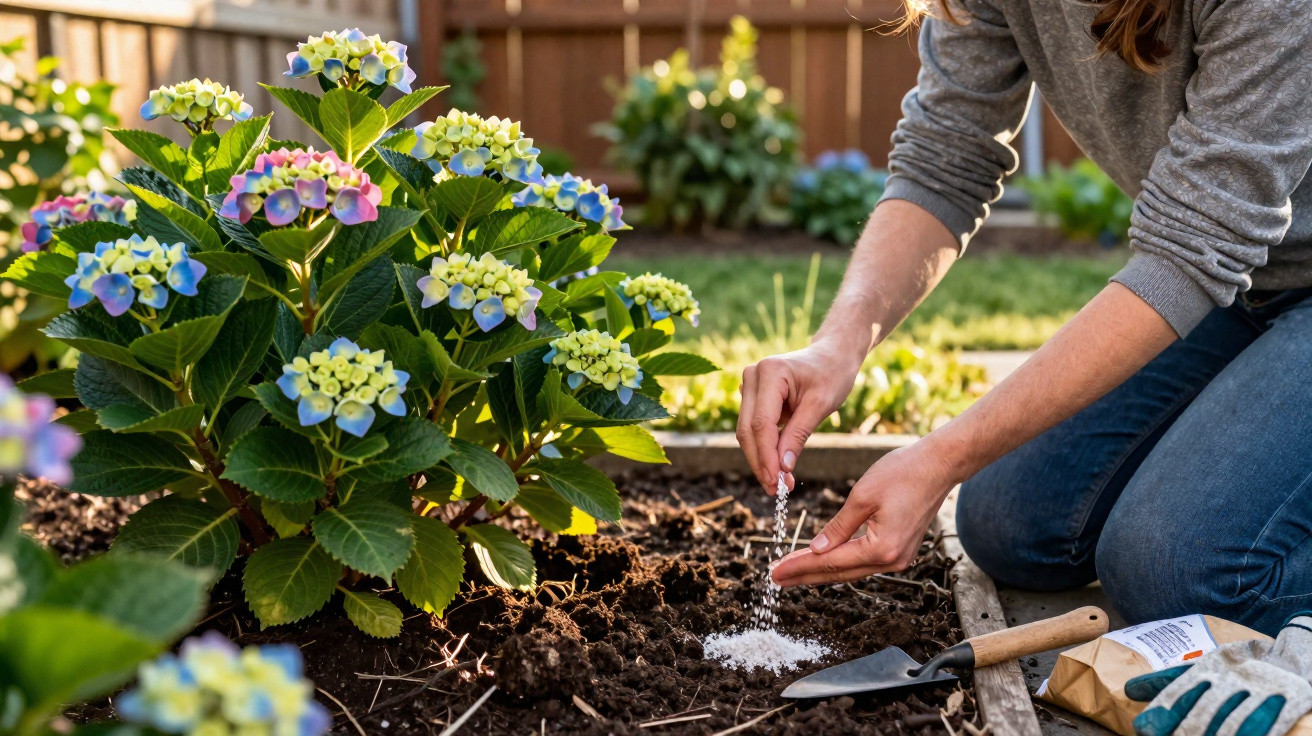
Many keen gardeners are puzzled in summer by huge, deep-green hydrangea bushes carrying only a handful of flower heads. Yet the real mistake is made much earlier in the year: towards the end of winter. During this brief period, hydrangeas determine whether to direct their energy into leaves or flower buds. This is precisely when a targeted nutrient boost matters.
The crucial window: why late winter determines hydrangea flowers
Hydrangeas gradually emerge from their winter dormancy between late February and early March. Sap begins to rise, fresh shoots are formed and flower buds start developing within the plant. At this point, the plant is, in effect, checking the nutrient reserves in its soil.
“If enough nutrients are available in late winter, the hydrangea will put its energy into plenty of strong flowers. If it lacks food, it will mainly produce leaves.”
Hydrangeas are among the classic ericaceous, or acid-loving, plants. They prefer humus-rich, mildly acidic soil containing plenty of organic matter. In depleted or heavily compacted ground, the nutrients required for abundant flower heads can soon be lacking.
This is a familiar sight in many gardens: the shrub grows vigorously, appears healthy, and has dense, rich green foliage, yet its flower heads remain small or sparse. In most cases, the reason is not incorrect pruning or the chosen variety, but simply unsuitable fertilising-or no fertilising-at the beginning of the season.
Gentle nourishment: the fertiliser that is worthwhile before March
Gardeners seeking beautiful hydrangeas over the long term do not rely on fast-acting fertilisers, but on something closer to a balanced, wholesome diet. Well-rotted compost, spread as a mulch around the plants, has proved particularly effective.
“A thick layer of mature compost acts like a long-term buffet: every shower gradually washes nutrients down into the root zone.”
A useful rule from practical gardening is to apply a layer 7 to 10 centimetres deep around the shrub, extending roughly 40 to 50 centimetres from the stem. This is generally entirely sufficient. Compost supplies nutrients while also improving soil structure, holding moisture and encouraging soil life.
If you prefer a shop-bought fertiliser
Not everyone has enough homemade compost. In that case, choose a specialist organic or organo-mineral hydrangea fertiliser that releases nutrients slowly. Blends with a moderate nitrogen content and slightly more potassium are advisable, for example those with an NPK ratio in the region of 7-4-5 or 8-3-9.
- Nitrogen (N): promotes growth and leaf production-useful in moderation, but harmful to flowering when overapplied.
- Phosphorus (P): supports flower formation and root development.
- Potassium (K): strengthens plant tissue, improves resilience and enhances flower quality.
Ideally, apply these fertilisers between February and March. Most importantly, do not overdo it. Many people assume that more is better and tip generous amounts of granules around the shrub. This can easily lead to excessive leafy growth and, in extreme cases, even root damage.
“A small but regular dose achieves far more than a one-off shock treatment of fertiliser.”
How to apply fertiliser correctly: step by step
By following a few straightforward principles, fertilising hydrangeas becomes a quick, almost routine late-winter task.
- Define the area: Use the shrub’s canopy as your guide. Its roots usually extend at least as far as the outermost shoot tips.
- Apply fertiliser in a ring: Do not pile compost or granules directly against the stem. Spread them evenly in a broad circle around the plant.
- Loosen the soil lightly: Work the material gently into the top layer of soil with a small rake or your fingers, taking care not to damage the roots.
- Water it in: Give the area a thorough watering afterwards. This helps the nutrients reach the root zone sooner.
For hydrangeas growing in beds, one substantial application of fertiliser in late winter is often enough. Container-grown plants depend more heavily on the gardener for nourishment: a further, very light feed in late spring or early summer is worthwhile, as potting compost contains fewer nutrient reserves.
Common mistakes: why many hydrangeas produce only leaves
The most common error is choosing the wrong fertiliser. General-purpose fertilisers for ornamental plants often contain high levels of nitrogen. This nutrient strongly encourages leaf and shoot growth, making a hydrangea look lush and green, but it noticeably suppresses flower production.
“Too much nitrogen turns hydrangeas into spectacular leafy shrubs-and deprives them of the energy for large flower heads.”
Fertilising at the wrong time is another frequent pitfall. Adding a large amount of fertiliser only in late spring or even summer can disrupt the plant’s rhythm. The hydrangea then invests energy in new shoots when bud formation has already finished.
Dry conditions immediately after feeding also matter. Without water, nutrients remain in the soil and barely reach the roots. A proper watering is essential, especially after applying granular fertiliser.
Garden bed or container: how care differs
Hydrangeas planted in garden soil benefit from deeper root systems and a larger store of nutrients in the ground. A well-prepared site with plenty of compost usually needs only one annual ‘top-up’ in late winter.
| Location | Fertilising schedule | Key points |
|---|---|---|
| Hydrangea in a garden bed | 1 main application in late winter | humus-rich soil; a mulch layer retains moisture |
| Hydrangea in a container | 1 application in late winter, 1 light follow-up application in early summer | potting compost is depleted more quickly; regular watering is necessary |
In pots, hydrangeas are more dependent on watering and fertilising practices. Waterlogging is harmful, but so is prolonged dryness directly after feeding. Those who provide their container hydrangeas with mature compost or a suitable specialist fertiliser once or twice yearly, while maintaining even moisture, will see significantly more flowers.
Practical extra tips for maximum flower abundance
Nutrients alone are not enough. A few additional measures make the difference between something merely pleasant and a real ‘wow effect’ on the patio.
- Choose the right position: Bright shade or morning and evening sun are ideal. Intense midday sun places the plants under stress.
- Mulch: A thin layer of composted bark or leaves over the compost retains moisture and protects soil life.
- Check the watering water: Very hard water can gradually raise the pH level. Rainwater is the better option.
- Prune gently: In late winter, remove old, dried flower heads just above the first strong pair of buds, but avoid cutting the plant back severely.
Many varieties form their flowers on the previous year’s shoots. Cutting back too hard in late winter simply removes the plant’s future flower buds. Combined with a lack of fertiliser, disappointment is then inevitable.
Why it is worth examining the soil
Anyone who takes a closer look at their garden soil will better understand how their hydrangeas respond. Loose, humus-rich, slightly acidic ground not only supplies nutrients but also allows plants to absorb them in the first place. Compacted, very clay-heavy or strongly calcareous soil restricts the roots.
Here is a simple test: after a rain shower or thorough watering, see how quickly the water drains away. If the surface remains slimy and wet for a long time, work in compost and leaves. If water disappears immediately and the soil dries out rapidly, it needs more organic matter to retain moisture.
Making use of the short period before March, applying well-rotted compost or a gentle specialist fertiliser, and keeping an eye on the site will do more than create a sea of flower heads in summer. Hydrangeas repay this care with strong growth, better resistance to hot spells and a considerably longer flowering season each year.



Comments
No comments yet. Be the first to comment!
Leave a Comment