
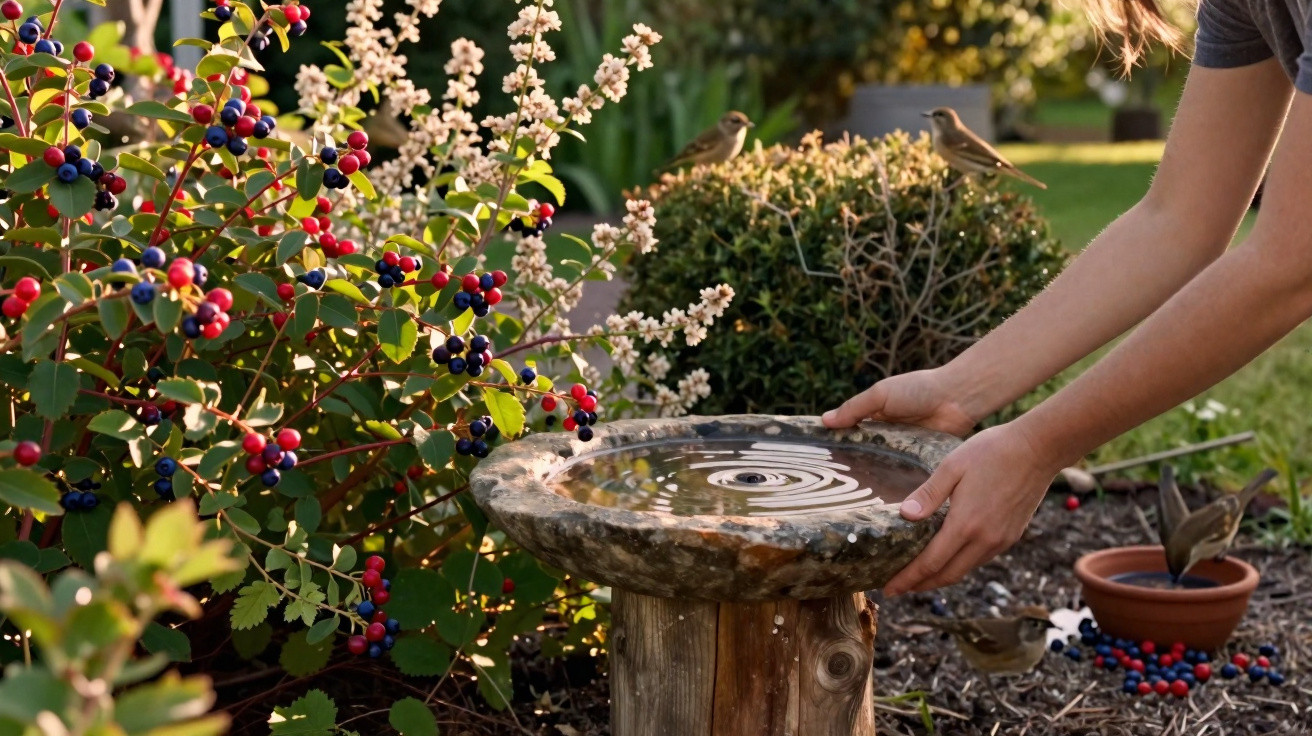
Many people hoping to attract blackbirds, tits and robins first think of ready-made seed mixes and ornamental feeding stations. They can work in the short term, of course. A garden becomes genuinely appealing, however, when birds experience it as a natural woodland edge, with berries, dense cover and fresh water. That is precisely the aim of a modern bird-friendly garden.
Why feeding stations are only a stopgap
Feeding points are particularly useful during harsh winters or in areas where the landscape offers very little natural cover. On their own, though, they remain a temporary measure. Food supplies disappear quickly, are often contaminated and, if poorly maintained, can even encourage disease.
“A garden that provides food, shelter and water throughout the year feels like a natural habitat to birds – rather than a roadside snack bar.”
Rather than continually refilling bags and dispensers, it is worth considering what birds naturally favour: insects, seeds, berries and buds, straight from nature. Strengthening this foundation supports wildlife far more sustainably.
Three berry shrubs that improve every garden
A living larder at the edge of the garden
Even a small number of carefully chosen shrubs can bring in an entire flock of regular visitors. They provide flowers for insects, berries for birds and, in many cases, dense branches in which to hide.
A combination of species that fruit early, midway through the season and late is ideal. This creates a natural feeding table from summer well into winter. Small songbirds enjoy pecking directly from the branches; it is normal behaviour for them, and one their beaks and digestive systems are adapted for.
Shrubs particularly worth planting
For an average home garden, planting three hardy native berry shrubs is enough. One possible trio would be:
- Rowan / mountain ash: Popular with thrushes, blackbirds and starlings, it bears striking fruit and also makes an attractive ornamental tree.
- Black elder: Its late-summer berries are sought after by many species; both the flowers and berries can also be used in the kitchen.
- Hedge rose or dog rose: Autumn rosehips provide food into winter, while the thorny growth protects nests.
Privet, hawthorn, viburnum and firethorn are also suitable alternatives, although with firethorn only unsprayed varieties suited to the location should be chosen. The important point is that birds must be able to reach the fruit easily. Avoid pruning everything back into a permanently “tidy” shape.
“Three well-positioned berry shrubs can do more for bird diversity than ten perfectly stocked feeders.”
A stretch of wild hedge as a secure refuge
What birds need even more urgently than food
Even a garden full of berries offers little benefit if birds feel under threat all the time. Cats, martens and birds of prey are only some of the dangers they face. For that reason, many species look for shelter first and food afterwards.
A dense strip of hedge provides exactly this: quick escape routes, numerous hiding places and suitable nesting sites. Rather than grooming every corner into submission, it is worth deliberately allowing part of the garden to remain “untidy”.
Turning a thicket into a sheltered habitat
A mix of thorny and non-thorny shrubs works best. Thorns deter many predators and help small birds feel secure. Just a few metres of width can be enough to form a genuine corridor of protection.
| Element | Benefit for birds |
|---|---|
| Thorny shrubs, such as hedge rose and blackthorn | Protection from cats and good nesting sites |
| Evergreen species, such as yew and privet | Winter screening and sheltered sleeping places out of the wind |
| Dead wood within the hedge | Cover for insects and an additional food source |
Crucially, at least part of the hedge should not be cut back drastically in autumn. Insects overwinter there, berries remain on the branches and birds can find winter shelter.
Water is essential: the simple bird bath
Why water can sometimes matter more than seed
Birds lose a great deal of fluid through breathing and digestion. Dry periods can arise quickly, especially in summer and during dry winters. Puddles disappear ever faster, while water butts are often too deep and dangerous.
A shallow dish filled with fresh water fills this gap. It serves not only as drinking water, but also as a place to bathe. Parasites and dust collect in plumage; birds that bathe regularly stay more agile and healthier.
What a safe water source looks like
- Use a shallow bowl, no more than five centimetres deep.
- Provide a rough surface or stones so birds can keep their footing.
- Keep the surrounding view open, allowing threats to be spotted early.
- Do not place it in direct, intense midday sun.
The water should be changed daily, or at least every two days. A quick scrub with a brush is sufficient; cleaning products should stay in the cupboard. During hot spells, a second container can be useful to prevent birds having to wait.
“A single bowl of water can create a small but vital oasis for birds – even on a balcony or terrace.”
When everything works together: the garden as a small habitat
The three building blocks that truly matter
By planting berry shrubs, allowing a dense section of hedge to develop and providing a water source, you can meet almost all the basic needs of native songbirds: food, shelter and water. Step by step, the garden changes from a sterile lawn into a lively miniature habitat.
It is remarkable how quickly birds respond to these changes. More species often appear in the very first year. Over time, good places to stay seem to spread by word of mouth in the bird world, and visitors return.
Practical additions for even greater bird diversity
Anyone wishing to do more can add further features:
- Wildflower areas: These attract insects and supply seeds and nectar.
- Dead-wood corners: They create habitat for beetles, larvae and spiders, all important food for young birds.
- Nest boxes: Useful where mature trees and natural cavities are absent.
- Leaf piles: A refuge for small creatures and insects, and therefore an indirect source of food for birds.
None of these features needs to look perfectly planned. Small “mistakes” and corners where plants are allowed to grow freely are often more valuable to wildlife than meticulously cleared beds. This quiet move away from the pursuit of perfection is exactly what makes a garden appealing to birds.
For many homeowners, the change can initially feel unfamiliar: less decoration, more structure that is genuinely used. Yet anyone who has watched dozens of thrushes descend on berries in autumn, seen sparrows splashing in the bird bath during summer, or spotted a robin disappearing into dense shrubbery soon realises that this approach is worthwhile – for the animals and for their own experience of nature.



Comments
No comments yet. Be the first to comment!
Leave a Comment