
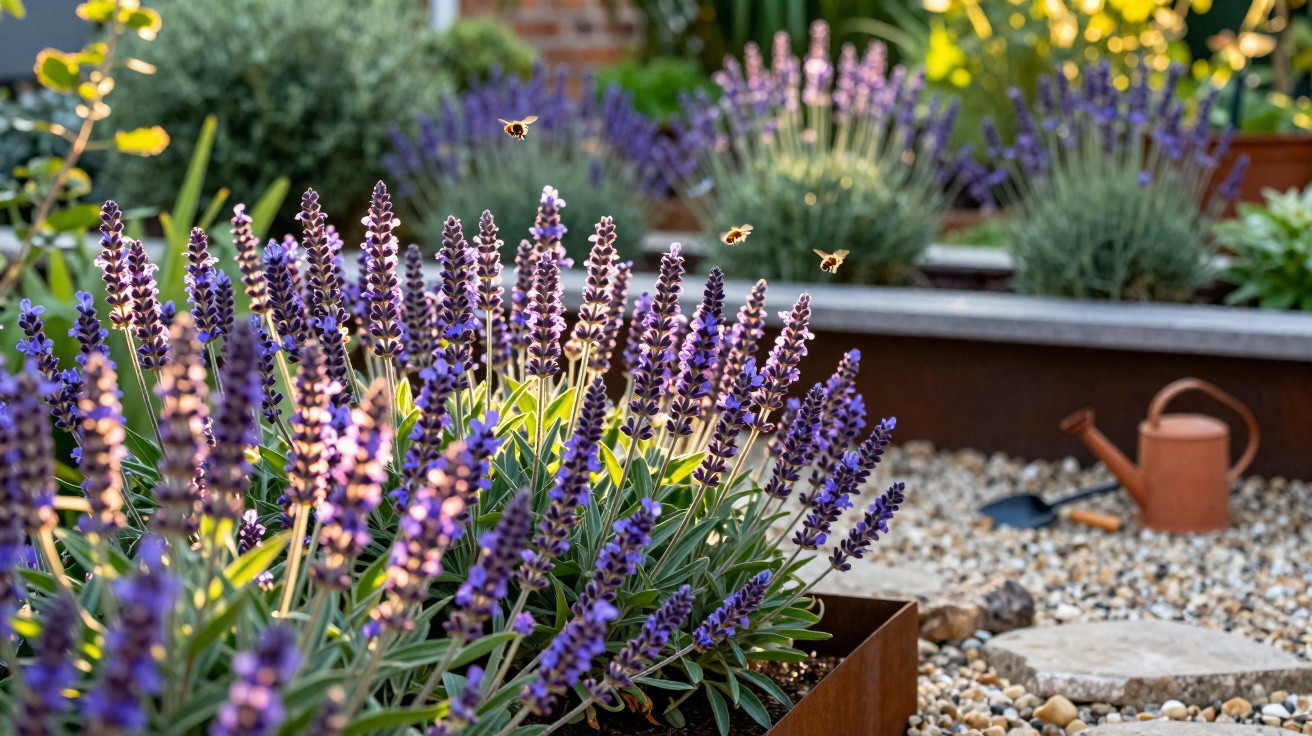
Many amateur gardeners automatically choose lavender when they want beds that are dry, sunny and reasonably low-maintenance. Yet professional garden designers have long favoured another plant, one that copes better with heat, flowers for longer and attracts considerably more insects: perennial sage, botanically known as Salvia. Anyone rethinking their garden in response to hotter summers can scarcely overlook it.
Why sage is overtaking lavender in modern gardens
At garden centres, sage often sits rather inconspicuously beside lavender, thyme and similar plants – yet it is increasingly the choice of professionals. The reason is that ornamental Salvia varieties combine visual impact with practical benefits that are becoming ever more valuable during periods of heat and water shortage.
Sage is now considered one of the most dependable perennials for sunny, dry locations – attractive, tough and exceptionally popular with insects.
While many perennials are finished after only a few weeks, sage keeps going for months. It forms dense clumps from which upright flower spikes rise. Blue, violet, pink or white – the range of colours is broad and the effect in a border is striking.
A blaze of flowers from spring well into summer
As soon as temperatures rise in spring, sage gets underway. Its first flowers often appear while other perennials are only beginning to emerge. If spent blooms are cut back regularly, the plant continues to produce fresh flower stems.
- Long flowering period from late spring, in some cases into autumn
- Numerous varieties in rich blue shades that glow in sunlight
- Compact, bushy growth, ideal for beds and borders
- Flowers sit high above the foliage, creating a light, airy look
This creates a colourful edging along paths, terraces or in front gardens that continually renews itself. Lavender, by comparison, often appears much more static and has a clearly limited flowering period.
Rapid growth fills gaps in the border
Another advantage is how quickly sage establishes itself. A single small pot can develop within a few weeks into a broad perennial that fills gaps and naturally suppresses weeds.
This makes it ideal for new borders or newly planted front gardens. Nobody wants to wait for years to achieve an effect while weeds take over. Sage creates fullness quickly, without demanding constant maintenance.
Sage as a bee magnet: more activity than lavender
Anyone wanting to support wild bees, bumblebees and butterflies will almost automatically think of lavender. However, landscape designers report noticeably more activity in large areas planted with sage.
Why sage nectar is so appealing
The tubular flowers are perfectly suited to bumblebees and wild bees. They can reach deep inside, access plenty of nectar and pollinate large numbers of flowers in the process. The food supply is not only abundant but also available over a particularly long period.
In a perennial border, the rule is: wherever sage is flowering, there is almost continuous air traffic – for far longer than in traditional strips of lavender.
For gardens, this means more pollinators, greater biodiversity and more life in the border. Anyone sitting among the plants on a summer evening will clearly hear the buzzing and humming.
A fragrant signal for insects
Many ornamental Salvia varieties release a strong scent when touched. Their essential oils have a dual effect: they help insects locate the plants while also deterring certain pests, including aphids and some caterpillars.
This makes it possible to maintain an insect-friendly garden with virtually no sprays. Even small urban gardens or narrow front-garden strips beside the pavement can become a modest refuge for pollinators with this type of planting.
Equipped for climate change: a perennial for heat and drought
Long periods of drought and watering restrictions are becoming more common. Many popular bedding plants struggle in such conditions, whereas sage is among the species that takes them in its stride.
Thrives in poor, stony soil
The plant enjoys sunshine, warmth and free-draining, fairly low-nutrient soil. Sandy or gravelly ground, where other species languish, is almost paradise for sage. It does not, however, tolerate waterlogging well.
- Ideal for dry borders, slopes and front gardens with gravelly soil
- Suitable for areas with regular heatwaves
- Hardy even at higher altitudes, provided the soil drains well
When summer temperatures reach 35°C or more, many perennials droop. Sage keeps its flower spikes upright and carries on – a clear advantage for long-term garden planning.
Less watering, lower costs
After its first year in position, the plant will have formed deep roots. It can then often manage entirely without supplementary watering, at least during normal central European summers. Only in extreme drought may occasional watering be useful.
Anyone who consistently chooses drought-tolerant perennials such as sage saves time, water and money – and avoids stress during hot summers.
Homeowners with large areas benefit in particular: less time unrolling hoses, fewer sprinklers and fewer discussions with neighbours when watering bans take effect.
How to plant sage successfully in spring, step by step
The best time to plant is in spring, once the soil is no longer icy cold and severe frosts are no longer expected.
Choosing a site and preparing the soil
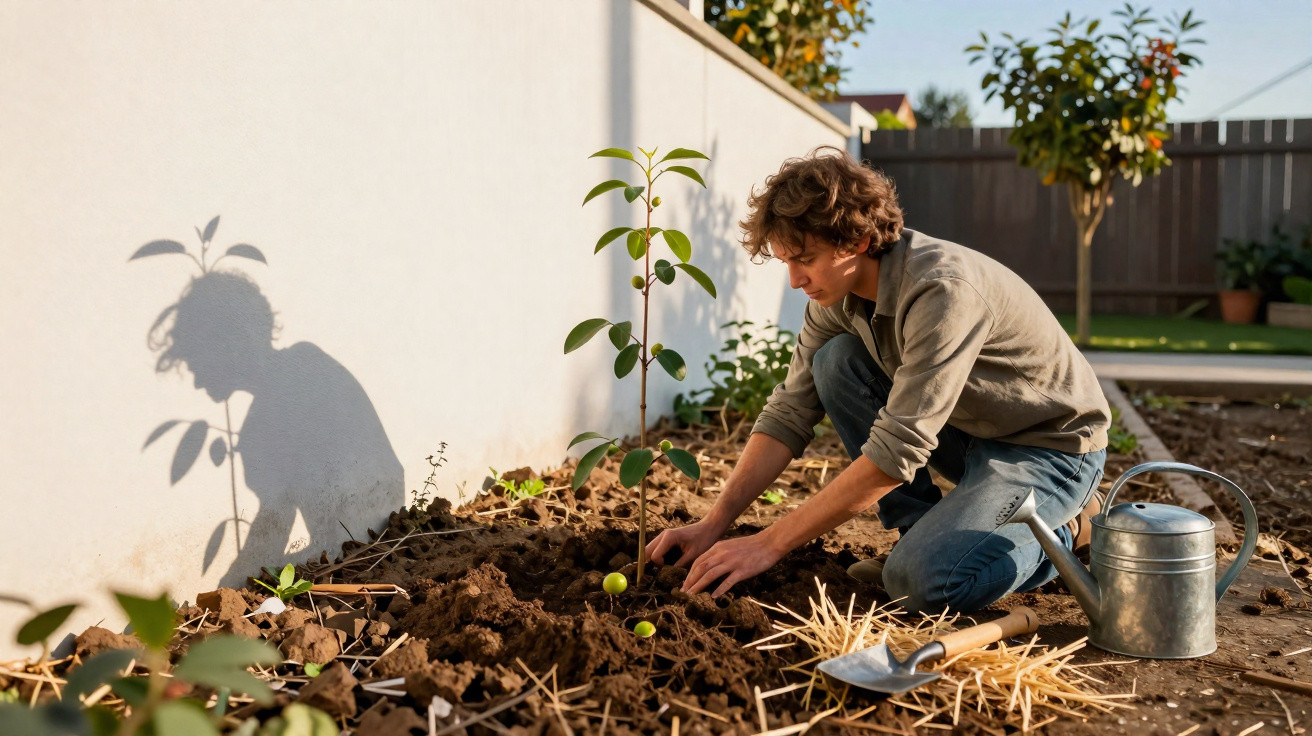
Sage prefers a sunny to full-sun position. A partially shaded site usually results in looser growth and fewer flowers. Soil should be loose, relatively dry and, above all, well drained.
- Loosen the soil at the planting site and remove weeds thoroughly.
- For heavy clay, work in several spadefuls of sand or fine gravel.
- Dig a planting hole slightly larger than the root ball.
- Do not enrich the soil heavily with fertiliser – excessive nutrients weaken the perennial.
Water thoroughly after planting so that the soil settles around the root ball. Afterwards, keep the soil moderately moist in normal weather and avoid waterlogging.
Plants that look best alongside sage
Professionals rarely use Salvia on its own, instead combining it with other drought-tolerant species. This produces borders that remain visually interesting for almost the entire summer.
| Plant | Effect in the border |
|---|---|
| Ornamental grasses (such as feather grass) | Light, moving structure that contrasts with the formal flower spikes |
| Gaura | Floating flowers and a relaxed character that complements sage blue |
| Coneflower (Echinacea) | Strong colour partners in pink, purple or white; also insect-friendly |
| Catmint | Similar site requirements, forming soft carpets beneath sage clumps |
For instance, pairing deep-violet sage with yellow coreopsis or white gaura creates beds that look as though they were designed by a landscape practice, with very little effort.
Easy day-to-day care – and simple to understand
Over the course of the year, care is limited to a few straightforward tasks. After the main flowering period, it is worth cutting back the faded stems. The plant often responds with a fresh flush of shoots and a second wave of flowers.
In late autumn, the upper growth can be left in place – dry flower spikes and seed heads provide food for birds and look attractive in frost. Those who prefer a tidier appearance can cut everything back in late winter to around a hand’s width above ground level. The perennial will then produce strong new growth in spring.
The term “poor soil” confuses many gardening enthusiasts. It means a location that is not continually fed with fertiliser, contains relatively few nutrients and dries out quickly. These are precisely the places where sage excels: it grows compactly, flowers intensely and remains far more resilient than it would in rich, dense soil.
Those with a balcony or terrace can also grow the perennial in a container. The important factors are a potting mix with a high mineral content and a pot with a large drainage hole. In heat-prone city centres, this can create small bee-friendly islands – without a large garden, yet with plenty of colour and life outside the door.
Comments
No comments yet. Be the first to comment!
Leave a Comment