
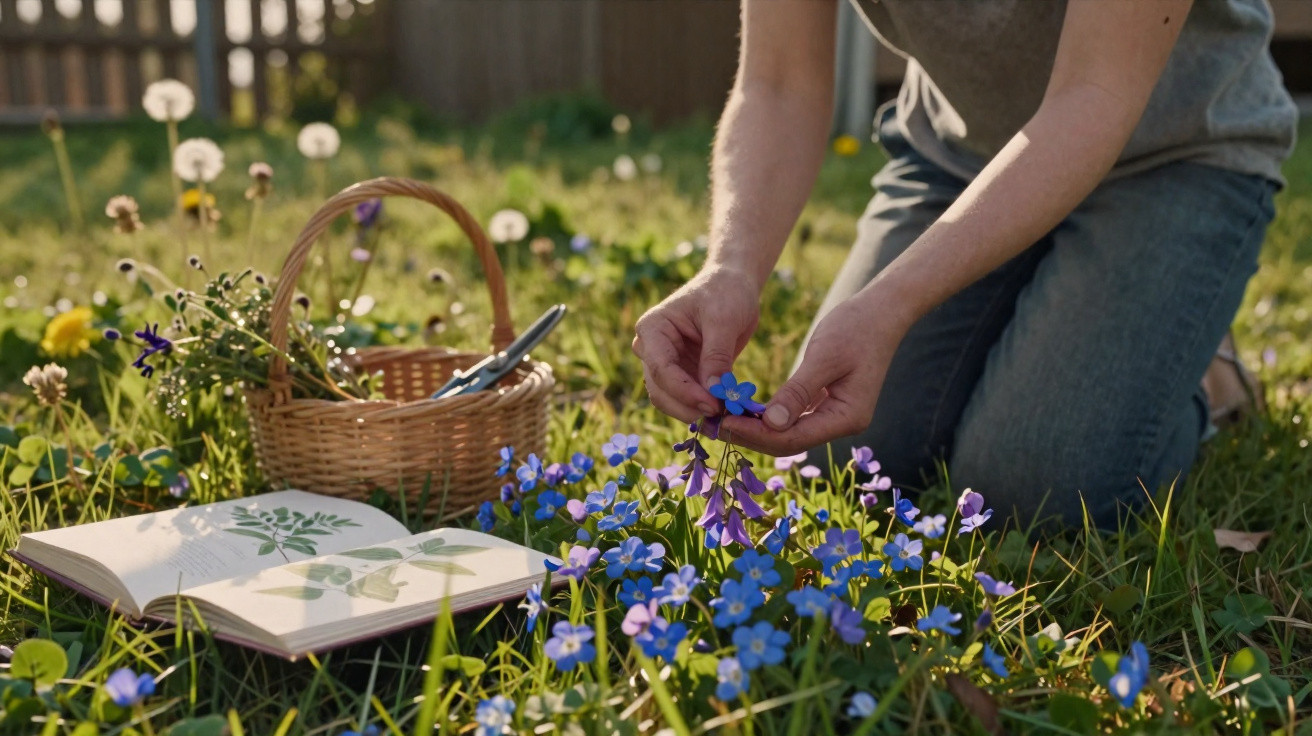
Between making the first plans for the barbecue and tackling the spring clean, something is happening in the garden that many people miss: tiny blue and purple plants are pushing up through lawns, cracks and bed edges. What may look “overgrown” is actually a free supply of wild greens, an insect buffet and a natural health cupboard. Looking closely now rather than cutting everything back brings a piece of genuine nature back into the garden.
Why these small flowers are not troublesome weeds
The label “weed” is misleading. It usually refers to plants that appear by themselves where nobody has sown them. Yet these very species are among the hardiest and most valuable plants a garden can contain.
What many people see as chaos in the lawn is actually a sign of living soil – and it is often even edible.
March and April are particularly good months for taking a closer look. Anyone familiar with the typical blue and purple spring flowers will quickly recognise three native classics: sweet violet, ground ivy and Persian speedwell. All three can soon be regarded as nuisances in a lawn, but they show that a garden can offer more than a closely clipped patch of green.
Sweet violet – spring fragrance for insects, not the shears
The sweet violet is often the quiet star along the edge of a flowerbed. It grows low to the ground, with heart-shaped leaves and intensely violet flowers that can release a sweet scent as early as March. It particularly likes partly shaded spots, beneath shrubs or beside walls.
In traditional herbal medicine, sweet violet was highly valued for centuries. Its essential oils, mucilage and flavonoids made it a popular ingredient in teas, syrups and violet syrup for coughs. Today, however, many herb experts advise greater restraint precisely with this plant.
Sweet violets are among the first flowers of the year – every single bloom is worth its weight in gold to hungry bees.
Why it is better to leave sweet violets where they are
- The plant generally does not form large carpets, instead appearing more sporadically.
- It opens its flowers while many other plants are still dormant.
- Pollinators such as solitary bees and bumblebees find nectar and pollen here early in the year.
- Every plant pulled out is lost from this already limited insect buffet.
Anyone wishing to garden thoughtfully should therefore enjoy sweet violets visually and leave them mainly for insects. The principle is simple: harvest common species and protect the rarer ones.
Ground ivy – a spicy ground cover rather than surplus greenery
Ground ivy is quite different. It spreads along the ground, forms proper carpets and produces small blue-violet two-lipped flowers. Many lawn owners are frustrated when it pushes through their closely cut grass, yet it is one of spring’s most interesting wild herbs.
Among other compounds, the plant contains bitter substances, tannins, essential oils and saponins. These give it a spicy, slightly bitter flavour reminiscent of a blend of mint and thyme, though considerably more powerful.
How to use ground ivy in the kitchen
As its taste is intense, a small amount is sufficient. It can be used in several appealing ways, for example:
- finely chopped into herb butter or herby soft cheese
- as a spicy addition to a mixed wild-herb salad
- in spreads with ground elder, dandelion or chives
- to add aromatic depth to soups or potato dishes
Important: always use ground ivy sparingly rather than in huge quantities. Otherwise, its bitterness can quickly overwhelm the dish. Its major advantage over sweet violet is that it grows abundantly, so it can be gathered without guilt.
What looks like a “problem weed” in the lawn is actually a free culinary herb – more intense than many seasonings from the supermarket.
Persian speedwell – a blue carpet with added benefits
Anyone with a lawn is likely to know Persian speedwell. It stays low, develops slender stems and bears tiny sky-blue flowers marked with darker streaks. At first glance, it looks more like a wildflower remembered from a holiday than something edible.
Speedwell used to be used far more often, including as a tea herb. The plant contains bitter substances, tannins and further secondary plant compounds that were appreciated in traditional herbal medicine. Today it tends to be overshadowed by other wild herbs, unfairly so.
Edible, mild and ideal for beginners
Compared with ground ivy, Persian speedwell has a far milder flavour: lightly fresh and pleasantly subtle. This makes it especially easy to use every day:
- as a delicate addition to a wild-herb salad
- as an edible garnish for bread, soups or desserts
- in herbal lemonades or infused water with slices of lemon
Because speedwell grows in abundance in lawns and along paths, it can be harvested without endangering its populations. It is often the most relaxed choice for anyone trying wild herbs for the first time.
What these plants reveal about your garden
Blue and purple spring flowers are not simply attractive; they also say something about the condition of the soil. Where they thrive, the ground is usually not a “dead”, sterile substrate but a living environment containing fungi, bacteria, earthworms and microorganisms.
| Plant | Typical location | What it suggests |
|---|---|---|
| Sweet violet | Partly shaded, humus-rich, moist | Loose soil, a layer of leaf litter, good structure |
| Ground ivy | Lawns, path edges, slightly damp spots | Nutrient-rich conditions, not too dry |
| Persian speedwell | Lawns, beds, cracks in paths | Open soil, regular disturbance from mowing |
Those able to read these signs gain a better understanding of their own garden. Instead of thinking only “get rid of it”, they can see where wild plants indicate living soil – and where the ground seems depleted.
How to identify blue spring plants safely
For beginners in particular, it is worth examining the usual features carefully. Even a rough guide is very helpful:
- Sweet violet leaves: heart-shaped, soft, slightly glossy and close to the ground.
- Ground ivy leaves: rounded to kidney-shaped, with scalloped edges, arranged along creeping stems.
- Persian speedwell leaves: small, lightly toothed, opposite on the stem and very delicate.
- Flower colour: sweet violet is deep violet, ground ivy is blue-violet, and speedwell is sky blue with a whitish centre.
Anyone unsure should always inspect several characteristics and, if in doubt, leave the plant alone. The guiding rule shared by many herb experts is: only eat what has been identified beyond doubt.
From a “perfect lawn” to an edible meadow
The traditional uniform lawn, closely mown, heavily fertilised and low in life, may look tidy but provides neither food for insects nor ingredients for the kitchen. A meadow containing sweet violets, ground ivy, speedwell and other wild herbs looks more alive and can even reduce the workload.
Those who mow less enjoy more diversity – and, with a little knowledge, gain a free herb garden in the lawn as well.
Even modest changes can make a noticeable difference:
- Extend mowing intervals, especially during spring.
- Leave individual “insect islands” in the lawn uncut.
- Protect sweet violets deliberately, while using ground ivy and speedwell consciously.
- Mow only where a short lawn is genuinely needed, such as paths or play areas.
Wild herbs, self-sufficiency and looking beyond the garden
Anyone walking through the garden with open eyes in March soon notices that self-sufficiency does not begin only with a large vegetable plot or a greenhouse. It starts with knowing the plants that are already present. A handful of ground ivy in butter, a little Persian speedwell in a salad, and sweet violets for the insects – that is enough to begin.
At the same time, you can start growing mini vegetables on the windowsill. Microgreens from rocket, radish or other varieties grow within a week and perfectly complement the wild herbs gathered in the garden. Little by little, this creates a combination of spontaneous nature outdoors and intentionally cultivated greenery indoors.
Once these blue and purple plants are understood as an opportunity rather than a nuisance, every “gap” in the lawn looks different. Places where a weeding tool would once have been used immediately now yield free ingredients, insect habitat and a measure of independence from the supermarket. This is where a modern, relaxed approach to the garden begins – along with a new appreciation for the unassuming spring flowers that are so much more than mere “weeds”.

Comments
No comments yet. Be the first to comment!
Leave a Comment