
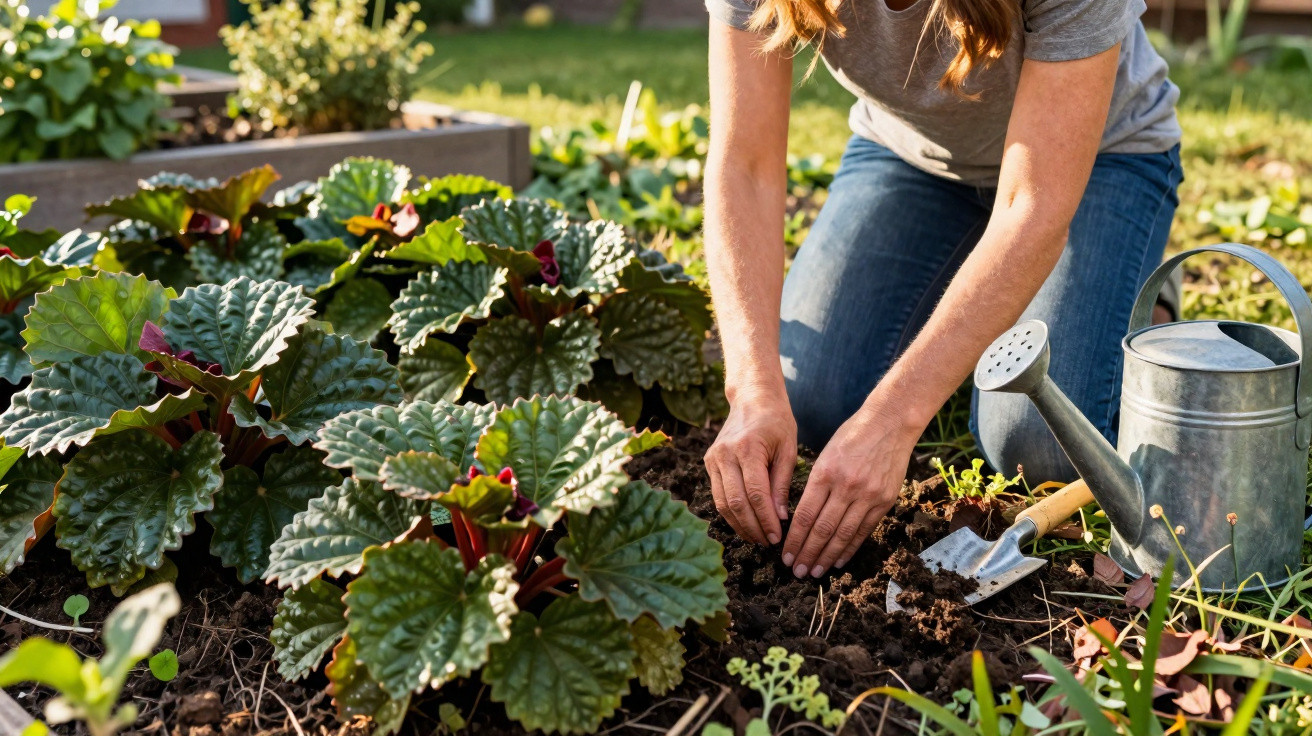
Where chemical treatments were once used, there is now often nothing but a tangle of wild growth. Many amateur gardeners give up and spend every spare weekend hoeing. Yet there is a remarkably straightforward alternative: a hardy perennial that spreads like a living carpet and suppresses weeds before they take hold.
Living mulch instead of chemicals: how one perennial replaces weeding
Since synthetic weedkillers have been heavily restricted in private gardens, it has become clear just how quickly weeds colonise bare soil. Leave a flowerbed uncovered and the first seeds soon germinate; within a few weeks, the area can be overgrown again.
Garden experts report that well-established ground-cover plants can reduce weed growth by up to 70 to 90 per cent – entirely without chemicals.
The principle is simple: rather than leaving soil exposed, cover it densely with suitable plants. These ground covers create a thick canopy of foliage that prevents light from reaching the soil surface. Less light means fewer seeds germinate – and considerably less work.
Among the many ground-cover plants, one perennial is especially notable: the Bergenia ground cover, botanically known as Bergenia purpurascens. It combines several qualities that make it particularly appealing:
- keeps its foliage throughout the year
- withstands severe frost well below 0°C
- forms dense, unbroken carpets
- flowers early in the year with striking blooms
Why Bergenia ground cover is so effective against weeds
Bergenias are traditional perennials in old cottage gardens, but they are now being rediscovered, particularly as a natural alternative to weedkiller. Over time, each plant forms a broad clump with large, leathery leaves. The leaves overlap like scales, leaving almost no bare ground on show.
This is precisely what stops weeds. The dense layer of foliage shades the soil surface, deprives seeds of light and makes it difficult for young shoots to push upwards. Gardeners often call this “living mulch”: the plant performs the same role as a layer of bark mulch or straw, but lasts far longer and looks more attractive.
Bergenias act like a natural filter in a flowerbed: desired perennials and shrubs remain, while unwanted weeds have hardly any chance.
The perennial is also exceptionally tough. It tolerates cold close to between -20°C and -30°C and copes with a wide range of growing conditions. In professional garden-design lists, it is frequently classed as an “excellent ground cover against weeds”.
The best time to plant
Traditionally, spring or autumn is the ideal time for planting. March and April are particularly favourable. The soil is still moist from winter but is beginning to warm up gradually, which is exactly what Bergenias prefer.
When planted at this point, they can develop strong roots over the following weeks. By summer, they are usually established enough for the first gaps between plants to begin closing. Anyone who offers a little support during this period will often need to weed noticeably less even in the first year.
Where the perennial works best in the garden
Bergenia ground cover is remarkably adaptable. Many perennials favour either sun or shade, whereas this plant can cope with both to a certain extent. Suitable locations include:
- bed edges beside paths and driveways
- areas beneath deciduous trees
- steep banks that are difficult to maintain
- bright woodland edges and open shrub borders
- rock gardens and wider gaps between stones
A position in full sun to partial shade is ideal. Even “dry shade”, such as beneath deeply rooted shrubs, works surprisingly well provided the soil is not permanently waterlogged. However, the plant will eventually weaken in very dark corners or persistently damp hollows.
In these places, it is worth combining it with other ground covers, such as hardy cranesbill varieties or evergreen lesser periwinkle. This creates a dense, varied covering that blocks weeds at several weak points at once.
How to plant Bergenias correctly
Preparing the soil: the most important step
A little more work is needed before planting, but only once. Careful preparation at this stage saves many hours of weeding later. Proceed as follows:
- Clear the area thoroughly of existing weeds, digging out roots as completely as possible.
- Loosen the soil to a depth of around 20 centimetres using a spade or garden fork.
- Work in well-rotted compost if the soil is very sandy or poor.
- Remove large stones, root fragments and persistent runners.
The perennials can then be planted. A spacing of roughly 40 centimetres between individual plants has proved effective. Some soil will initially remain visible, but the gaps should close within one to two years.
Plant, water and mulch lightly
Planting holes should be slightly wider than the root ball. This makes the transition from the container root ball to the surrounding soil easier, allowing roots to grow out into the ground more quickly.
The crown – the point where the roots meet the stems – should remain level with the soil surface. If it is planted too deeply, rot may develop; if it sits too high, the roots can dry out. After planting, firm the soil gently and water thoroughly so that any air pockets close.
During the establishment period, a thin mulch of fine bark material or lawn clippings between the perennials is helpful. It protects against drying out and bridges the time until the leaves meet. Later, the plant takes over this role itself.
Maintenance effort: do little, achieve a lot
There is good news for gardeners who prefer low-maintenance planting: Bergenias need very little attention. During the first weeks after planting, the soil should not be allowed to dry out completely. Regular but moderate watering is entirely sufficient.
Once the plants have rooted in, they rarely need watering, even in dry summers. Their thick leaves retain moisture, while the strong root system draws on water reserves in deeper soil layers.
For ongoing care, it is enough to cut away the occasional brown or damaged leaf. Once flowering has finished, the spent stems can be removed to keep the planting looking tidy. Dividing the clumps every three to five years is worthwhile: lift the plants, split them with a spade and replant the sections. This rejuvenates the carpet while also helping it spread further.
How much does weed pressure really decrease?
Anyone expecting perfectly sterile soil will be disappointed – even this perennial cannot achieve that. Individual seedlings will always find a small gap, especially around the edges. However, the difference compared with an uncovered bed is clearly noticeable.
In many gardens, the time spent weeding falls so markedly that a previously troublesome bed suddenly feels almost low-maintenance.
Instead of working through the area with a hoe every week, it is generally enough to inspect it briefly every few weeks and remove isolated stragglers by hand. Many owners then prefer these gentler methods because the task becomes far less frustrating.
Practical advice for avoiding common mistakes
People starting out with ground covers often make similar mistakes. A few points can prevent unnecessary problems:
- spacing plants too widely: if only one or two plants are used per square metre, gaps will take a long time to close. Three to five plants per square metre is more realistic.
- planting into dry soil without watering afterwards: particularly with spring planting, thorough watering is essential.
- planting in heavy, waterlogged ground: Bergenias do not like permanently wet soil. Improve drainage first in these areas, for example with sand and compost.
- fertilising too heavily: this perennial needs only moderate nutrient input. Too much nitrogen produces soft, more vulnerable leaves.
Why switching to ground covers is worthwhile
Anyone who has seen how calmly a densely planted area develops rarely wants to return to bare soil. The garden looks tidier, and many areas remain green even in winter. At the same time, the living carpet shelters soil organisms, worms and insects.
For families with children or pets, another benefit is important: there is no longer any need to spray. Concerns about chemical residues being carried indoors on shoes or paws disappear. Instead, the result is a robust, natural-looking area that still appears well cared for.
Those who follow the basic rules – a suitable position, thorough care during establishment and sensible planting density – can free large parts of the garden from the chore of “pulling weeds” with Bergenias. Once established, this system runs almost by itself for many years and removes the most strenuous part of gardening.


Comments
No comments yet. Be the first to comment!
Leave a Comment